
lip 16, 2026
Choose a mini excavator if: You need to dig in tight spaces, access backyards through gates (as narrow as 36 inches), or do precision work near structures. Mini excavators are purpose-built for digging and offer superior maneuverability with 360‑degree rotation . They are also more fuel-efficient and cost less to purchase ($20,000–$60,000).
Choose a backhoe if: You already own a tractor and need occasional digging capability, or you need to dig deep (10+ feet) and also need a loader for material handling. Backhoes are more powerful with 70‑90 horsepower engines and can dig 15–18 feet deep . They can also drive on roads at 20‑30 mph, eliminating the need for a trailer.
The bottom line: For most homeowners and landscapers, a mini excavator is the better choice – it’s more maneuverable, easier to transport, and specifically designed for digging. Backhoes make sense if you already own the tractor and only dig occasionally.
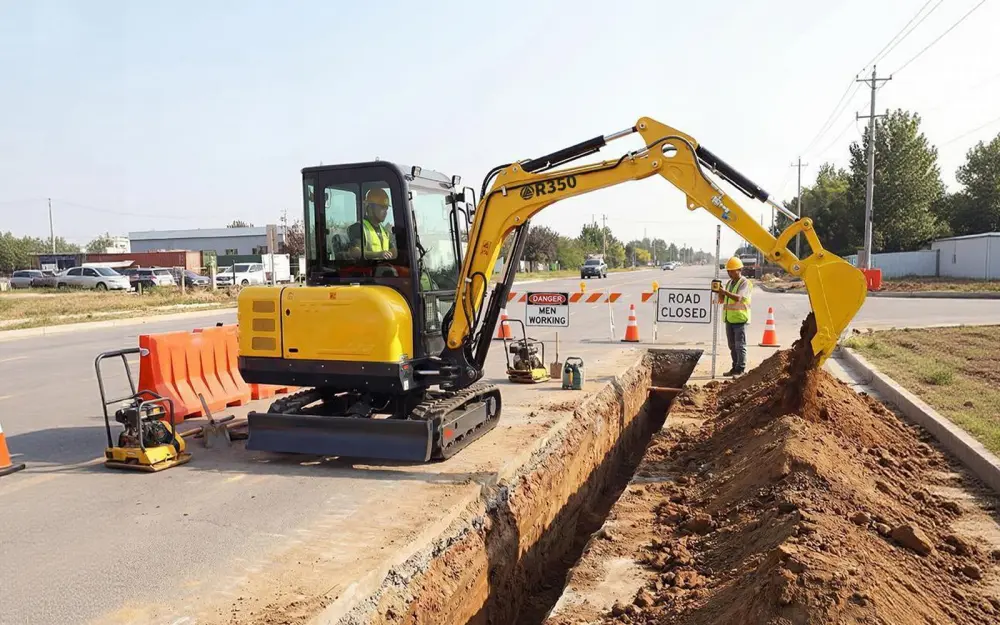
| Značajka | Minibager | Backhoe |
|---|---|---|
| Weight Range | 2,000–18,000 lbs | 12,000–25,000 lbs |
| Engine Power | 20–55 HP | 70–90 HP |
| Digging Depth | 10–20 feet or more | 15–18 feet |
| Lifting Capacity | Varies by model | 1,500–3,500 lbs (loader end) |
| Učinkovitost goriva | More fuel-efficient | Umjereno |
Key difference: Backhoes are stronger and handle tough jobs easily. Their higher horsepower engines make them great for lifting heavy things or digging deep holes.Mini excavators are made for smaller, detailed tasks and use less fuel, which saves money and helps the environment.
| Značajka | Minibager | Backhoe |
|---|---|---|
| 360° rotation | Yes (cab spins fully) | No |
| Fits through 36″ gate? | Some models (micro) | No – too wide |
| Working near walls/fences | Excellent (zero tail swing) | Difficult |
| Transport width | As narrow as 917 mm | 1,800–2,400 mm |
| Transport weight | Lighter, easier to move | Heavier, harder to transport |
Key difference: Mini excavators are great for tight spaces. Their small size and spinning cab make them perfect for city construction, landscaping, and utility work. Backhoes are bigger and need more room to operate, making them less useful in cramped areas. For backyard access, a mini excavator is the clear winner.
| Cost Factor | Minibager | Backhoe |
|---|---|---|
| New Purchase | $20,000–$60,000 | $50,000–$100,000 |
| Troškovi održavanja | Niži | Više |
| Učinkovitost goriva | More fuel-efficient | Less fuel-efficient |
If you already own a tractor: A backhoe attachment costs $7,000–$12,000 – cheaper than a mini excavator. But you lose maneuverability and can’t access tight spaces.
If you don’t own a tractor: A mini excavator is much cheaper than buying a tractor + backhoe attachment ($20k vs $50k+). This makes a mini excavator the more economical choice for most homeowners.
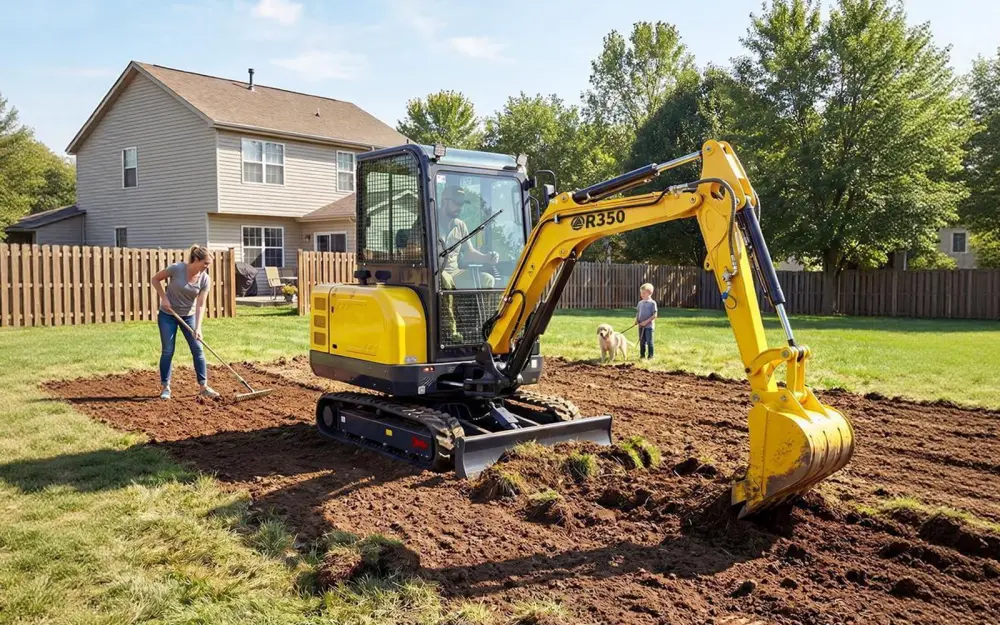
| Attachment | Minibager | Backhoe |
|---|---|---|
| Bucket | ✓ | ✓ |
| Grading blade | ✓ | Ograničeno |
| Hydraulic thumb | ✓ | No |
| Auger | ✓ | No (tractor has PTO auger) |
| Grapple | ✓ | No |
| Vilice za palete | No | Yes (tractor loader) |
| Mower | No | Yes (tractor) |
| Microtrencher | ✓ | No |
| Brush cutter | ✓ | No |
Key difference: Mini excavators are better for detailed work with specialized attachments like microtrenchers, vibratory plows, and brush cutters. Backhoes are more versatile for general construction tasks with attachments like augers, cold planers, and telescopic arms, but lack the precision of mini excavators.
| Primary Task | Recommended Machine |
|---|---|
| Backyard pool excavation | Mini excavator (access through gate) |
| Drainage trenches | Mini excavator (precision) |
| Stump removal | Either |
| Foundation digging | Mini excavator (tight spaces) |
| Land clearing | Either |
| Tractor work + occasional digging | Tractor with backhoe attachment |
| Mostly mowing, sometimes digging | Tractor with backhoe |
| Only digging, no other tasks | Mini excavator |
| Utility line trenching (urban) | Mini excavator |
| Large construction site | Backhoe |
For homeowners: A mini excavator is usually the better choice – it’s designed specifically for digging, fits through gates, and costs less than a tractor + backhoe. A 1.5‑1.8 ton model offers the best balance of power, portability, and price.
For farmers or large property owners: If you already have a tractor or need tractor capabilities (mowing, tilling, loader work), a backhoe attachment may make more economic sense. You get two functions from one machine.
Q: Can a backhoe dig as well as an excavator?
A: In open areas, yes. But backhoes lack the maneuverability of excavators. They can’t work as close to walls or in tight spaces. Mini excavators offer 360‑degree rotation, making them far more efficient in confined areas
Q: Which is easier to transport?
A: Mini excavator. It’s lighter and narrower. You can tow a 1.5‑ton excavator with a half‑ton pickup and single‑axle trailer. A tractor with backhoe requires a larger truck and trailer due to higher weight and width.
Q: Which has better resale value?
A: Both hold value well. Premium brand excavators (Kubota) and tractors (John Deere, Kubota) have excellent resale. Value brand excavators (RIPPA) offer lower initial cost but also lower resale dollars. However, the lower purchase price often means lower net cost over the ownership period.
Q: What is zero tail swing and why does it matter?
A: Zero tail swing means the machine rotates within its track width – ideal for working near walls, fences, and buildings without hitting obstacles. This is a key advantage of mini excavators over backhoes.
Q: Which is better for a first‑time buyer?
A: A mini excavator – it’s purpose‑built, easier to learn, and more maneuverable. Start with a 1.5‑1.8 ton model. The learning curve is gentler, and you’ll be able to access tighter spaces around your property.
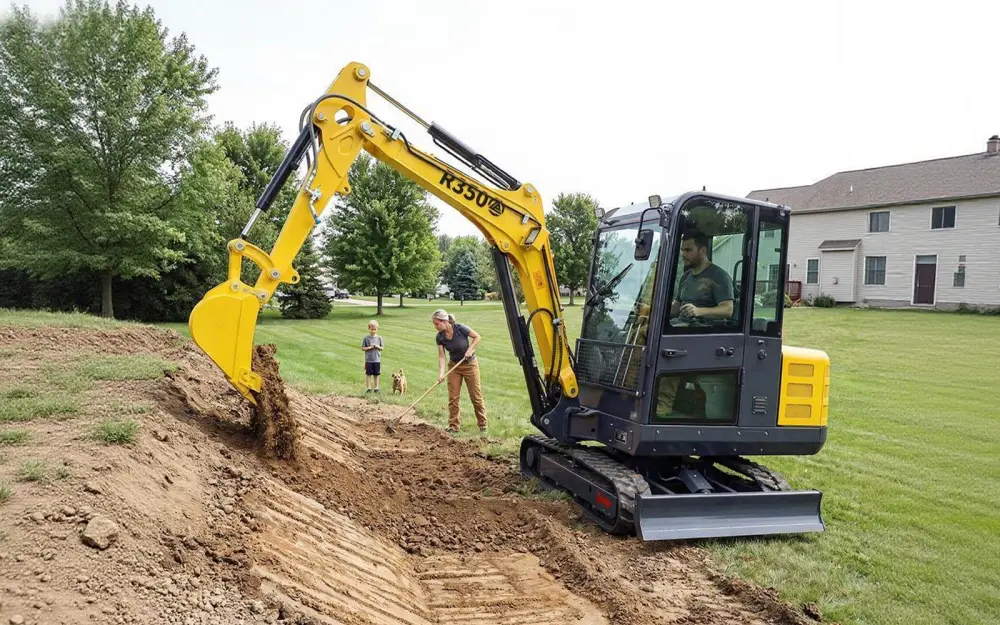
The choice between a mini excavator and a backhoe depends on what else you need to do. If you only need digging capability and want to access backyards, a mini excavator is the clear winner – it’s maneuverable, easy to transport, and purpose‑built for the job. If you already own a tractor or need tractor capabilities (mowing, tilling, loader work), adding a backhoe attachment may be more economical.
For most homeowners, a mini excavator is the better choice. It will fit through your gate, work in tight spaces, and handle 80% of property tasks. A 1.5‑1.8 ton model offers the best balance of power, portability, and price. Mini excavators are also more fuel‑efficient and cost less to maintain.
Next step: List your top three tasks. If digging is #1, get an excavator. If you also need to mow 5 acres, consider a tractor with backhoe. Then rent the other machine for occasional specialized tasks.


 Početna
 Proizvodi
 E-pošta
 WhatsApp