6 月 16, 2026
A 滑移装载机 is one of the most versatile machines in the construction equipment industry. With compact dimensions, powerful hydraulic performance, and wide attachment compatibility, a skid steer loader can complete many tasks that traditionally require multiple machines.
For construction companies, farms, landscaping contractors, and municipal maintenance teams, using a skid steer loader can improve efficiency, reduce labor costs, and increase project flexibility.
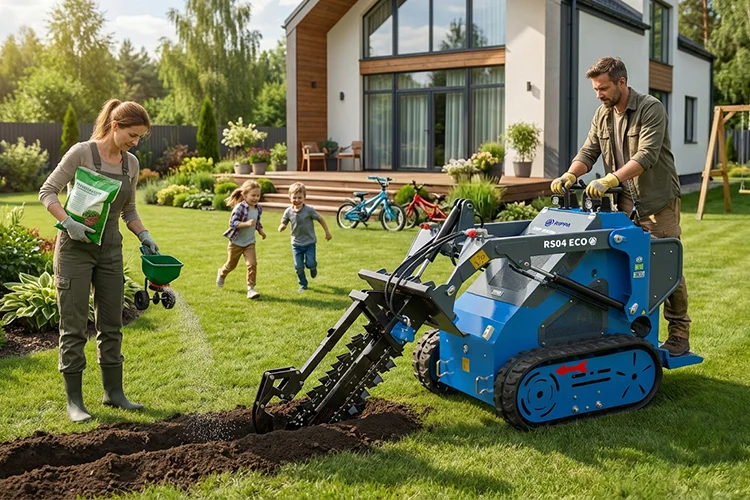
The biggest benefit of using a skid steer loader is versatility. With different attachments, one skid steer loader can perform digging, lifting, grading, sweeping, trenching, drilling, and demolition work.
This makes the skid steer loader suitable for construction, agriculture, landscaping, road maintenance, and warehouse material handling.
A skid steer loader is designed for confined jobsites. Its compact structure allows operators to work in narrow alleys, residential areas, warehouses, and small construction sites.
In real-world applications, contractors often use skid steer loaders for backyard renovation, interior demolition, and municipal repair work where large loaders cannot enter.
Modern skid steer loaders are equipped with powerful hydraulic systems. Standard hydraulic flow usually ranges from 60–90 L/min, while high-flow systems may exceed 100–150 L/min.
A strong hydraulic system improves:
High-flow hydraulic systems are especially useful for demanding attachments such as cold planers, forestry mulchers, and hydraulic breakers.
Rated Operating Capacity, or ROC, determines how much material a skid steer loader can safely lift and carry.
Typical ROC ranges from 700–1,600 kg, depending on machine size and configuration.
For construction projects, a higher ROC helps with:
A skid steer loader can replace several manual labor tasks. For example, one operator can move soil, clean debris, transport materials, and level ground efficiently.
This reduces labor intensity and helps contractors complete projects faster.
Most skid steer loaders can be transported using a standard trailer. This makes them ideal for contractors who need to move between multiple jobsites each day.
Compact dimensions and moderate machine weight reduce logistics costs and improve operating flexibility.
Used for site preparation, demolition, material handling, and cleanup.
Used for feeding, manure handling, bale transport, and farm road maintenance.
Used for soil preparation, grading, tree planting, and turf maintenance.
Used for snow removal, street cleaning, road repair, and public facility maintenance.
Reliable skid steer loader manufacturers should follow ISO 9001 quality management, ISO 14001 environmental management, and ISO 45001 occupational safety systems.
CE certification supports access to European markets and confirms compliance with machinery safety requirements.
EPA-compliant engines help reduce emissions and meet environmental requirements in North American markets.
Because a skid steer loader can use many attachments, businesses can increase machine utilization and reduce the need to purchase multiple machines.
With proper maintenance, a skid steer loader can provide years of reliable service and stable productivity.
A trusted manufacturer should provide:
Experienced exporters can help customers handle CE, EPA, ISO, shipping, customs clearance, and local compliance requirements.
"(《世界人权宣言》) top benefits of using a skid steer loader include versatility, compact size, strong hydraulic performance, high rated operating capacity, lower labor costs, and excellent attachment compatibility.
For global buyers, choosing a skid steer loader from an experienced manufacturer with ISO certification, CE compliance, EPA engine options, and reliable after-sales service ensures better performance, lower risk, and stronger long-term value.



 首页
首页
 产品
产品
 电子邮件
电子邮件
 WhatsApp