6 月 16, 2026
Choosing the right mini skid steer loader is essential for contractors, landscapers, farmers, and rental companies that need compact, powerful, and versatile equipment. A suitable mini skid steer loader can improve productivity, reduce labor costs, and support multiple jobsite applications with different attachments.
This guide explains how to choose a mini skid steer loader based on real working conditions, hydraulic performance, rated operating capacity, safety standards, and supplier reliability.
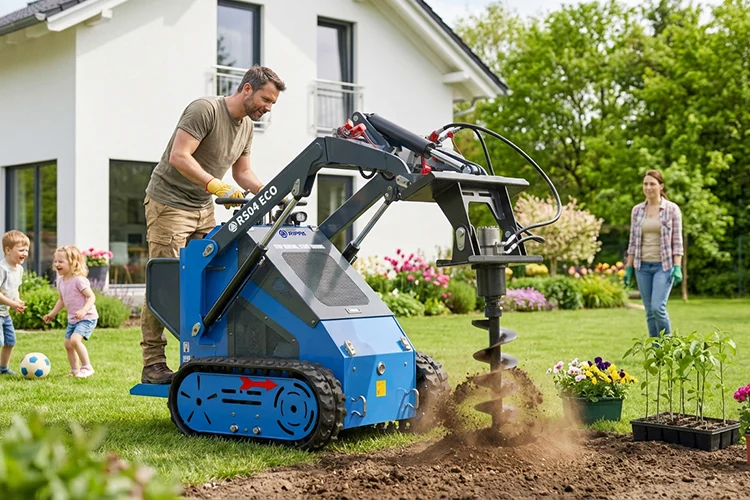
Before purchasing a mini skid steer loader, buyers should first evaluate their daily working environment.
A mini skid steer loader is widely used in:
For narrow spaces, backyard construction, or urban renovation projects, compact dimensions and easy maneuverability are especially important.
The hydraulic system directly determines attachment performance. A reliable mini skid steer loader should provide stable hydraulic pressure and sufficient auxiliary flow.
Typical hydraulic flow ranges from 40–80 L/min, depending on model size and engine power.
If you plan to use augers, trenchers, hydraulic breakers, sweepers, or brush cutters, always confirm hydraulic flow requirements before purchase.
A high-flow hydraulic system improves:
Rated Operating Capacity, often called ROC, refers to the safe working load of the machine. It is one of the most important specifications when choosing a mini skid steer loader.
Typical ROC categories include:
| Machine Type | Rated Operating Capacity |
|---|---|
| Light-Duty Mini Loader | 300–500 kg |
| Medium-Duty Mini Loader | 500–800 kg |
| Heavy-Duty Mini Loader | 800–1,200 kg |
For construction material handling, choose a mini skid steer loader with enough lifting capacity for pallets, bricks, gravel, and cement bags.
Most mini skid steer loaders use diesel or gasoline engines between 20HP and 50HP. Higher horsepower supports stronger breakout force, faster hydraulic response, and better performance with demanding attachments.
For international buyers, engine compliance is critical. EPA-compliant engines are important for the North American market, while EU Stage V engines are commonly required in Europe.
A professional manufacturer should follow international quality and safety systems such as:
CE certification is essential for European markets. It demonstrates that the mini skid steer loader meets machinery safety, electrical safety, and operator protection requirements.
A major advantage of a mini skid steer loader is its ability to use multiple attachments.
For contractors, choosing a machine with a universal quick coupler can greatly improve work efficiency.
A trustworthy supplier should have experience exporting mini skid steer loaders to different regions and understand local regulations, documentation, and certification requirements.
Reliable after-sales support should include:
To choose the right mini skid steer loader, buyers should evaluate hydraulic performance, rated operating capacity, engine compliance, attachment compatibility, and certification standards.
A high-quality mini skid steer loader supported by ISO, CE, and EPA-compliant systems can help contractors improve productivity, reduce operating costs, and achieve long-term return on investment.



 首页
首页
 产品
产品
 电子邮件
电子邮件
 WhatsApp