
Haz 18, 2026
The right mini excavator size depends on three things: where you need to work (access width and terrain), what you need to dig (depth and soil type), and how you’ll transport it (trailer and truck capacity). For most homeowners and small contractors, a 1.5–2.5 ton machine handles 80% of common projects. Larger is not always better – oversize machines cause more lawn damage and transport headaches.–
Key insight: A 1-2 ton mini excavator typically offers a maximum digging depth of around 5-7 feet. A 3-4 ton model can dig up to 10 feet.
Mini excavators are classified by operating weight, which determines their power, reach, and transportability.
| Size Class | Weight Range | En Uygun Olan |
|---|---|---|
| Micro (1.0–1.5 tons) | 1,000–1,500 kg | Garden work, small trenches, tight access |
| Compact (1.5–2.5 tons) | 1,500–2,500 kg | Driveways, drainage, stump removal |
| Midi (2.5–4.0 tons) | 2,500–4,000 kg | Ponds, foundations, land clearing |
| Standard (4.0–6.0 tons) | 4,000–6,000 kg | Commercial excavation, large projects |
The key difference between these classes isn’t just weight – it’s capability. Heavier machines offer more digging force and depth, but they also require larger trailers and trucks for transport, and they cause more ground damage on soft surfaces.
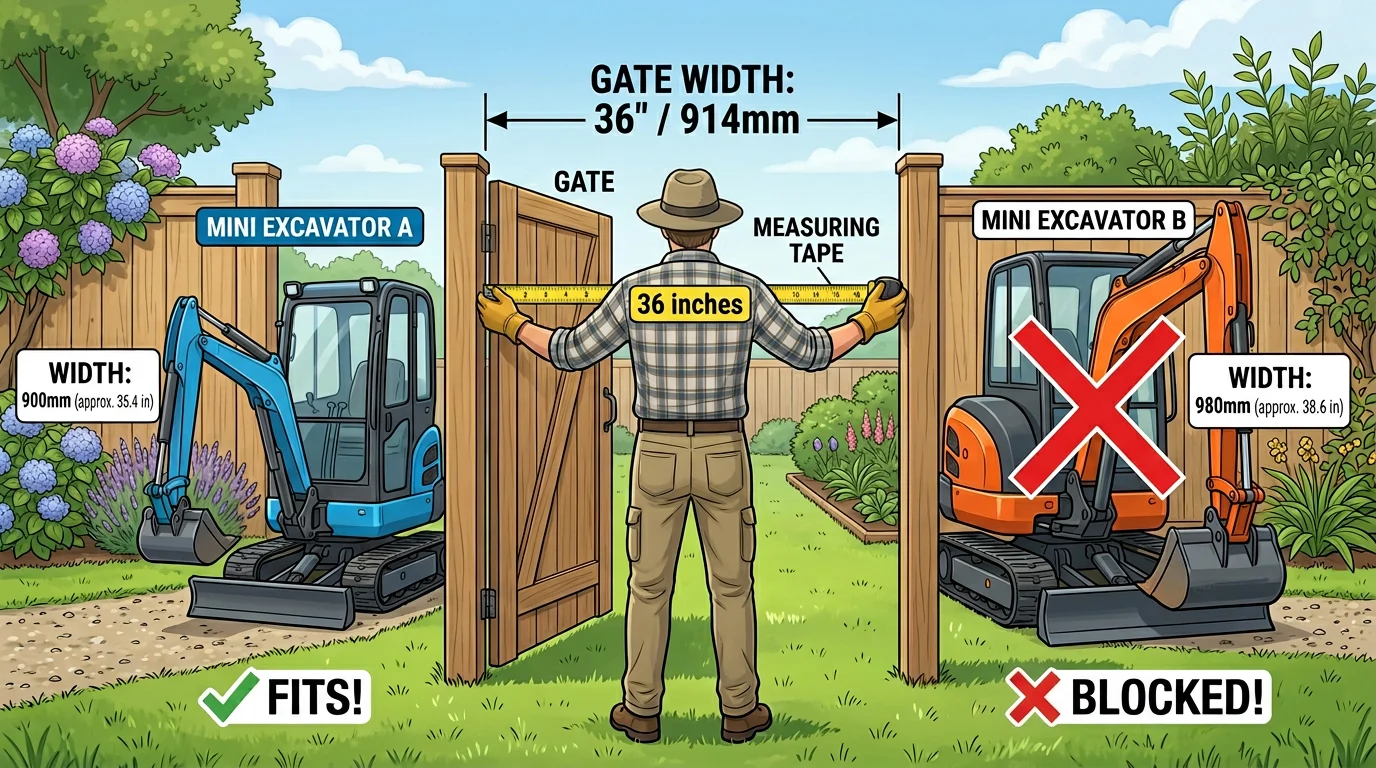
The number one mistake buyers make is choosing a machine that can’t dig deep enough for their hardest project. A machine that handles your toughest job will easily manage easier tasks.
| Proje | Minimum Digging Depth | Recommended Machine Size |
|---|---|---|
| Bahçe hendeği (sulama) | 12–18 inç | 1,0–1,3 ton |
| Fransız drenajı | 24–36 inç | 1,5–1,8 ton |
| Small stump (under 12″) | 18–24 inç | 1,5–1,8 ton |
| Medium stump (12–24″) | 24–36 inç | 1,8–2,5 ton |
| Kulübe temeli | 24–48 inç | 1,8–2,5 ton |
| Yüzme havuzu | 48–72 inç | 2,5–3,5 ton |
Rule of thumb: Rahat bir çalışma için, makinenizin maksimum kazma derinliği, ihtiyaç duyduğunuz en derin derinliği en az 6 inç aşmalıdır.
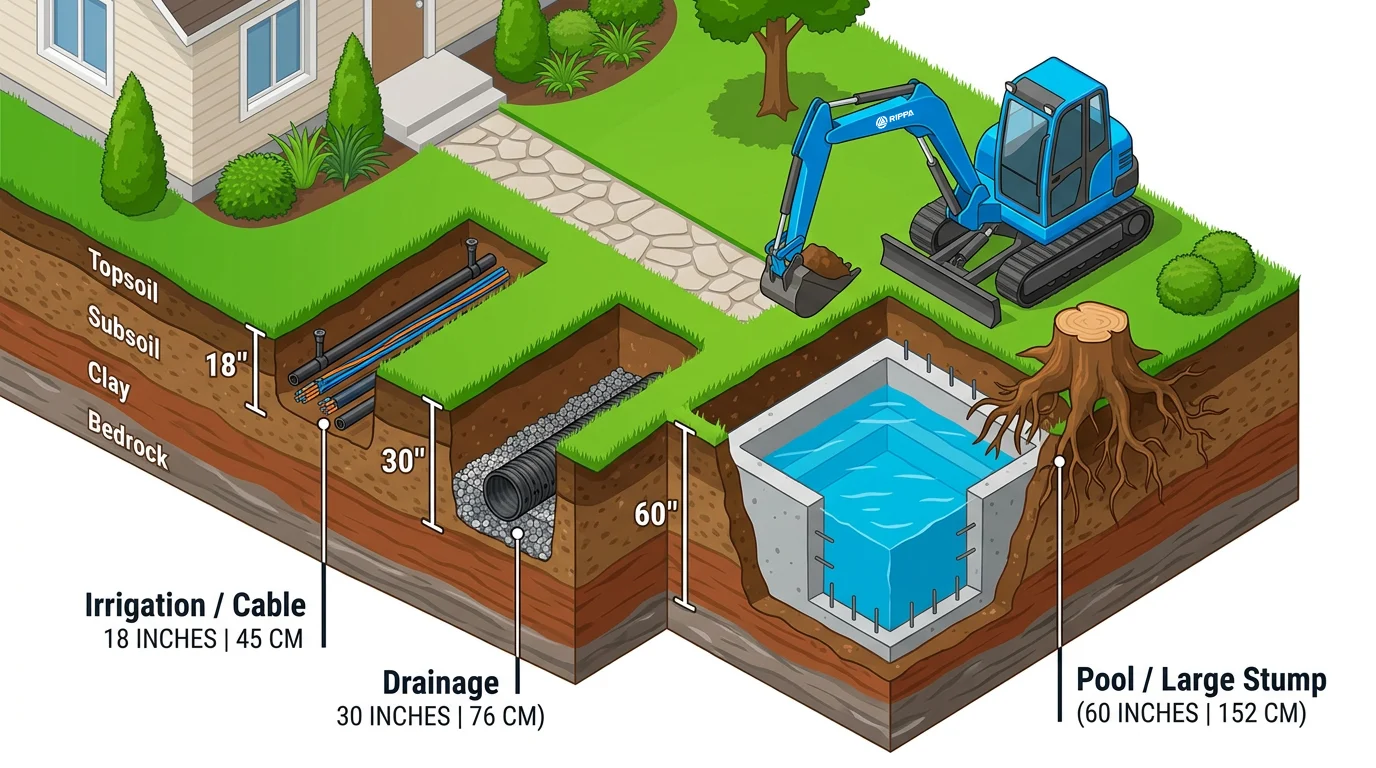
Standard residential gates are 36 inches (914 mm) wide. If your machine won’t fit, you can’t use it in your backyard. This is the most common mistake first-time buyers make
| Makine Genişliği | 36″’lık kapıya sığar mı? | What to Do |
|---|---|---|
| 917 mm'den az | Yes | Some micro excavators fit through standard gates |
| 950–980 mm | Tight | May need to remove hinges or a fence panel |
| 980 mm'den fazla | No | Requires permanent panel removal or alternative access |
Action step: Measure your narrowest gate opening before you look at any specifications. If you have a 36-inch gate, prioritize machines with transport width under 917 mm.
Tail swing design also matters: Zero tail swing machines rotate entirely within their track width, making them ideal for working near walls, fences, and buildings.
Before buying, verify your trailer and truck can handle the machine’s weight.
| Makine Ağırlığı | Römork Türü | Asgari Kamyon |
|---|---|---|
| 1.500 kg'dan az | Single-axle (3,500 lb) | Half-ton pickup |
| 1.500–2.200 kg | Tandem-axle (7,000 lb) | Half-ton or 3/4-ton |
| 2.200 kg'dan fazla | Ağır tandem (10.000+ lb) | 3/4-ton or 1-ton |
If you don’t own a trailer: Many owners choose dealer delivery once and keep the machine on their property permanently – often the most convenient and cost-effective solution.–
Kazma kuvveti (kN cinsinden ölçülür), makinenin sıkışmış toprağı, kili veya kökleri ne kadar kolay delip geçebileceğini belirler.
| Digging Force | Uygun Olduğu Yerler |
|---|---|
| 9–11 kN | Gevşek toprak, bahçe yatakları |
| 11–15 kN | Sıkışmış toprak, küçük kökler |
| 15–20 kN | Ağır kil, orta boy kütükler |
| 20+ kN | Kayalar, büyük kütükler, yıkım |
If you have clay or rocky soil: Choose a machine with at least 12 kN digging force. For regular stump removal, look for 15 kN or more.
| Model | Ağırlık | Kazma Derinliği | Width (min) | En Uygun Olan |
|---|---|---|---|---|
| R319 | 1.0 t | 1,56 m | 917 mm | Gate access, light landscaping |
| R13 | 1.3 t | 2,4 m | 950 mm | Zero tail swing, narrow spaces |
| R15 | 1.5 t | 2,5 m | 980 mm | Driveways, universal homeowner |
| R322L | 1.8 t | 2.52 m | 980 mm | Stump removal, truck loading |
| R18 | 1.8 t | 2.9 m | 1,100 mm | Heavy clearing, land clearing |
| R330 | 2.0 t | ~2.8 m | ~1,000 mm | Farms, large properties |
| R350 | 3.5 t | ~3.5 m | ~1,200 mm | Contractors, heavy excavation |
Owner data: 94% of RIPPA owners would recommend their machine to a neighbor. 98% of R319 owners report no major issues in the first 500 hours.
Q: What’s the best mini excavator size for a first-time buyer?
A: A 1.5–1.8 ton machine offers the best balance of power, transportability, and ease of use.
Q: How deep can a mini excavator dig?
A: A 1-2 ton model digs 5-7 feet. A 3-4 ton model digs up to 10 feet.–
Q: Do I need a special license to operate a mini excavator on my property?
A: No. For personal use on your own land, no license is required.
S: Bir mini ekskavatörün ömrü ne kadardır?
A: With proper maintenance, 8,000–12,000 hours (10-15 years for homeowners).
Q: What’s the most common mistake buyers make?
A: Not measuring their gate before buying. The second most common is buying too small for their hardest project.
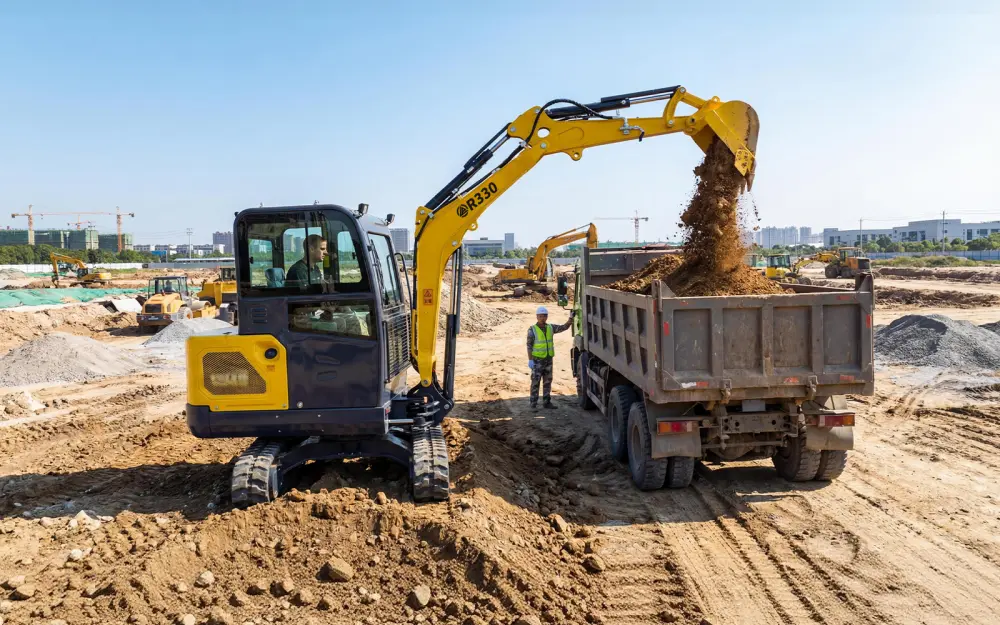
Choosing the right mini ekskavatör size comes down to measuring your gate, identifying your hardest project, and checking your transport setup. For most homeowners, a 1.5–1.8 ton machine with a Kubota engine is the sweet spot – enough power for real work without the headaches of oversize equipment.
Next step: Measure your gate, list your top three projects, and contact a reputable mini excavator manufacturer for a recommendation.


 Ev
Ev
 Ürünler
 E-posta
 WhatsApp