
2026 m. sausio 18 d.
The right mini excavator size depends on three things: where you need to work (access width and terrain), what you need to dig (depth and soil type), and how you’ll transport it (trailer and truck capacity). For most homeowners and small contractors, a 1.5–2.5 ton machine handles 80% of common projects. Larger is not always better – oversize machines cause more lawn damage and transport headaches.–
Key insight: A 1-2 ton mini excavator typically offers a maximum digging depth of around 5-7 feet. A 3-4 ton model can dig up to 10 feet.
Mini excavators are classified by operating weight, which determines their power, reach, and transportability.
| Size Class | Weight Range | Best For |
|---|---|---|
| Micro (1.0–1.5 tons) | 1,000–1,500 kg | Garden work, small trenches, tight access |
| Compact (1.5–2.5 tons) | 1,500–2,500 kg | Driveways, drainage, stump removal |
| Midi (2.5–4.0 tons) | 2,500–4,000 kg | Ponds, foundations, land clearing |
| Standard (4.0–6.0 tons) | 4,000–6,000 kg | Commercial excavation, large projects |
The key difference between these classes isn’t just weight – it’s capability. Heavier machines offer more digging force and depth, but they also require larger trailers and trucks for transport, and they cause more ground damage on soft surfaces.
The number one mistake buyers make is choosing a machine that can’t dig deep enough for their hardest project. A machine that handles your toughest job will easily manage easier tasks.
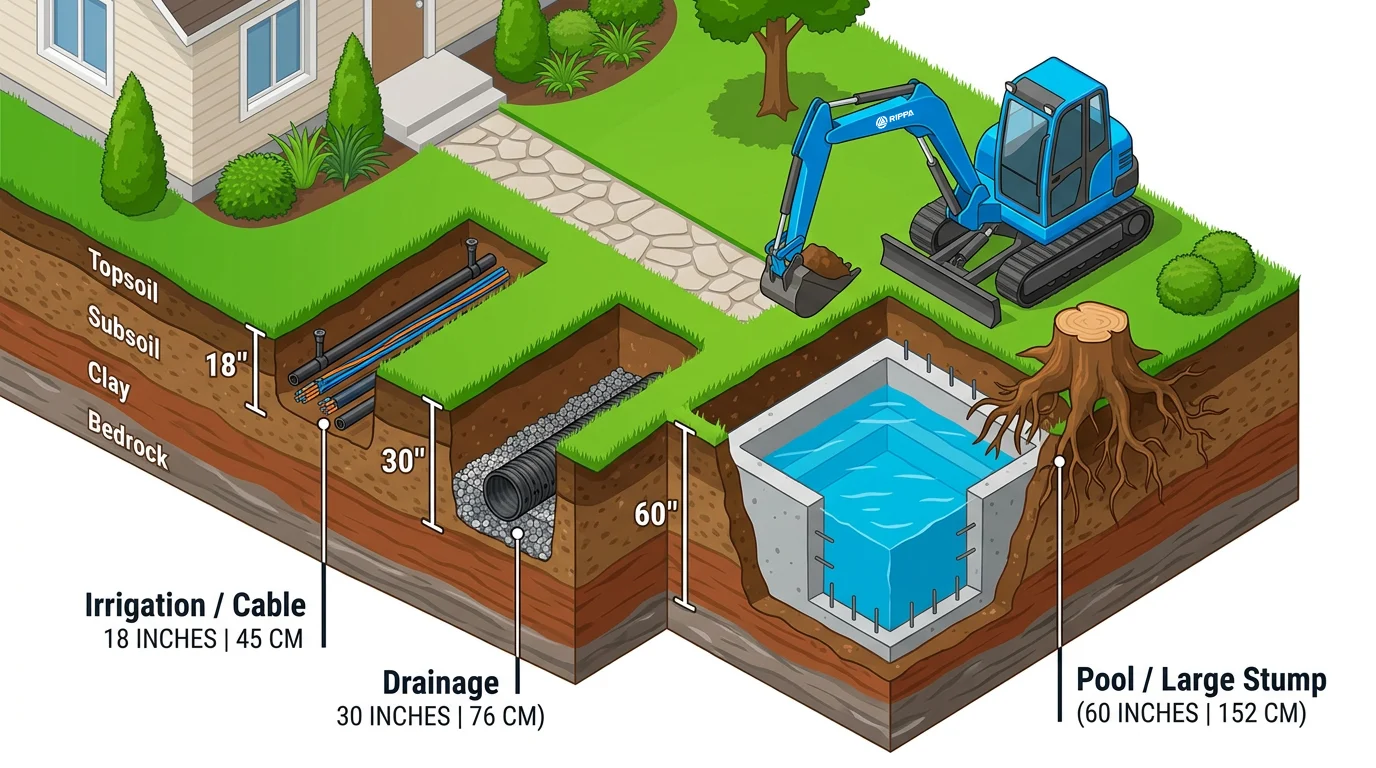
| Projektas | Minimum Digging Depth | Recommended Machine Size |
|---|---|---|
| Sodo tranšėja (drėkinimui) | 12–18 colių | 1,0–1,3 tonos |
| Prancūziškas drenažas | 24–36 colių | 1,5–1,8 tonos |
| Small stump (under 12″) | 18–24 coliai | 1,5–1,8 tonos |
| Medium stump (12–24″) | 24–36 colių | 1,8–2,5 tonos |
| Pamatai pavėsinei | 24–48 colių | 1,8–2,5 tonos |
| Baseinas | 48–72 coliai | 2,5–3,5 tonos |
Rule of thumb: Your machine’s maximum digging depth should exceed your deepest required depth by at least 6 inches for comfortable operation.
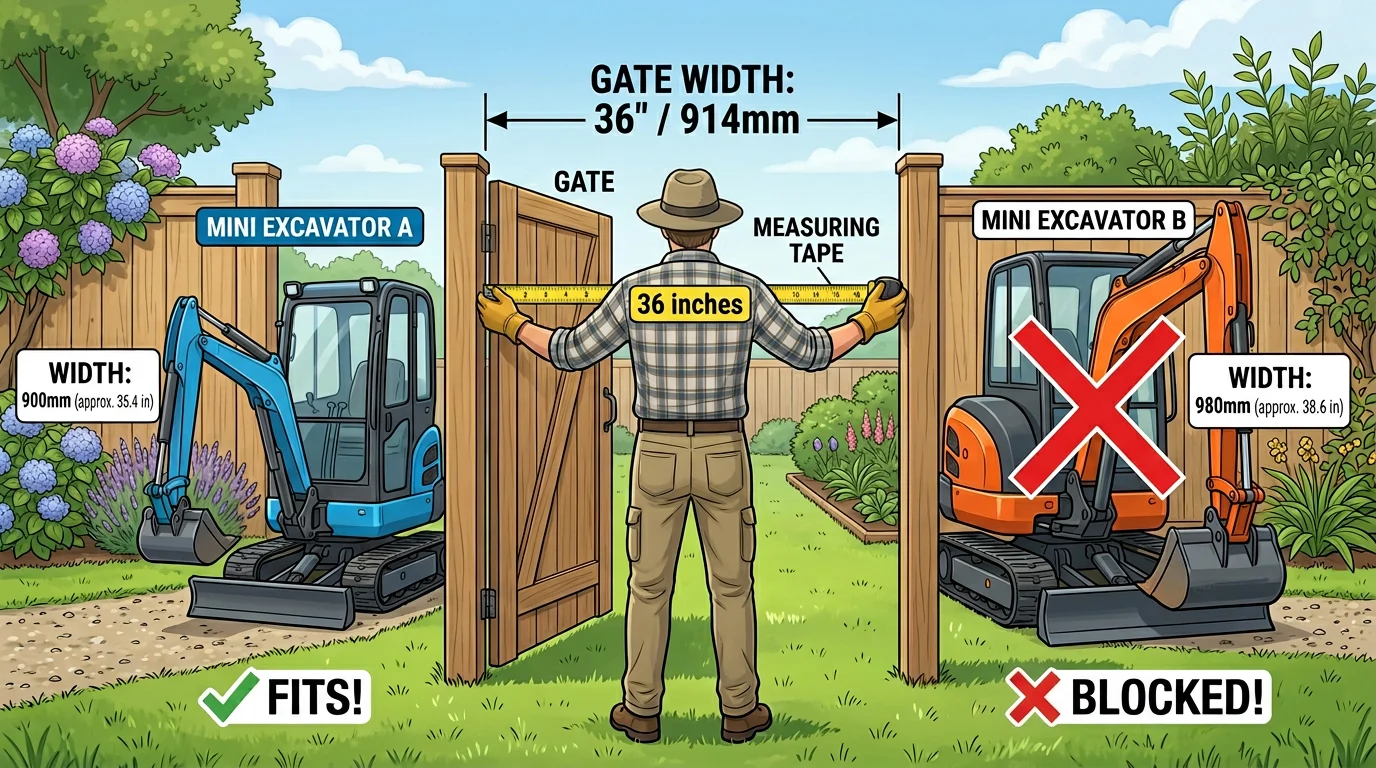
Standard residential gates are 36 inches (914 mm) wide. If your machine won’t fit, you can’t use it in your backyard. This is the most common mistake first-time buyers make
| Mašinos plotis | Tinka 36″ vartams? | Ką daryti |
|---|---|---|
| Mažiau nei 917 mm | Taip | Some micro excavators fit through standard gates |
| 950–980 mm | Glaudus | Gali prireikti nuimti vyrius arba tvoros plokštę |
| Daugiau nei 980 mm | Ne | Reikia nuimti skydelį visam laikui arba užtikrinti alternatyvią prieigą |
Action step: Measure your narrowest gate opening before you look at any specifications. If you have a 36-inch gate, prioritize machines with transport width under 917 mm.
Tail swing design also matters: Zero tail swing machines rotate entirely within their track width, making them ideal for working near walls, fences, and buildings.
Before buying, verify your trailer and truck can handle the machine’s weight.
| Mašinos svoris | Priekabos tipas | Mažiausias sunkvežimis |
|---|---|---|
| Mažiau nei 1 500 kg | Single-axle (3,500 lb) | Half-ton pickup |
| 1 500–2 200 kg | Tandem-axle (7,000 lb) | Half-ton or 3/4-ton |
| Daugiau nei 2 200 kg | Sunkusis tandemas (10 000+ lb) | 3/4-ton or 1-ton |
If you don’t own a trailer: Many owners choose dealer delivery once and keep the machine on their property permanently – often the most convenient and cost-effective solution.–
Digging force (measured in kN) determines how easily the machine breaks through compacted soil, clay, or roots.
| Kasinimo jėga | Tinka |
|---|---|
| 9–11 kN | Palaidi dirvožemis, gėlynai |
| 11–15 kN | Sutankintas dirvožemis, smulkios šaknys |
| 15–20 kN | Tankus molis, vidutinio dydžio kelmai |
| 20+ kN | Akmenys, dideli kelmai, griovimas |
If you have clay or rocky soil: Choose a machine with at least 12 kN digging force. For regular stump removal, look for 15 kN or more.
| Modelis | Weight | Digging Depth | Width (min) | Best For |
|---|---|---|---|---|
| R319 | 1.0 t | 1.56 m | 917 mm | Gate access, light landscaping |
| R13 | 1.3 t | 2.4 m | 950 mm | Zero tail swing, narrow spaces |
| R15 | 1.5 t | 2.5 m | 980 mm | Driveways, universal homeowner |
| R322L | 1.8 t | 2.52 m | 980 mm | Stump removal, truck loading |
| R18 | 1.8 t | 2.9 m | 1,100 mm | Heavy clearing, land clearing |
| R330 | 2.0 t | ~2.8 m | ~1,000 mm | Farms, large properties |
| R350 | 3.5 t | ~3.5 m | ~1,200 mm | Contractors, heavy excavation |
Owner data: 94% of RIPPA owners would recommend their machine to a neighbor. 98% of R319 owners report no major issues in the first 500 hours.
Q: What’s the best mini excavator size for a first-time buyer?
A: A 1.5–1.8 ton machine offers the best balance of power, transportability, and ease of use.
Q: How deep can a mini excavator dig?
A: A 1-2 ton model digs 5-7 feet. A 3-4 ton model digs up to 10 feet.–
Q: Do I need a special license to operate a mini excavator on my property?
A: No. For personal use on your own land, no license is required.
Klausimas: Kiek laiko tarnauja mini ekskavatorius?
A: With proper maintenance, 8,000–12,000 hours (10-15 years for homeowners).
Q: What’s the most common mistake buyers make?
A: Not measuring their gate before buying. The second most common is buying too small for their hardest project.
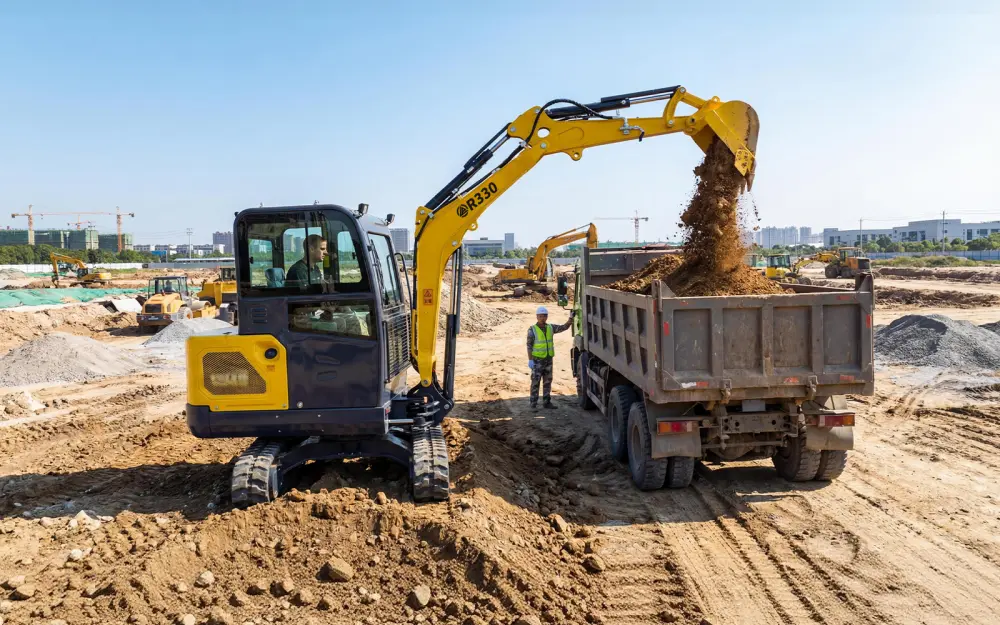
Choosing the right mini excavator size comes down to measuring your gate, identifying your hardest project, and checking your transport setup. For most homeowners, a 1.5–1.8 ton machine with a Kubota engine is the sweet spot – enough power for real work without the headaches of oversize equipment.
Kitas žingsnis: Measure your gate, list your top three projects, and contact a reputable mini excavator manufacturer for a recommendation.


 Pagrindinis
 Produktai
 El. paštas
 "WhatsApp"