
мај 22, 2026
The undercarriage is one of the most expensive components to replace – typically 1,500–3,000 for a full set of tracks, rollers, and sprockets. Proper maintenance extends life significantly. Key tasks: daily visual inspection for cuts, missing lugs, and debris; weekly track tension check (10–15 mm sag at mid-point); regular cleaning to remove packed mud and rocks; and early replacement of worn components before they damage others. With proper care, rubber tracks can last 1,500–2,500 hours; steel tracks longer.
Owner data: Neglected undercarriages are the #1 cause of unexpected downtime for mini excavator owners after hydraulic issues.
The undercarriage supports the entire machine and absorbs tremendous abuse. Neglect leads to expensive failures:
| Component | Replacement Cost | Failure Consequence |
|---|---|---|
| Rubber tracks (pair) | 1,500–3,000 | Machine immobile |
| Sprockets (pair) | 500–1,000 | Premature track wear |
| Rollers (each) | 100–300 | Track derailment, uneven wear |
| Idlers | 300–600 | Track tension loss, derailment |
| Final drive motor | 2,000–4,000 | Complete loss of drive |
| Функција | Rubber Tracks | Steel Tracks |
|---|---|---|
| Best for | Turf, pavement, landscaping | Rock, demolition, forestry |
| Притисак на тло | Lower – lawn‑friendly | Higher – can damage surfaces |
| Ride comfort | Smoother | Rougher |
| Noise | Quieter | Louder |
| Wear life | 1,500–2,500 hours | 3,000–5,000+ hours |
| Цена | умерен | Више |
| Repairability | Replace entire track | Can replace individual pads |
Most mini excavators use rubber tracks – they offer the best balance of traction, ground protection, and ride comfort for residential and landscaping use.
Proper track tension is critical. Too tight causes excessive wear and power loss. Too loose allows derailment.
How to check tension (rubber tracks):
Park on level ground
Raise the track off the ground using the blade or boom
Measure sag at the mid-point between sprocket and idler
Correct sag is 10–15 mm (0.4–0.6 inches) for most mini excavators
How to adjust tension:
Most machines have a grease fitting on the track adjuster
Add grease to tighten tracks
Grease fittings, then loosen the relief valve to release pressure
| Tension Problem | Симптом | Consequence |
|---|---|---|
| Too tight | Excessive vibration, hard rolling | Premature wear, power loss |
| Too loose | Track sagging, slapping | Derailment risk, sprocket jump |
| Uneven | Machine pulls to one side | Alignment issues |
Check tension weekly – especially after working in mud or snow where tracks may have stretched or contracted.
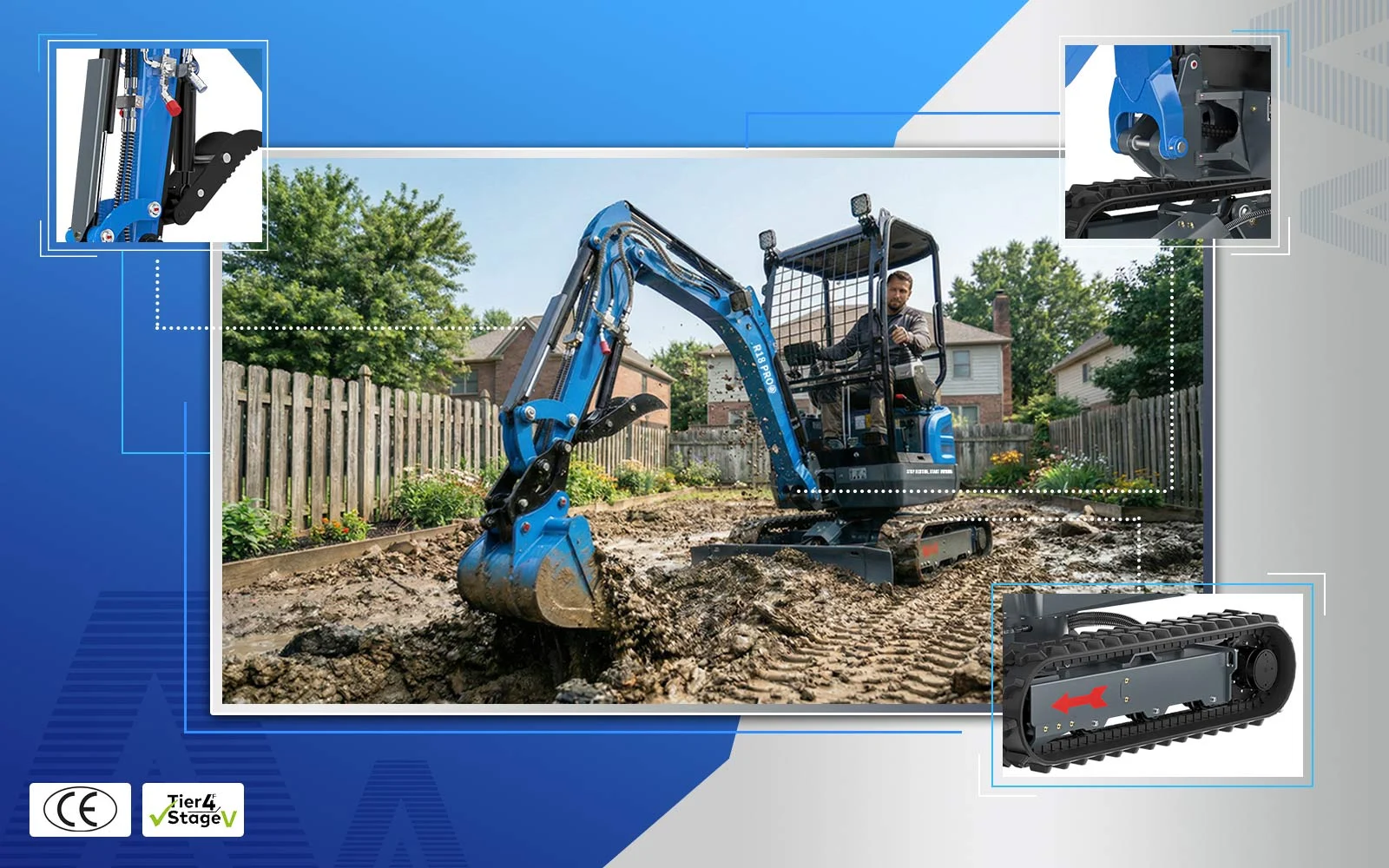
Daily (5 minutes):
Look for cuts, missing chunks, or embedded debris
Check for loose or missing track hardware
Note any unusual wear patterns
Remove rocks wedged between track and sprocket
Weekly (15 minutes):
Measure track tension (10–15 mm sag)
Inspect sprocket teeth for wear (should be uniform, not hooked)
Check rollers – spin by hand, look for flat spots or seized bearings
Inspect idlers for damage or leaking seals
Clean undercarriage thoroughly
When to replace tracks:
Wear indicators flush with surface (most rubber tracks have built‑in indicators)
Cuts deeper than 50% of track thickness
Missing lugs affecting traction
Cords visible through rubber
Stretched beyond adjustment range
Sprockets drive the tracks. Worn sprockets accelerate track wear.
Good sprocket:
Teeth are uniform in shape
No “hooking” (wear on one side of teeth)
Smooth engagement with track
Worn sprocket:
Teeth hooked or sharpened
Uneven wear pattern
Track skipping or jumping
Sprocket replacement interval: Typically every 1,500–2,500 hours – often replaced with tracks. Never install new tracks on worn sprockets – the new tracks will wear rapidly.

Track rollers: Support the track between sprocket and idler.
What to check:
Spin freely by hand – no grinding or roughness
No leaks (sealed rollers contain oil)
Even wear across the roller face
Flanges not worn through
Idlers: Guide the track at the front and rear.
What to check:
No damage or cracking
Proper alignment
Seals intact, no leaks
Smooth rotation
Dirt, mud, and rocks are the enemy of undercarriage components.
After each use in muddy or rocky conditions:
Pressure wash undercarriage thoroughly
Pay special attention to areas between tracks and sprockets
Remove packed material from between track links
Don’t forget the area around the final drive
Warning: Don’t pressure wash seals directly – high pressure can force water past seals into bearings. Use wide spray pattern and keep nozzle moving.
| Good Habit | Why It Helps |
|---|---|
| Avoid sharp turns on pavement | Reduces track abrasion |
| Keep tracks clean | Prevents abrasive wear from packed debris |
| Work on firm ground when possible | Reduces track flex and stress |
| Avoid spinning tracks | Spinning accelerates wear dramatically |
| Reduce travel speed on rough ground | Less impact on rollers and idlers |
| Park on level ground | Reduces tension on tracks overnight |
One hour of spinning tracks on concrete can wear as much as 100 hours of normal operation.
| Симптом | Вероватан узрок |
|---|---|
| Machine pulls to one side | Uneven track tension, damaged drive motor |
| Track comes off repeatedly | Loose tension, worn sprocket, damaged idler |
| Vibration while traveling | Debris in undercarriage, flat spot on roller |
| Unusual noise from undercarriage | Failed roller bearing, debris caught |
| Неједнака хабања стазе | Alignment issue, worn sprocket |
| Sagging track | Stretched beyond adjustment, tension loss |

Q: How long do rubber tracks last on a мини багер?
A: Typically 1,500–2,500 hours for homeowner use. Rocky terrain wears faster; soft soil and turf are gentler.
Q: Can rubber tracks be repaired?
A: Small cuts can be glued with specialized track repair kits. Large cuts or missing lugs require replacement.
Q: How often should I check track tension?
A: Weekly, and after any heavy use in mud or snow. Tension changes with temperature and wear.
Q: What causes tracks to come off?
A: Loose tension (most common), worn sprockets, debris packed in undercarriage, or operating on uneven ground.
Q: Can I replace tracks myself?
A: Yes, with proper tools and a safe jacking method. It’s a 2‑3 hour job for a DIY owner. Many dealers offer mobile service.
Q: What’s the most common undercarriage mistake?
A: Running tracks too loose. Loose tracks cause derailment and accelerate wear on sprockets and rollers. Check tension weekly.
The undercarriage is expensive to replace but cheap to maintain. A 5‑minute daily walk‑around, weekly tension check, and regular cleaning can double the life of your tracks, sprockets, and rollers. Most undercarriage failures are preventable. The key is consistency – check tension, clean after muddy jobs, and replace worn components before they damage others.
Next step: Check your track tension today. If you don’t know the last time your undercarriage was inspected, schedule a professional inspection with your dealer.


 Почетна
 Производи
 Е-пошта
 ВхатсАпп