
Jun 15, 2026
Choose a mini excavator if: You need to dig in tight spaces, access backyards through gates (as narrow as 36 inches), or do precision work near structures. Mini excavators are purpose-built for digging and offer superior maneuverability. They can also use a variety of attachments including thumbs, augers, and grapples.
Choose a backhoe if: You already own a tractor and need occasional digging capability, or you need to dig deep (10+ feet) and also need a loader for material handling. A backhoe attachment for an existing tractor costs much less than a dedicated excavator.
The bottom line: For most homeowners and landscapers, a mini excavator is the better choice – it’s more maneuverable, easier to transport, and specifically designed for digging. Backhoes make sense if you already own the tractor and only dig occasionally.
| Machine Type | Typical Digging Depth | Can Dig a Pool? |
|---|---|---|
| Mini excavator (1–2 tons) | 6–9 feet | Small pools only |
| Mini excavator (2–3 tons) | 9–12 feet | Yes – most residential pools |
| Mini excavator (3–5 tons) | 12–15 feet | Yes – any size |
| Backhoe (tractor-mounted) | 8–12 feet | Yes, but slower |
| Compact backhoe (dedicated) | 10–14 feet | Yes |
Key difference: Both can dig deep enough for most residential projects. The difference is maneuverability and ease of use. A dedicated mini excavator is faster and more precise for digging tasks than a tractor-mounted backhoe.
| Značilnost | Mini bager | Backhoe |
|---|---|---|
| Turns within its own length? | Yes (zero tail swing models) | No |
| Fits through 36″ gate? | Some models (R319) | No – too wide |
| Working near walls/fences | Easy (zero tail swing) | Difficult – tail swing |
| Prevozna širina | As narrow as 917 mm | 1,800–2,400 mm |
| Transport weight | 1,000–5,000 kg | 3,000–8,000 kg |
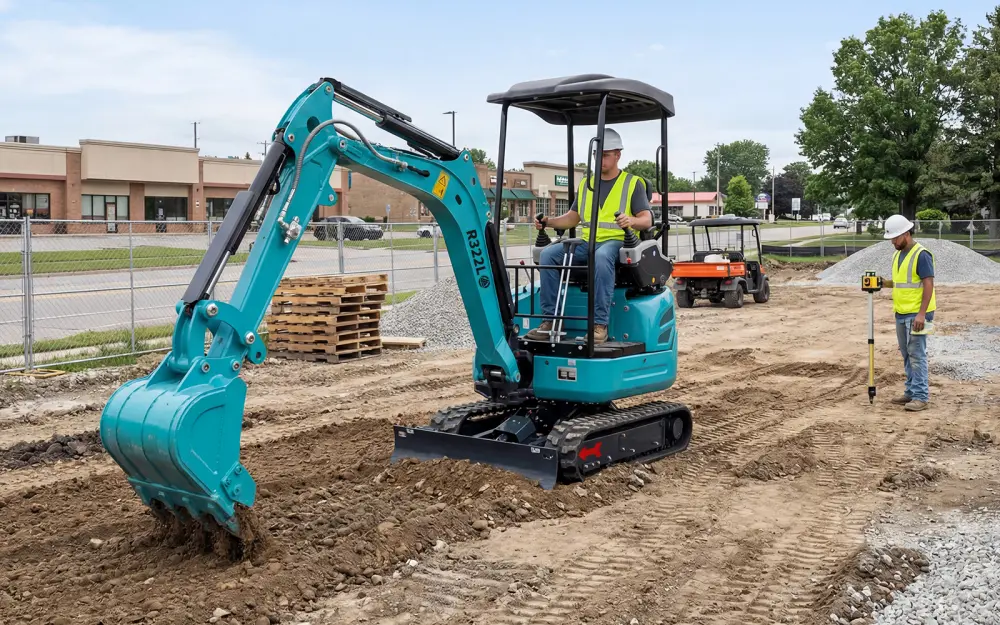
Key difference: Mini excavators are designed for tight spaces. Backhoes are wider, heavier, and harder to transport. For backyard access, a mini excavator is the clear winner. A micro excavator like the RIPPA R319 can fit through a standard garden gate – a backhoe cannot.
| Machine Type | New Price Range | Used Price Range |
|---|---|---|
| Mini excavator (1.5-2t) | $22,000–$32,000 | $14,000–$22,000 |
| Tractor-mounted backhoe attachment | $7,000–$12,000 | $4,000–$8,000 |
| Dedicated compact backhoe | $40,000–$70,000 | $20,000–$40,000 |
If you already own a tractor: A backhoe attachment costs $7,000–$12,000 – cheaper than a mini excavator. But you lose maneuverability and can’t access tight spaces.
If you don’t own a tractor: A mini excavator is much cheaper than buying a tractor + backhoe attachment ($22k vs $40k+). This makes a mini excavator the more economical choice for most homeowners.
| Attachment | Mini bager | Backhoe |
|---|---|---|
| Vedro | ✓ | ✓ |
| Grading blade | ✓ | Limited |
| Hydraulic thumb | ✓ | No |
| Auger | ✓ | No (tractor has PTO auger) |
| Grapple | ✓ | No |
| Vilice za palete | No | Yes (tractor has loader) |
| Mower | No | Yes (tractor) |
| Snow blower | Limited | Yes (tractor PTO) |
Key difference: A backhoe is part of a tractor – if you already need a tractor for mowing, tilling, or other farm tasks, adding a backhoe attachment gives you digging capability. A mini excavator is a dedicated digging machine that doesn’t mow grass, but it can use a much wider range of digging-specific attachments (thumbs, grapples, specialized buckets).
| Primary Task | Recommended Machine |
|---|---|
| Backyard pool excavation | Mini excavator (access through gate) |
| Drainage trenches | Mini excavator (precision) |
| Stump removal | Either |
| Foundation digging | Mini excavator (tight spaces) |
| Land clearing | Either |
| Tractor work + occasional digging | Tractor with backhoe attachment |
| Mostly mowing, sometimes digging | Tractor with backhoe |
| Only digging, no other tasks | Mini excavator |
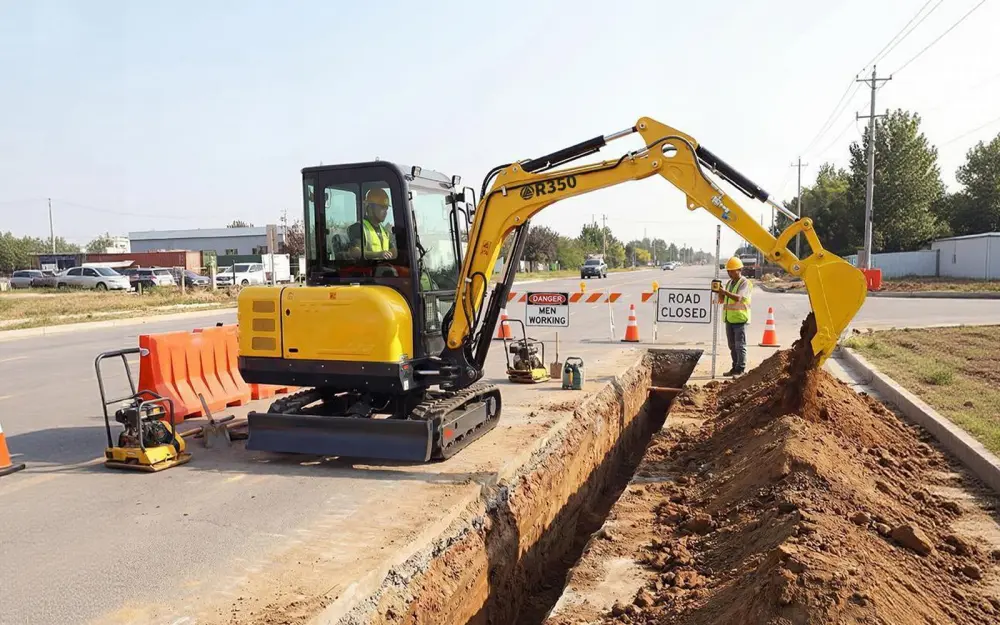
For homeowners: A mini excavator is usually the better choice – it’s designed specifically for digging, fits through gates, and costs less than a tractor + backhoe. A 1.5-1.8 ton model like the RIPPA R15 or R322L is ideal for most residential projects.
For farmers or large property owners: If you already have a tractor or need tractor capabilities (mowing, tilling, loader work), a backhoe attachment may make more economic sense. You get two functions from one machine.
Q: Can a backhoe dig as well as an excavator?
A: In open areas, yes. But backhoes lack the maneuverability of excavators. They can’t work as close to walls or in tight spaces. An excavator’s boom design allows it to dig parallel to walls – a backhoe cannot.
Q: Which is easier to transport?
A: Mini excavator. It’s lighter and narrower. You can tow a 1.5-ton excavator with a half-ton pickup and single-axle trailer. A tractor with backhoe requires a larger truck and trailer due to higher weight and width.
Q: Which has better resale value?
A: Both hold value well. Premium brand excavators (Kubota) and tractors (John Deere, Kubota) have excellent resale. Value brand excavators (RIPPA) offer lower initial cost but also lower resale dollars. However, the lower purchase price often means lower net cost over the ownership period.
Q: Can I use a backhoe attachment on any tractor?
A: No. You need a tractor with a 3-point hitch and sufficient hydraulic flow. Most subcompact and compact tractors (25-40 HP) can run a backhoe attachment. Check your tractor’s specifications before buying.
Q: Which is better for a first-time buyer?
A: A mini excavator – it’s purpose-built, easier to learn, and more maneuverable. Start with a 1.5-1.8 ton model like the RIPPA R15 or R322L. The learning curve is gentler, and you’ll be able to access tighter spaces around your property.
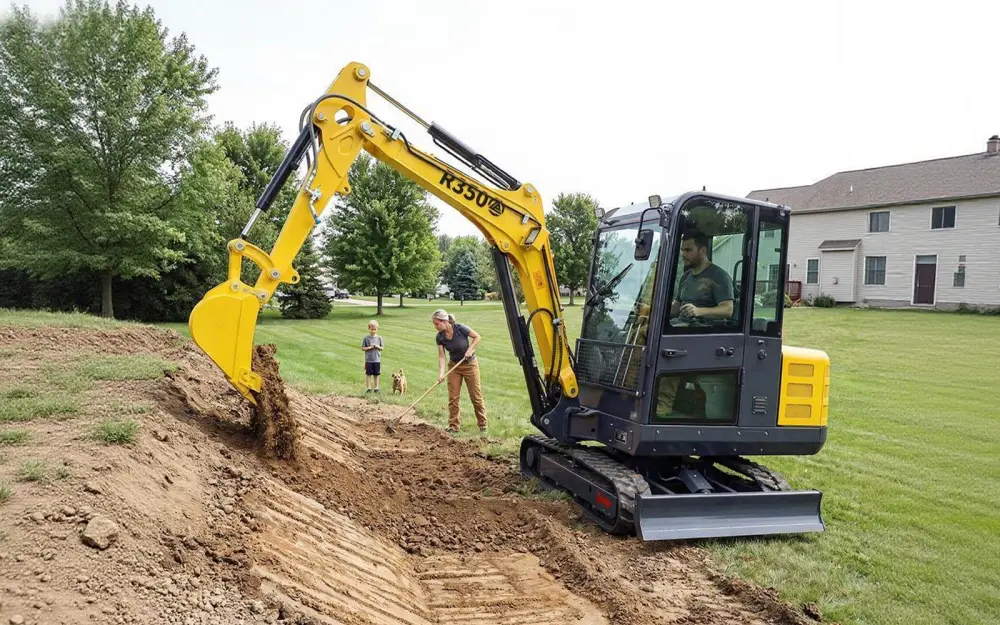
The choice between a mini excavator and a backhoe depends on what else you need to do. If you only need digging capability and want to access backyards, a mini excavator is the clear winner – it’s maneuverable, easy to transport, and purpose-built for the job. If you already own a tractor or need tractor capabilities (mowing, tilling, loader work), adding a backhoe attachment may be more economical.
For most homeowners, a mini bager is the better choice. It will fit through your gate, work in tight spaces, and handle 80% of property tasks. A 1.5-1.8 ton model offers the best balance of power, portability, and price.
Next step: List your top three tasks. If digging is #1, get an excavator. If you also need to mow 5 acres, consider a tractor with backhoe. Then rent the other machine for occasional specialized tasks.


 Domov
Domov
 Izdelki
 E-pošta
 WhatsApp