
mei 21, 2026
| Attachment | Cost Range | ROI | Essential For |
|---|---|---|---|
| Hydraulic quick coupler | 800–1,500 | 1–2 months | Every owner – enables all other attachments |
| Grading blade | 500–1,000 | 1–3 projects | Driveway repair, leveling |
| Hydraulic thumb | 800–2,000 | 2–5 projects | Material handling, stumps |
| Auger | 1,200–2,500 | 3–8 projects | Tree planting, fencing |
| Grapple | 1,500–4,000 | 3–10 projects | Brush, logs, debris |
| Hydraulic breaker | 3,000–6,000 | 1–3 jobs | Demolition, rock |
The essential starter set: Quick coupler, grading blade, and hydraulic thumb enable 80% of common homeowner tasks.
1. Why Attachments Matter
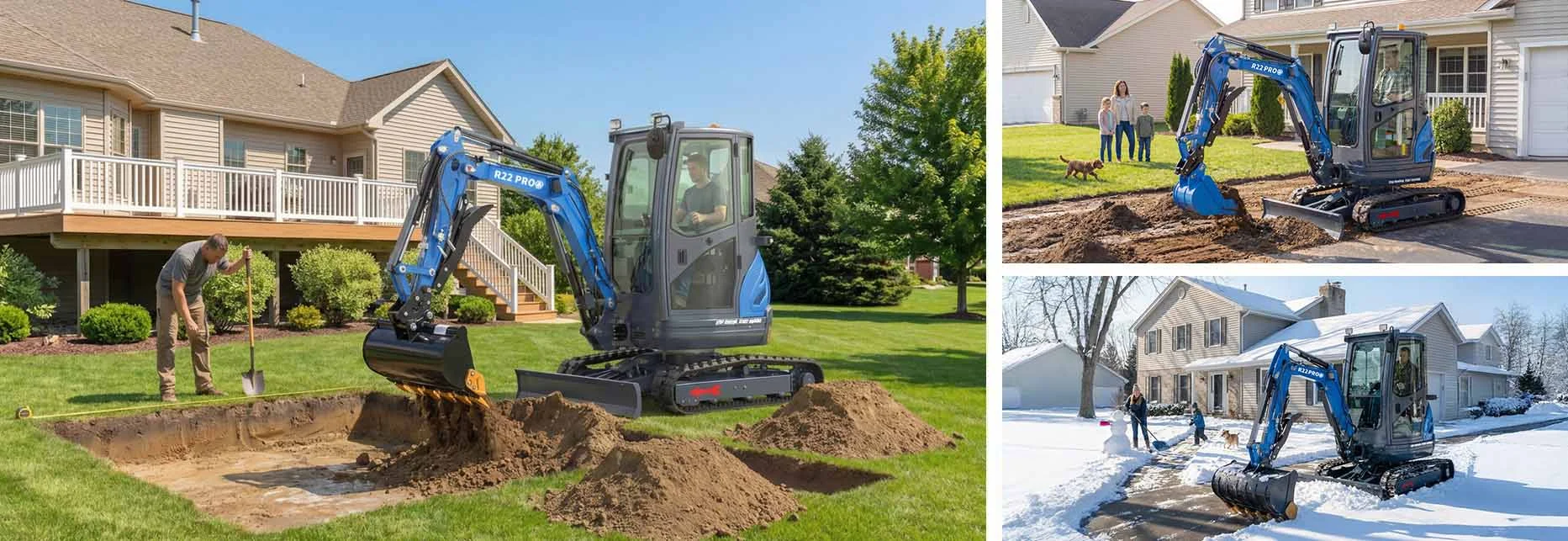
A mini excavator with only a bucket is like a pickup truck with no bed – useful, but dramatically limited. The right attachments can transform your machine into a multi‑functional property management system capable of handling dozens of different tasks.
The versatility multiplier:
1 attachment (bucket only): 10‑15 basic tasks
3 attachments (bucket + blade + thumb): 40‑50 common tasks
5+ attachments: 80+ specialized tasks
According to owner surveys, the average RIPPA owner uses 4‑5 different attachments regularly, with many reporting that attachments pay for themselves within 2‑3 projects.
Hydraulic quick coupler:
Change time: 10‑30 seconds from the cab
No tools required
Typical cost: 800–1,500 (standard on most RIPPA models)
Productivity impact:
| Scenario | Manual Changes | Hydraulic Quick Coupler |
|---|---|---|
| 4 changes per day | 60 minutes | 2 minutes |
| 100 changes per year | 100 hours | 3.3 hours |
| Labor cost impact | 30/hr) | $100 |
ROI analysis: For any operation requiring regular attachment changes, a hydraulic quick coupler pays for itself within months through labor savings alone.
RIPPA advantage: Hydraulic quick coupler is standard on R15 and above, saving owners 1,500‑3,000 compared to brands where it’s optional.
What it does: Levels and smooths surfaces – driveways, building pads, landscaping areas.
Why essential: After digging, most projects require finishing work. A grading blade creates professional results that a bucket alone cannot achieve.
| Machine Size | Recommended Blade Width |
|---|---|
| R319/R13 | 48–60 inches |
| R15/R322L/R18 | 60–72 inches |
| R330/R22/R32 | 72–84 inches |
| R350/R57 | 84–96 inches |
ROI: One driveway repair can pay for the blade. Owners report average payback in 1‑3 projects.
Blade angles:
Straight (0°): Pushes material straight ahead, good for spreading
Angled (10‑30°): Pushes material to one side, good for creating crown
Tilted: Cuts deeper on one side, good for ditch cleaning
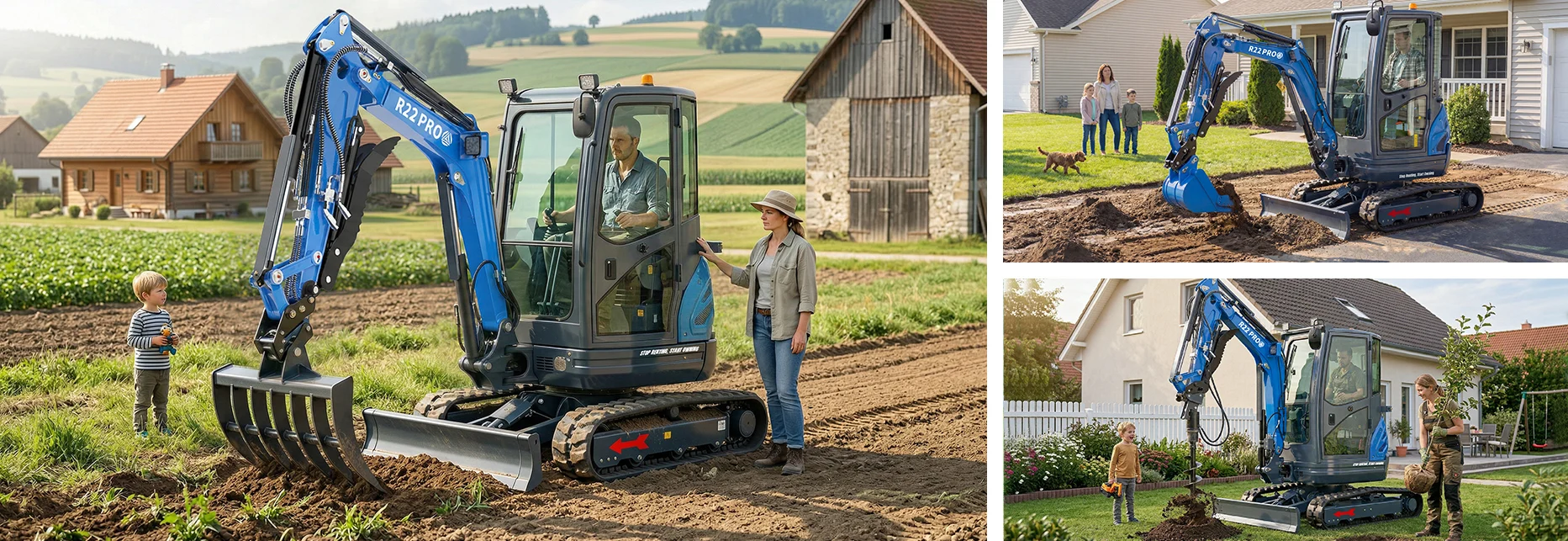
What it does: Provides an opposable “finger” for the bucket, enabling precise handling of irregular objects – rocks, logs, debris, demolition materials.
Why essential: Without a thumb, your bucket can only scoop and dump. With it, you pick up, place, and manipulate objects with precision.
Types:
| Type | Operation | Kosten | Meest geschikt voor |
|---|---|---|---|
| Fixed thumb | Manual adjustment | 800–1,200 | Occasional use, budget |
| Hydraulic thumb | Cab‑controlled | 1,500–2,500 | Frequent use, versatility |
Applications:
Rock and boulder placement
Log and timber handling
Demolition debris sorting
Stump removal assistance
Owner feedback: “The hydraulic thumb is my most‑used attachment after the bucket. I use it for everything – clearing brush, moving rocks, handling logs. It turns the excavator into a giant hand.” – RIPPA R15 owner
What it does: Drills holes for fence posts, trees, signs, and footings.
Why it matters: Hand‑digging post holes is back‑breaking labor. An auger attachment creates perfect holes in minutes.
| Machine | Max Auger Diameter | Ideal For |
|---|---|---|
| R319/R13 | 12 inches | Light fencing, small trees |
| R15/R322L/R18 | 24 inches | Standard fencing, landscaping |
| R330/R22/R32 | 36 inches | Large posts, commercial |
| R350/R57 | 36+ inches | Heavy‑duty applications |
Typical cost: 1,200–3,000 including auger bits
ROI: A 100‑post fence project would take days manually; with an auger, it’s a weekend project. Owners report payback in 2‑5 fencing jobs.
Auger types:
Standard flighting: For most soil conditions
Rock auger: Tungsten‑carbide teeth for rocky ground
Extension: For deeper holes
What it does: Grabs and moves logs, brush, rocks, and debris.
Why it matters: Clearing property without a grapple means piling material by hand or with bucket – slow and inefficient.
Types:
| Type | Meest geschikt voor | Kosten | Machine Size |
|---|---|---|---|
| Root grapple | Brush, small debris, rocks | 1,500–2,500 | R15+ |
| Forestry grapple | Logs, stumps, heavy clearing | 2,500–4,000 | R18+ |
| Demolition grapple | Construction debris | 3,000–5,000 | R22+ |
Applications:
Land clearing
Storm cleanup
Firewood processing
Debris loading
Owner feedback: “I bought a grapple for my R18 specifically for clearing 5 acres of overgrown land. It’s incredible – I can grab and pile brush faster than I ever imagined. Worth every penny.” – RIPPA R18 owner
What it does: Breaks concrete, asphalt, rock, and frozen ground.
Why it matters: When you encounter material too hard to dig, a breaker is the solution.
| Machine | Breaker Class | Impact Energy | Applications |
|---|---|---|---|
| R13/R15 | Light | 200–400 ft‑lb | Small concrete, thin asphalt |
| R18/R22 | Medium | 400–800 ft‑lb | Foundations, moderate rock |
| R32/R57 | Heavy | 800–1,500+ ft‑lb | Commercial demo, large rock |
Typical cost: 3,000–8,000
ROI: One demolition project can pay for the breaker. Owners report payback in 1‑3 jobs.
Operation tips:
Keep breaker perpendicular to surface
Apply moderate down pressure
Let breaker do work – don’t force
15‑30 seconds per spot, then reposition
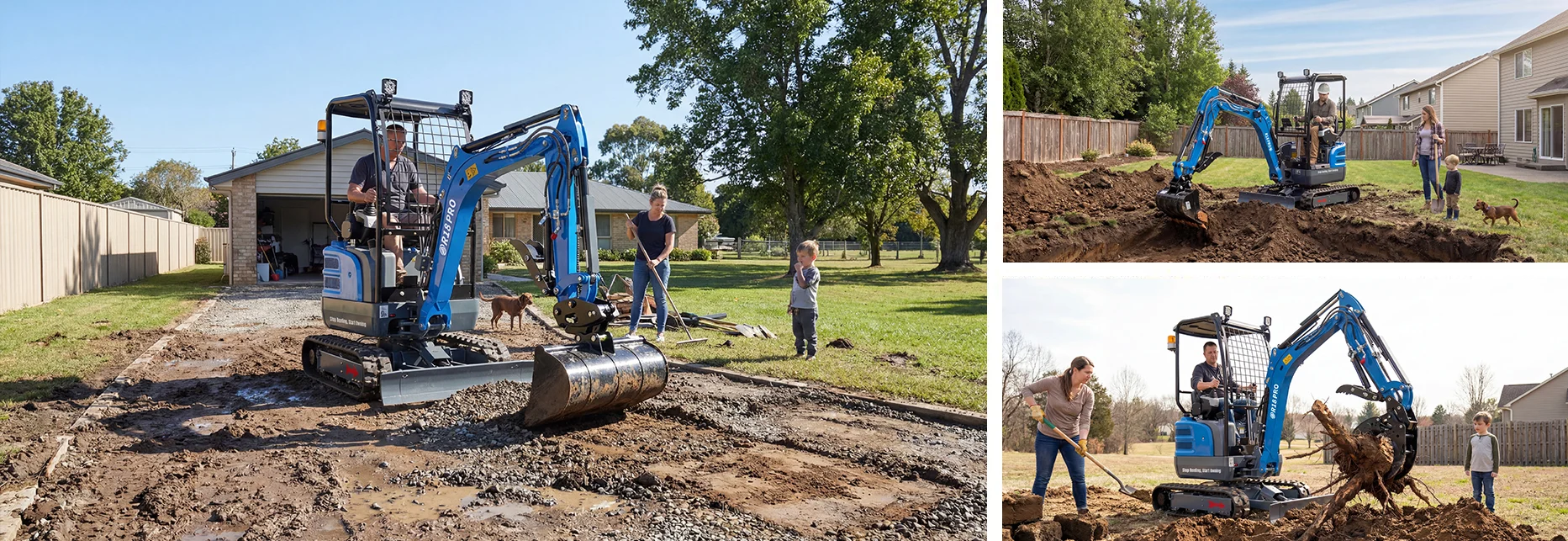
Landscaping and Gardening:
Bed preparation – Soil rake, grading blade
Tree planting – Auger
Debris clearing – Grapple, thumb
Final grading – Grading bucket, grading blade
Driveway and Hardscape:
Gravel regrading – Grading blade
Base preparation – Grading blade, compactor
Paver installation – Grading blade
Edging – Trenching bucket
Tree and Stump Work:
Stump removal – Thumb, ripper
Tree planting – Auger
Brush clearing – Grapple
Log moving – Grapple, thumb
Demolition:
Concrete breaking – Breaker
Debris sorting – Grapple, thumb
Loading – Standard bucket
| Attachment | Typical Cost | Contractor Cost Avoided | Payback Period |
|---|---|---|---|
| Quick coupler | $1,500 | 500–1,000/year | 1–2 years |
| Grading blade | $800 | 2,000–5,000 | 3–8 months |
| Hydraulic thumb | $2,000 | 3,000–6,000 | 4–12 months |
| Auger (set) | $2,500 | 2,000–8,000 | 3–18 months |
| Grapple | $3,000 | 3,000–10,000 | 3–18 months |
| Breaker | $4,000 | 2,000–15,000 | 3–24 months |
Q: Can I use attachments from other brands?
A: Yes, with proper adapters. Verify hydraulic flow and pressure requirements, coupler mounting pattern, and weight relative to machine capacity.
Q: How do I store attachments?
A: Clean after each use, store indoors or under cover when possible, grease moving parts regularly, organize for easy access. Consider attachment racks for efficient storage.
Q: What’s the most profitable attachment for contractors?
A: Based on contractor surveys, the hydraulic breaker typically generates the highest ROI for construction‑focused operators, while grapples are most valuable for land clearing and forestry work.
Q: Do attachments affect machine warranty?
A: Using approved attachments with proper hydraulic matching does not void warranty. However, overloading the hydraulic system with too‑large attachments can cause damage not covered by warranty. Always consult your dealer before purchasing major attachments.
Q: What’s the best attachment for a first‑time buyer?
A: Grading blade – it’s the most used and fastest payback. Then a hydraulic thumb, then an auger if you have fencing or planting projects.
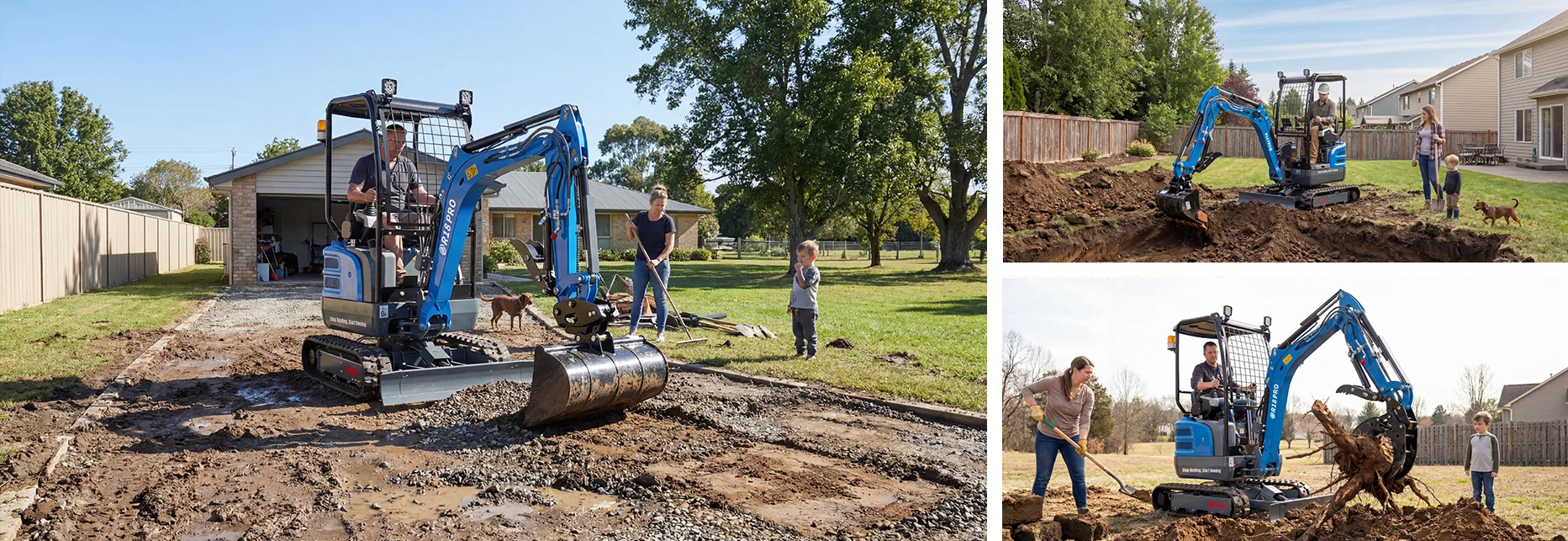
Attachments transform a minigraafmachine from a single‑purpose digging machine into a versatile property management system capable of handling dozens of tasks. The right attachment selection can multiply a machine’s value by 3‑5 times, enabling owners to tackle projects that would otherwise require multiple specialized machines or expensive contractors.
For most owners, starting with a quick coupler, grading blade, and hydraulic thumb provides maximum versatility at minimum investment. Additional attachments can be added as specific project needs arise, with each attachment typically paying for itself within 1‑3 projects.
Next step: Contact your RIPPA dealer for attachment recommendations specific to your applications. Many dealers offer bundled pricing on attachment packages.


 Home
Home
 Producten
 E-mail
 WhatsApp