
mrt 10, 2026
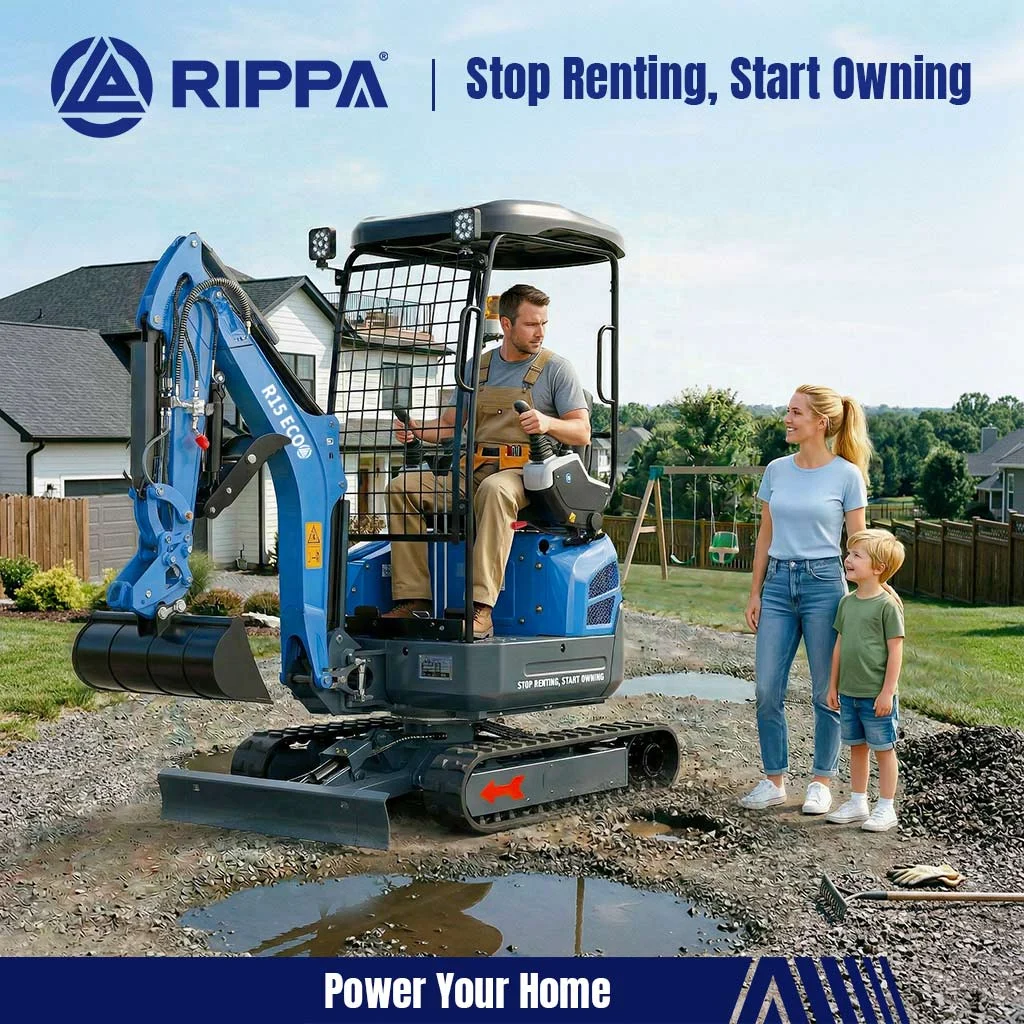
Yes, and it’s one of the most common and rewarding projects for RIPPA owners. A RIPPA R15, equipped with a grading blade, can completely restore a gravel or asphalt driveway—removing ruts, establishing proper drainage, and creating a smooth, professional-looking surface.
Why the R15? RIPPA’s own lineup designates the R15 as the “Driveway Repair King” because its 1.5-ton weight, 10.4 kN digging force, and telescopic tracks provide the ideal balance of power, stability, and maneuverability for this specific task. Heavier machines may overcompact the surface; lighter machines lack the breakout force to scarify compacted gravel.
Typical cost savings: Homeowners report saving $1,500–$3,500 per driveway repair compared to hiring contractors, with the machine often paying for itself after just one or two projects.
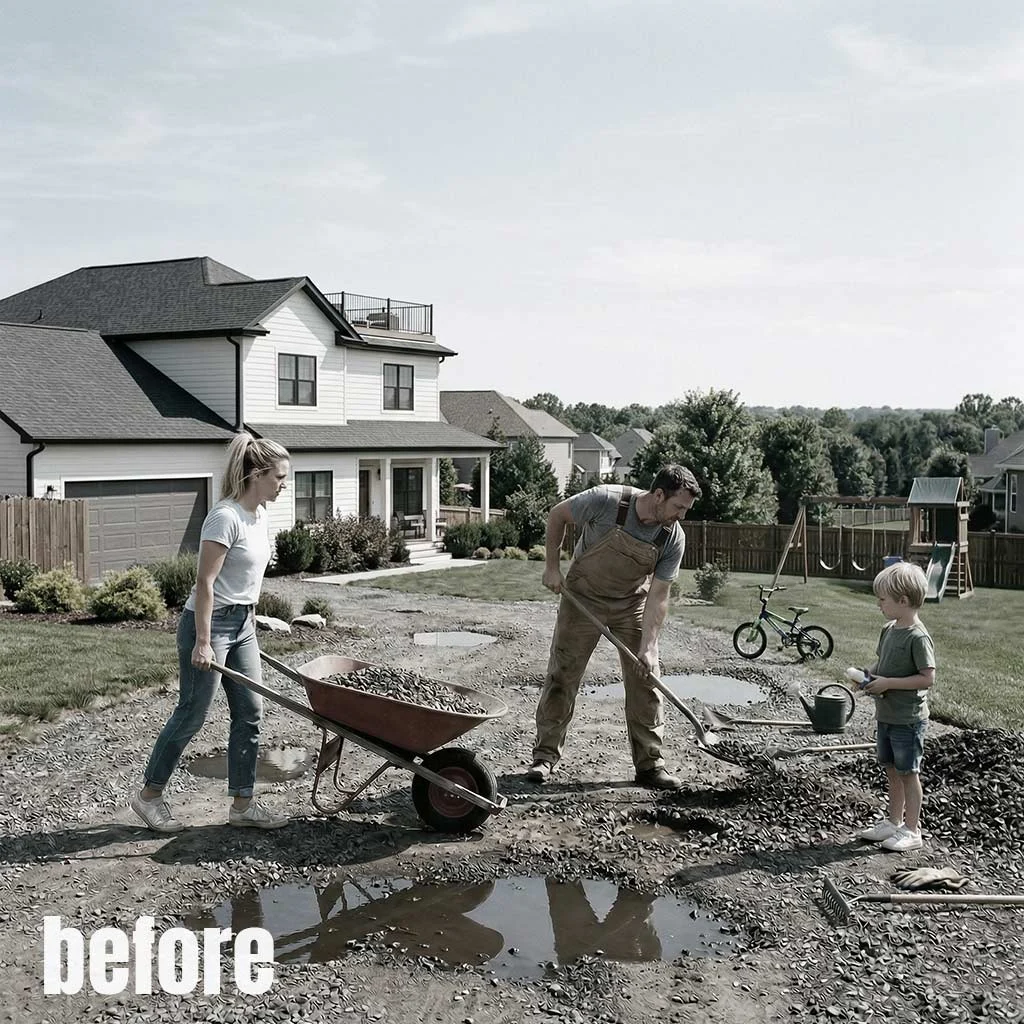
Driveways endure constant abuse—vehicle traffic, freeze-thaw cycles, rain erosion, and UV degradation. Common issues include:
| Problem | Cause | Consequence |
|---|---|---|
| Ruts | Repeated tire traffic in same path | Water pooling, vehicle damage |
| Potholes | Water infiltration, freeze-thaw | Unsightly, hazardous |
| Washboarding | Loose material, poor grading | Uncomfortable driving |
| Crown loss | Erosion, improper drainage | Water runs toward structures |
| Edge deterioration | Lack of containment | Widening cracks, weed invasion |
According to the National Asphalt Pavement Association, a well-maintained driveway lasts 20–30 years, while neglected ones may need replacement in 10–15 years. Routine grading every 2–3 years is the most cost-effective maintenance.
| Driveway Type | Average Contractor Cost (100 ft) | Typical Schedule |
|---|---|---|
| Gravel regrade | $800–$1,500 | 2–6 weeks wait |
| Asphalt patch & level | $1,200–$2,500 | 3–8 weeks wait |
| Full gravel replacement | $2,500–$5,000 | 3–6 weeks wait |
| Asphalt overlay | $4,000–$8,000 | 4–10 weeks wait |
Data source: HomeAdvisor 2025 industry report
Beyond the cost, homeowners face the frustration of contractor scheduling—small driveway jobs are often deprioritized for larger commercial projects, leading to long delays exactly when repairs are needed most.
| Specification | R15 Value | Benefit for Driveway Work |
|---|---|---|
| Operating Weight | 1,500 kg (3,307 lbs) | Heavy enough to scarify, light enough to avoid overcompaction |
| Digging Force | 10.4 kN | Breaks up compacted gravel and small asphalt cracks |
| Track Width | 980–1,300 mm (38–51 in) | Narrow for access, wide for stability |
| Hydraulic Quick Coupler | Standard | 30-second attachment changes |
| Grading Blade Compatibility | Up to 72 inches | Matches common driveway widths |
| Warranty | 5 years / 5,000 hours | Peace of mind for the long term |
The R15’s load-sensing hydraulic system provides the precise control needed for fine grading—unlike larger machines that can be jerky and over-powerful for finish work.
| Attachment | Purpose | Typical Cost |
|---|---|---|
| Grading blade (60–72″) | Final leveling and crowning | $500–$800 |
| Standard digging bucket | Scarifying and material moving | Included |
| Hydraulic thumb (optional) | Moving large rocks/debris | $800–$1,500 |
| Compaction wheel (optional) | Compacting base material | $2,000–$3,500 |
Most owners find that a grading blade and the standard bucket are sufficient for 90% of driveway repairs.
Mark underground utilities – Call 811 or your local service at least 3 days before digging.
Assess drainage needs – Determine the required slope (typically 1–2% away from structures).
Gather materials – Order fresh gravel or cold patch asphalt if needed.
Clear the driveway – Remove vehicles, debris, and large obstacles.
If the driveway has ruts or compacted areas, use the bucket to loosen the top layer:
Set the bucket teeth to penetrate 2–4 inches
Work in passes parallel to the driveway length
Break up any large clumps
Pro tip: For asphalt driveways, scarifying is usually unnecessary unless there are localized failures. Focus on patching cracks and low spots with cold patch.
If the driveway is low or missing gravel:
Use the bucket to spread fresh material evenly
Aim for 2–3 inches of new gravel for a typical refresh
For asphalt, fill potholes and depressions with cold patch, compacting each layer
Switch to the grading blade for rough shaping:
Set the blade at a slight angle to push material sideways
Make passes from the center toward the edges to create crown
Work slowly, checking slope with a level or laser
Crown formation: The center of the driveway should be 1–2 inches higher than the edges to shed water.
Reduce blade angle for final passes
Adjust blade height for precise leveling
Check frequently with a straightedge
If you have a compaction wheel attachment, compact the surface in sections. Otherwise, drive over the area repeatedly with the machine’s tracks to achieve moderate compaction.
Use the bucket to remove excess material from edges and spread it where needed. Tidy up the shoulders to prevent future erosion.
Owner: Mark, Ohio
Driveway: 200-foot gravel, severely rutted
Machine: RIPPA R15 with 60″ grading blade
Time: 6 hours over one weekend
Materials: 5 tons fresh gravel ($400)
Contractor quote avoided: $2,800
Net savings: $2,400
“I’d been quoted $2,800 and a six-week wait. With my R15, I did it myself in a weekend. The result is better than any contractor ever did—I could control every inch. The machine paid for itself on this one job.”
Owner: Susan, Pennsylvania
Driveway: 150-foot asphalt with multiple potholes and edge cracks
Machine: RIPPA R15 with grading blade
Time: 4 hours
Materials: Cold patch asphalt ($300)
Contractor quote avoided: $1,500
Net savings: $1,200
“I was nervous about using an excavator on asphalt, but the R15’s precise controls let me fill potholes without damaging the surrounding surface. It looks professional.”
Owner: Tom, Colorado
Project: 300-foot new gravel driveway on raw land
Machine: RIPPA R15 (rented, then purchased)
Time: 3 weekends
Materials: 20 tons gravel ($1,600)
Contractor quote avoided: $7,500
Net savings: $5,900
“I rented an R15 for the first weekend to see if I could do it. After two days, I was hooked. I bought one and finished the driveway, then used it for a dozen other projects. Best investment I ever made.”
| Cost Factor | Year 1 | Year 2 | Year 3 | Year 4 | Year 5 | 5-Year Total |
|---|---|---|---|---|---|---|
| Machine purchase (R15) | $XX,000 | $0 | $0 | $0 | $0 | $XX,000 |
| Grading blade | $600 | $0 | $0 | $0 | $0 | $600 |
| Fuel (per driveway repair) | $30 | $30 | $30 | $30 | $30 | $150 |
| Maintenance (oil, filters) | $150 | $150 | $200 | $200 | $250 | $950 |
| Total cost | $XX,780 | $180 | $230 | $230 | $280 | $XX,700 |
| Contractor cost avoided (2 driveways/year) | $3,000 | $3,000 | $3,000 | $3,000 | $3,000 | $15,000 |
| Net savings | -$XX,780 + $3,000 | +$2,820 | +$2,770 | +$2,770 | +$2,720 | ~$XX,300 |
Note: Actual payback period depends on local contractor rates and frequency of repairs. Most owners break even in 12–24 months.
A: Yes. The R15 works well on both. For asphalt, avoid aggressive scarifying; focus on patching and leveling with cold patch. The grading blade can smooth the surface without damaging the base.
A: The R15 can handle it—just allow more time. For very long driveways, consider breaking the work into sections over multiple weekends. The machine’s fuel capacity (approx. 1.3–1.5 L/h) means you can work all day on a tank.
A: The R15 weighs about 1,500 kg (3,307 lbs). You’ll need a tandem-axle trailer rated for at least 2,500 kg and a half-ton or larger truck. Many owners arrange dealer delivery for the first time and then keep the machine on their property.
A: The R15 has a 30% gradeability (about 16.7°). It can handle most residential slopes, but extreme hills may require extra caution. Always operate across the slope, not up and down, to minimize tip-over risk.
A: Yes. Many RIPPA dealers offer attachment rentals. However, a grading blade is relatively inexpensive and useful for many other projects (snow removal, landscaping), so buying is often worthwhile.
A: RIPPA machines are designed with low-noise operation and meet strict emission standards. Let neighbors know your schedule—they may even appreciate the improved look of your driveway. Offer to do their edging afterward to build goodwill.
A: Signs include:
Water pooling after rain
Ruts deep enough to affect vehicle handling
Visible crowning loss (water runs toward garage)
Potholes or washboarding
More than 3–5 years since last maintenance
Always wear seatbelt – ROPS/FOPS cab protects you in case of tip.
Check for underground utilities – Before any digging.
Maintain safe distance from edges – Driveway shoulders may be soft.
Use spotters when backing – Especially near traffic.
Keep children and pets away – Designate a safe zone.
Follow manufacturer guidelines – Read the operator’s manual.
| Feature | Benefit |
|---|---|
| Pilot-operated controls | Smooth, precise grading even for novices |
| Telescopic tracks | Narrow for gate access, wide for stability |
| Hydraulic quick coupler | Switch between bucket and blade in 30 seconds |
| 5-year warranty | Protection during payback period |
| 200+ video tutorials | Learn techniques from experienced owners |
| Dealer network | Local support when needed |
A RIPPA R15 mini excavator transforms driveway maintenance from an expensive, frustrating ordeal into a satisfying, cost-effective DIY project. With the right techniques and a grading blade, homeowners can achieve professional results while saving thousands of dollars. The machine pays for itself quickly and remains available for countless other projects—from trenching to snow removal.
Whether your driveway is gravel or asphalt, the R15 gives you the power to take control of your property’s curb appeal and functionality. Join the thousands of homeowners who have discovered that driveway repair is not just a chore—it’s the first step toward a more self-sufficient lifestyle.
Ready to fix your driveway yourself? Visit the RIPPA website to explore the R15 and find a dealer near you. Most dealers offer demonstrations—see the machine in action before you buy. Get started today.





 Home
Home
 Producten
 E-mail
 WhatsApp