
jún 05, 2026
Choosing the right wheel loader is essential for maximizing productivity, reducing operating costs, and improving jobsite efficiency. Wheel loaders are available in several sizes and configurations, each designed for specific applications ranging from landscaping and agriculture to construction, quarrying, and mining.
Understanding the different types of wheel loaders helps contractors and fleet managers select equipment that matches their workload, material type, and operating environment.
In this guide, we’ll explore the major categories of wheel loaders and their ideal applications.
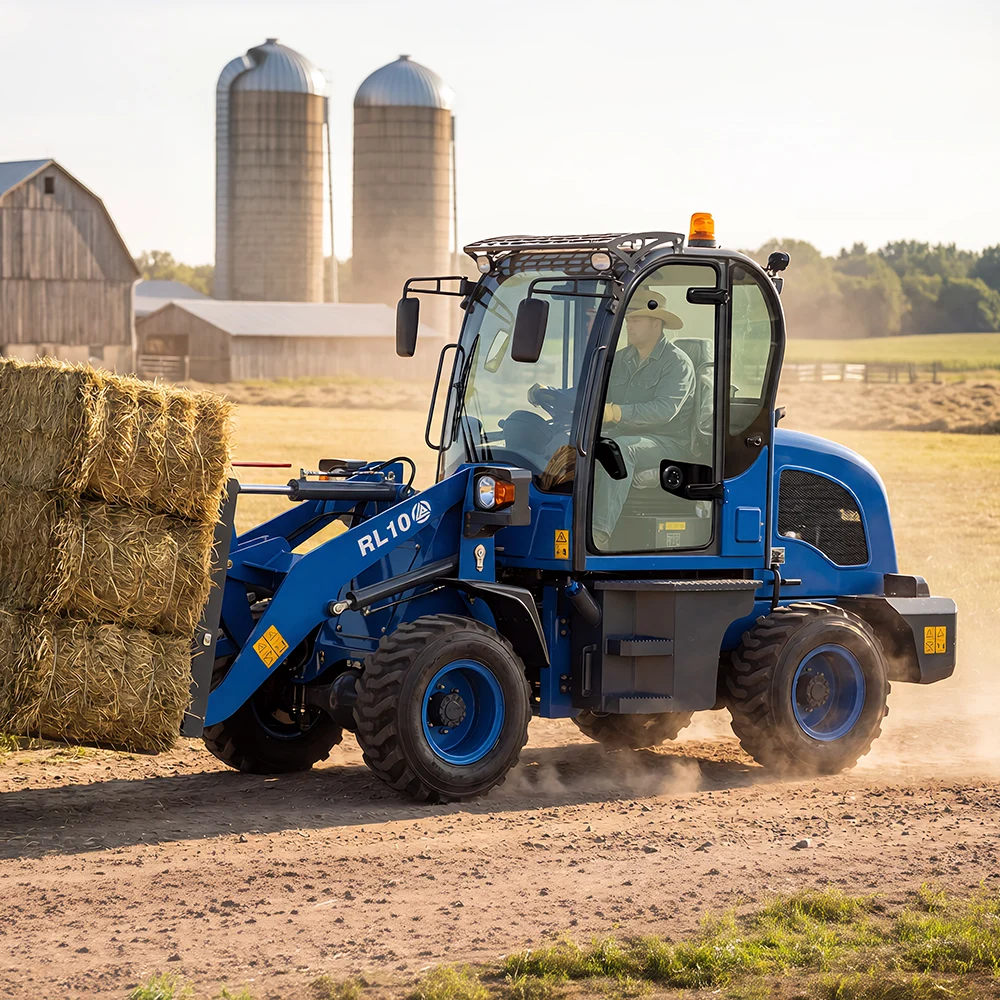
A wheel loader is a versatile material-handling machine equipped with a front-mounted bucket powered by a hydraulic system. Its primary purpose is to load, lift, carry, and transport materials over short distances.
Wheel loaders are commonly used for:
Their mobility, lifting capacity, and attachment versatility make them one of the most valuable machines in the heavy equipment industry.
Compact wheel loaders are the smallest category available and are designed for projects with limited space.
Compact wheel loaders are ideal for:
Key benefits include:
Because of their compact size, these machines can easily operate in tight spaces where larger equipment cannot.
Small wheel loaders offer more lifting power than compact models while maintaining excellent flexibility.
They are frequently used in:
Small wheel loaders provide:
They are often considered the best balance between performance and affordability.
Medium wheel loaders are among the most popular choices in the construction industry.
These machines are commonly used for:
Előnyök:
Medium wheel loaders are suitable for businesses that require high daily production without investing in large mining equipment.
Large wheel loaders are built for demanding environments where productivity is the top priority.
Large loaders are widely used in:
These machines typically offer:
Their ability to move significant amounts of material in a single cycle helps reduce operating costs and improve efficiency.
Beyond standard models, manufacturers also offer specialized wheel loaders designed for specific tasks.
These loaders feature extended lift arms and are commonly used for:
Tool carrier models prioritize attachment versatility.
A legnépszerűbb kiegészítők a következők:
These machines are commonly found in municipalities and industrial facilities.
Selecting the best wheel loader depends on several factors.
Different materials require different bucket sizes and machine capacities.
Examples include:
Fontolja meg:
Compact models perform better in confined areas, while larger machines excel in open environments.
Daily workload plays a major role in equipment selection.
Questions to ask:
Matching machine capacity to production goals helps maximize return on investment.
Choosing the appropriate wheel loader provides several advantages.
Using an oversized machine can increase fuel consumption unnecessarily.
Proper machine sizing reduces wear on components and extends equipment life.
A correctly sized wheel loader can complete tasks more efficiently without overworking the machine.
Machines operating within their design limits provide greater stability and safer operation.
The wheel loader industry continues to evolve with new technologies.
Many manufacturers are introducing battery-powered models that offer:
Modern systems provide:
Advanced features now include:
These technologies help improve efficiency and reduce operator fatigue.
Understanding the different types of wheel loaders is essential when selecting equipment for construction, mining, agriculture, or material handling applications. From compact wheel loaders for tight jobsites to large loaders designed for mining operations, each category offers unique advantages.
By evaluating jobsite requirements, material types, and production goals, businesses can choose the right wheel loader to maximize productivity, reduce operating costs, and achieve long-term success.


 Home
Home
 Termékek
 E-mail
 WhatsApp