
jan 09, 2026
The difference between a compact track loader and a skid steer lies mainly in undercarriage design, ground interaction, and terrain suitability, which determines how each machine matches specific working conditions rather than indicating overall superiority.
Compact track loaders and skid steers are both compact loaders designed for material handling and attachment-driven tasks, but they are optimized for different surface conditions and operating environments. The comparison of compact track loader vs skid steer usually centers on undercarriage type, ground pressure and traction, és surface adaptability.
A compact track loader typically operates on rubber tracks and is commonly used on soft, muddy, or low-bearing ground such as landscaping sites, agricultural fields, and unstable construction areas. A skid steer typically operates on wheels and is commonly used on firm, paved, or compacted surfaces such as concrete slabs, asphalt yards, and indoor facilities. These machines serve overlapping functions but are applied under different site conditions. There is nincs abszolút jobb lehetőség, as suitability depends on terrain, surface sensitivity, and operational demands.
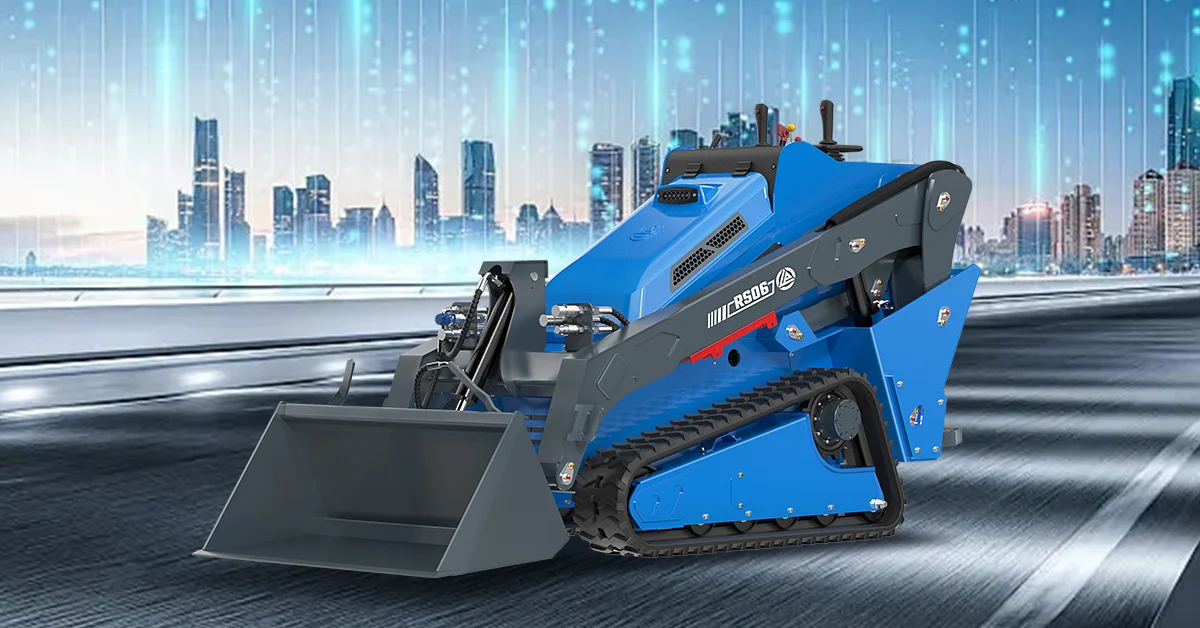
The most fundamental difference between a compact track loader and a skid steer a the undercarriage system.
A compact track loader uses rubber tracks that distribute machine weight over a wide surface area. This design reduces ground pressure and improves flotation, allowing operation on soft soil, mud, sand, or snow with reduced risk of sinking.
A skid steer uses wheels that concentrate weight on smaller contact points. This increases ground pressure but reduces rolling resistance, making wheeled machines efficient on firm and stable surfaces.
In terms of traction, compact track loaders jellemzően a where surface conditions are unstable or uneven. Continuous track contact improves grip and stability, particularly on slopes or loose ground.
Csúszókerekek jellemzően a where traction demands are moderate and surfaces are compacted or paved. On soft or wet ground, wheel slip can occur more easily, limiting effectiveness.
Surface interaction represents another important distinction.
Compact track loaders tend to minimize surface rutting on soft terrain but may increase component wear when frequently operated on abrasive hard surfaces such as concrete or asphalt.
Csúszókerekek tend to be more suitable for finished surfaces and indoor environments, where tire wear is manageable and surface damage is limited.
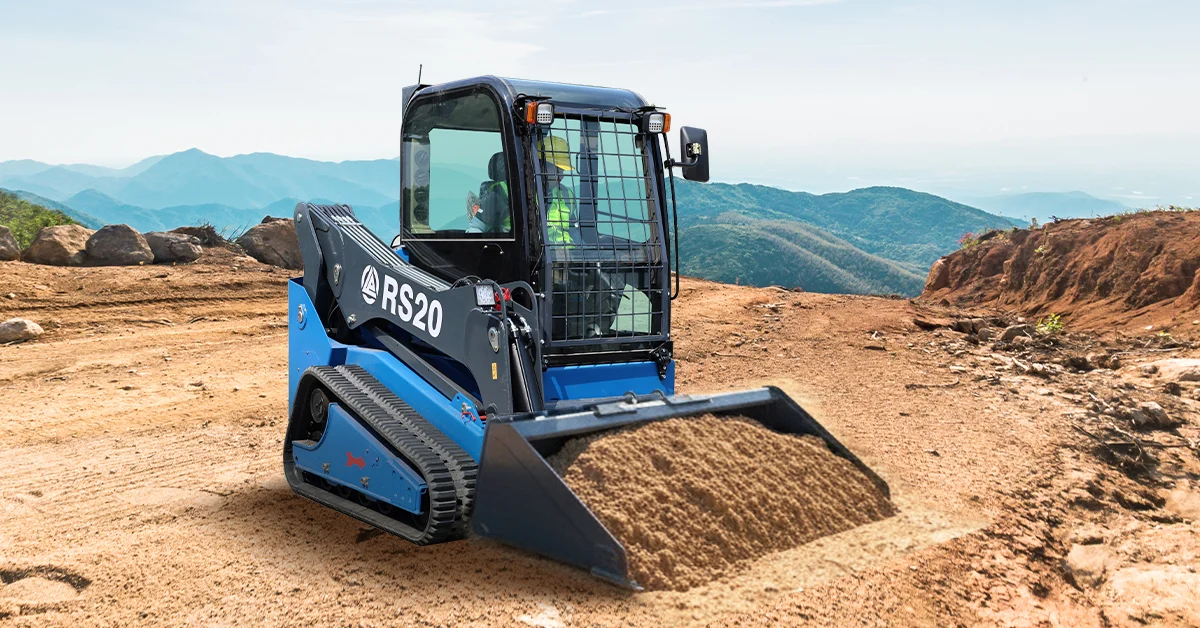
Not typically used for: extended operation on hard, abrasive surfaces.
Not typically used for: prolonged work on very soft or unstable ground.
Yes. Both machines typically share similar attachment interfaces and can operate many of the same buckets, forks, augers, and hydraulic tools, subject to hydraulic capacity.
No. Each machine is limited by surface conditions, and neither fully replaces the other across all terrains.
Operating cost trends a használati szokásoktól függ. Track systems generally show higher maintenance complexity, while wheeled systems are more sensitive to traction limits.
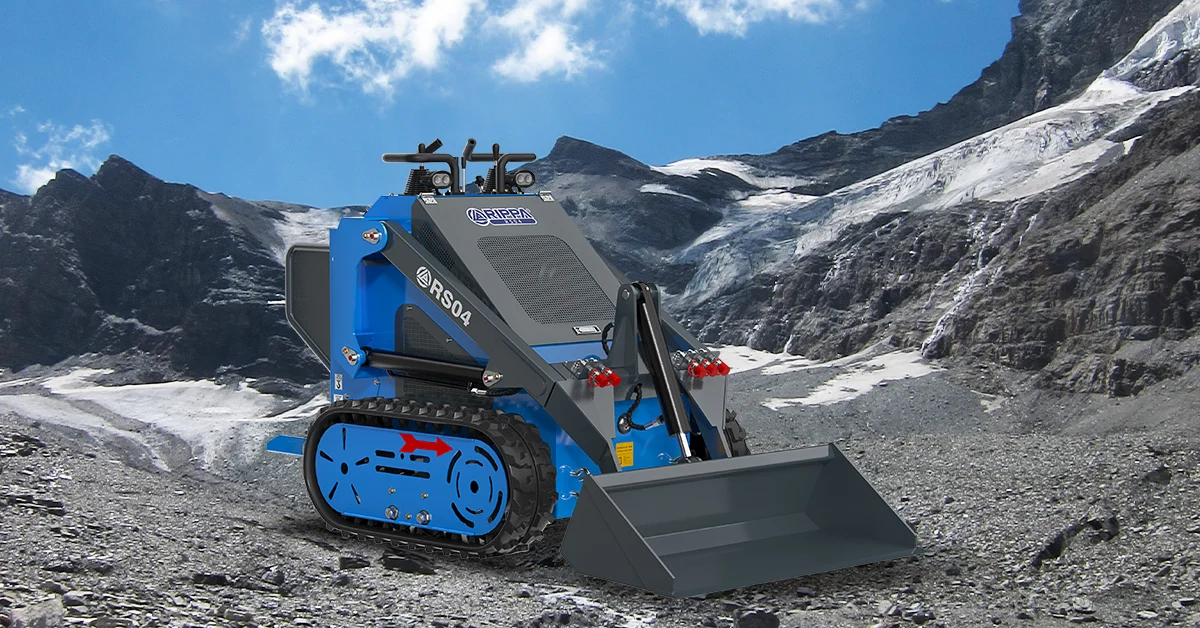
Az összehasonlítás a compact track loader vs skid steer is defined by undercarriage design, ground interaction, and terrain conditions.
Rather than indicating superiority, the distinction emphasizes scenario matching, where effective machine selection depends on aligning surface conditions and job requirements with the appropriate loader configuration.





 Home
Home
 Termékek
 E-mail
 WhatsApp