
ápr 20, 2026
A mini excavator is the ultimate landscaping tool for homeowners. With the right attachments, one machine can: dig trenches for irrigation, grade driveways, remove stumps, plant trees, clear brush, excavate ponds, install drainage, level patios, move rocks, and even plow snow. Homeowners report saving $10,000‑$20,000 in contractor fees within the first two years of ownership.
The key: Choose a machine that fits through your gate (like RIPPA R319 at 917 mm wide) and add a few essential attachments (grading blade, thumb, auger). Then tackle projects at your own pace.
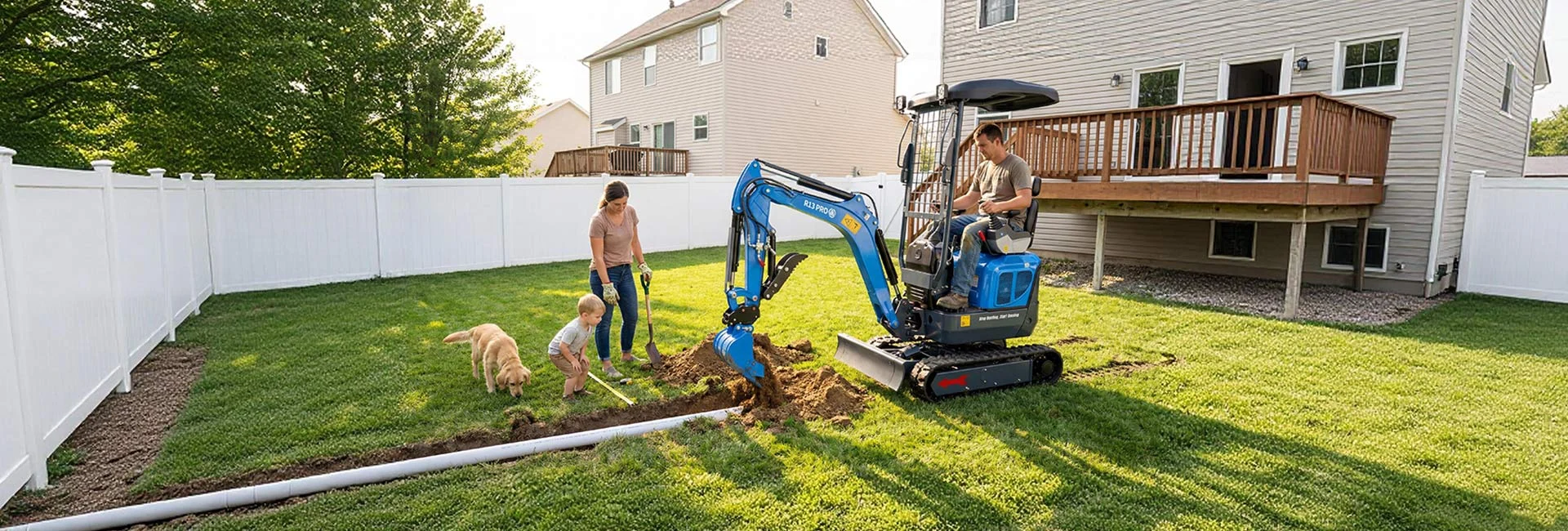
A proper irrigation system or French drain requires precise trenches. Hand digging 100 feet takes days; a mini excavator does it in hours. Use a standard bucket or a trencher attachment.
Cost comparison: Contractor trenching $800‑$2,000. DIY with excavator: $15‑$25 fuel.
Pro tip: Mark utility lines before digging – call 811. Maintain consistent slope (1‑2%) for drainage.
Gravel driveways develop ruts and washboarding. A grading blade attachment restores proper crown and drainage. One pass with the blade can fix years of wear.
Savings: Professional driveway regrading costs $1,200‑$3,500. DIY: $20‑$30 fuel. The grading blade pays for itself on the first job.
Technique: Start at the center, angle blade to push material to the edges, and make overlapping passes.
Tree stumps are eyesores and trip hazards. Instead of paying $200‑$500 per stump for grinding, pull them out with a hydraulic thumb. A 1.5‑1.8 ton excavator can remove stumps up to 18 inches.
Process: Dig around the stump, expose roots, grip with thumb, and apply steady upward pressure. Rock back and forth to break taproots.
Savings: 5 medium stumps professionally removed = $1,000‑$2,500. DIY fuel cost: $10‑$20.
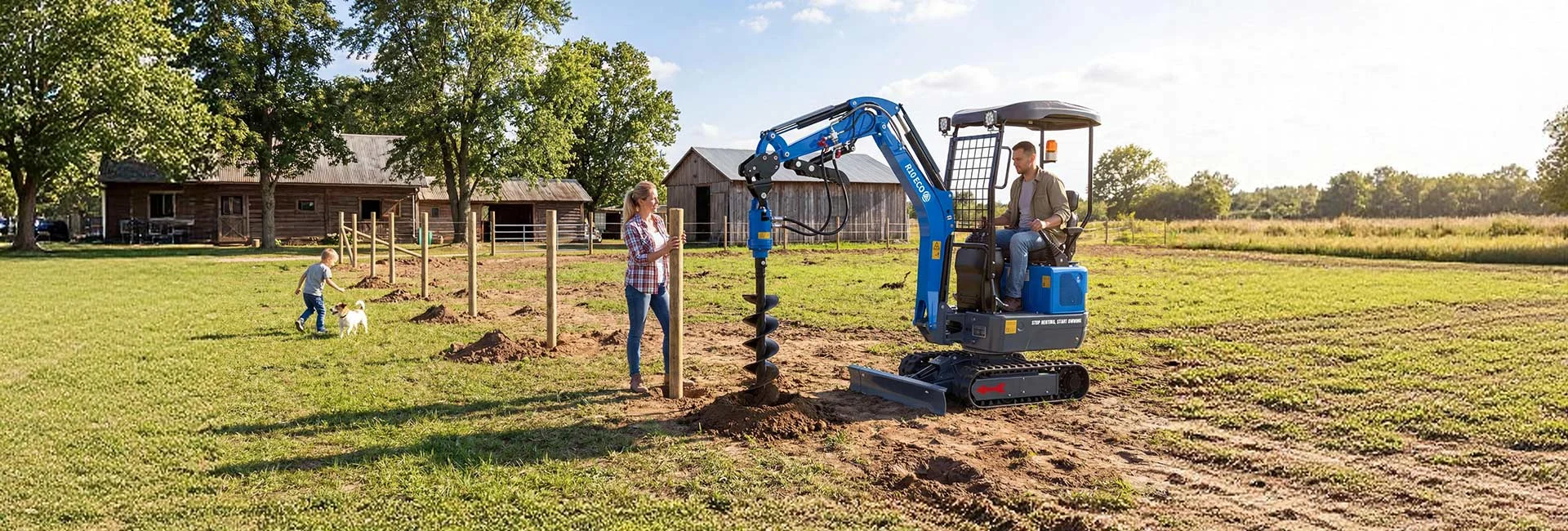
Planting a tree by hand takes 30‑60 minutes of digging. With an auger attachment, drill a perfect hole in 2‑3 minutes. The auger also works for fence posts, sign posts, and footings.
Best for: Orchards, windbreaks, or any project requiring multiple holes.
Auger sizes: 12‑18 inches for trees, 6‑12 inches for fence posts. Match to your machine’s hydraulic flow.
A small decorative pond adds beauty and wildlife habitat. A mini excavator can dig a 10‑12 foot diameter pond in a weekend. Use a bucket for rough excavation, then a grading blade for the final shape.
Contractor cost: $5,000‑$10,000 for a small pond. DIY fuel cost: $30‑$60.
Tip: Leave a shelf for aquatic plants and a deep area for fish. Line with clay or a rubber liner.
Overgrown brush, fallen trees, and thick vegetation are no match for a grapple attachment. Grab and pile debris for burning or chipping. A grapple also moves logs for firewood.
Time savings: Clearing one acre of brush by hand takes weeks; with a grapple, 1‑2 days.
RIPPA advantage: Models with auxiliary hydraulics can run a grapple directly from the cab. The R322L’s retractable tracks help navigate tight wooded areas.
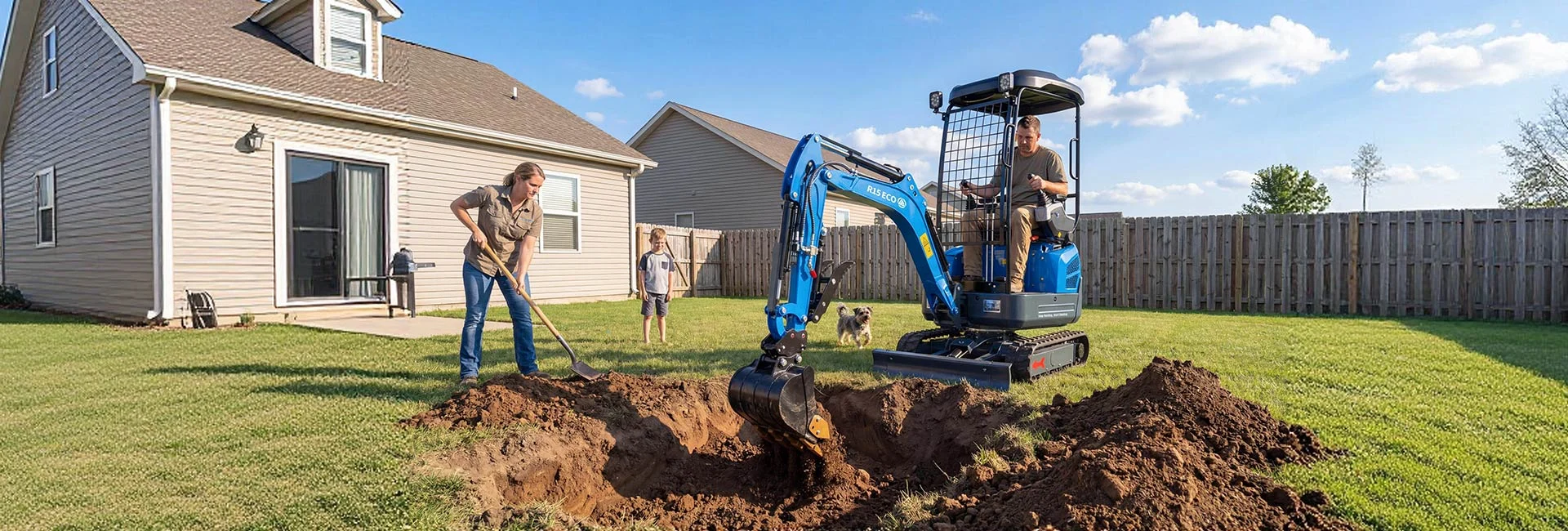
Adding a shed, greenhouse, or workshop? Dig the foundation yourself. A mini excavator can excavate footing trenches to frost depth (24‑48 inches) in hours.
Contractor cost: $2,000‑$5,000 for foundation excavation. DIY: $20‑$30 fuel.
Accuracy tip: Use a laser level or string line to maintain consistent depth. Leave 6 inches extra for gravel base.
A level base is critical for pavers or concrete. Use a grading blade to rough‑grade the area, then switch to the bucket for fine leveling. Compact with the machine’s tracks or a rented compactor.
Savings: Patio base prep by contractor: $1,500‑$4,000. DIY: $20‑$40 fuel.
Pro tip: Excavate 6‑8 inches deep for a proper gravel base, then compact in 2‑inch lifts.
Landscape boulders, retaining wall blocks, and large rocks are impossible to move by hand. A hydraulic thumb lets you grip and place stones precisely. Use the bucket to roll boulders into position.
Avoid back injury: Let the machine do the heavy lifting. A 1.5‑ton excavator can lift 500‑800 lbs easily.
Tip: For very large rocks, dig underneath and roll rather than trying to lift straight up.
Many homeowners don’t realize a mini excavator can clear snow. Attach a snow blade or snow blower, and clear a 200‑foot driveway in 20 minutes. The heated cab (optional) keeps you warm.
Savings: Plow service costs $75‑$150 per storm. Over a snowy winter (10‑15 storms), that’s $1,000+ saved. The snow blade pays for itself in one season.
Best models: Tracked excavators (R322L, R18, R330) have better traction on snow and ice. Add tire chains for wheeled models.
Q: What attachments should I buy first?
A: Grading blade, hydraulic thumb, and auger. These three cover 80% of homeowner landscaping tasks.
Q: How long does it take to learn to operate a mini excavator?
A: Basic competency takes 2‑4 hours. Most homeowners feel confident after one weekend of practice.
Q: Can a mini excavator fit through a standard garden gate?
A: Yes, if you choose the right model. RIPPA R319 is 917 mm wide – fits 36‑inch gates. Larger models require gate removal or alternative access.
Q: How much does a mini excavator cost?
A: New: $15,000‑$35,000 depending on size and features. Used: 30‑50% less. Many homeowners break even in 2‑3 years through avoided contractor costs.
Q: Is it cheaper to rent or buy a mini excavator for landscaping?
A: For less than 10 days of use per year, rent. For 15+ days per year, buying is cheaper over 5 years. Most homeowners with ongoing landscaping projects find buying more economical.

A mini excavator is not just a tool – it’s a gateway to transforming your property. From trenches and driveways to ponds and patios, one machine handles dozens of tasks that would otherwise cost thousands in contractor fees. RIPPA mini excavators are designed with homeowners in mind: easy to operate, simple to maintain, and backed by Kubota reliability. Start with a grading blade and thumb, then add attachments as your projects grow. Your property will never be the same.
Next step: Measure your gate, list your top three projects, and request a demo from a RIPPA dealer. See for yourself what a mini excavator can do.


 Home
Home
 Termékek
 E-mail
 WhatsApp