
srp 20, 2026
A kolesni utovarivač is one of the most productive machines used in construction, agriculture, mining, landscaping, and material handling. Designed to load, carry, and transport materials quickly, wheel loaders help businesses increase efficiency while reducing labor costs.
With many wheel loaders for sale available on the global market, choosing the right model can be challenging. Factors such as lifting capacity, operating weight, hydraulic performance, fuel efficiency, and attachment compatibility all influence purchasing decisions.
This guide explains the different types of wheel loaders, their applications, key features, and buying considerations to help contractors, equipment dealers, and fleet managers make an informed investment.
A kolesni utovarivač is a self-propelled construction machine equipped with a front-mounted bucket and hydraulic lifting arms. Unlike excavators that primarily dig below ground level, wheel loaders are designed to load, transport, stockpile, and handle bulk materials efficiently.
They are commonly used to move:
Because of their speed and versatility, wheel loaders are indispensable on modern job sites.
Understanding the different types of wheel loaders helps buyers select equipment that matches their projects.
A compact wheel loader is ideal for projects where maneuverability is more important than maximum lifting capacity.
Common applications include:
Prednosti uključuju:
Compact machines are increasingly popular among contractors who require flexibility across multiple job sites.
An articulated wheel loader features a center articulation joint that allows the machine to turn sharply while maintaining stability.
Typical applications include:
Its tight turning radius makes it highly efficient in restricted work environments.
For demanding operations such as mining and large-scale infrastructure projects, heavy-duty wheel loaders provide:
These machines are commonly found in quarries, ports, mining operations, and major construction projects.
Construction companies rely on wheel loaders to:
Their speed significantly improves project efficiency.
Modern farms use wheel loaders for daily tasks such as:
Attachment versatility makes one machine suitable for multiple agricultural operations.
Landscape contractors frequently use compact wheel loaders to:
Their compact dimensions allow operators to work in residential areas with minimal disturbance.
Wheel loaders are also widely used in:
With pallet forks or grapples installed, wheel loaders become efficient material handling machines.
Bucket size directly affects loading efficiency. Selecting the correct bucket depends on the materials being handled and the available working space.
Always choose a loader with sufficient lifting capability for your daily workload while maintaining a safe operating margin.
Efficient hydraulic systems improve:
Hydraulic performance is one of the most important factors influencing productivity.
Comfortable operators are more productive.
Look for features such as:
These features contribute to safer and more efficient operation during long workdays.
Modern wheel loaders can perform many different tasks using interchangeable attachments, including:
The ability to switch attachments quickly increases equipment utilization and overall return on investment.
Many buyers searching for wheel loaders for sale also want to understand pricing. Although costs vary by model and market, several factors influence the overall investment.
Larger wheel loaders generally offer higher lifting capacities and larger bucket volumes, resulting in higher purchase costs.
Engine options, hydraulic systems, tires, operator cabins, and attachment packages all influence the final price.
Specialized attachments expand machine functionality but also affect total ownership costs.
Shipping, dealer support, replacement parts, and maintenance services should all be considered when evaluating long-term value rather than focusing solely on the initial purchase price.
Before investing in a wheel loader, evaluate your operational requirements carefully.
Different industries require different loader configurations.
For example:
Think about:
Selecting equipment that matches your work environment improves efficiency and reduces operating costs.
Many businesses choose machines capable of supporting future expansion.
A wheel loader compatible with multiple attachments allows companies to diversify services without investing in several specialized machines.
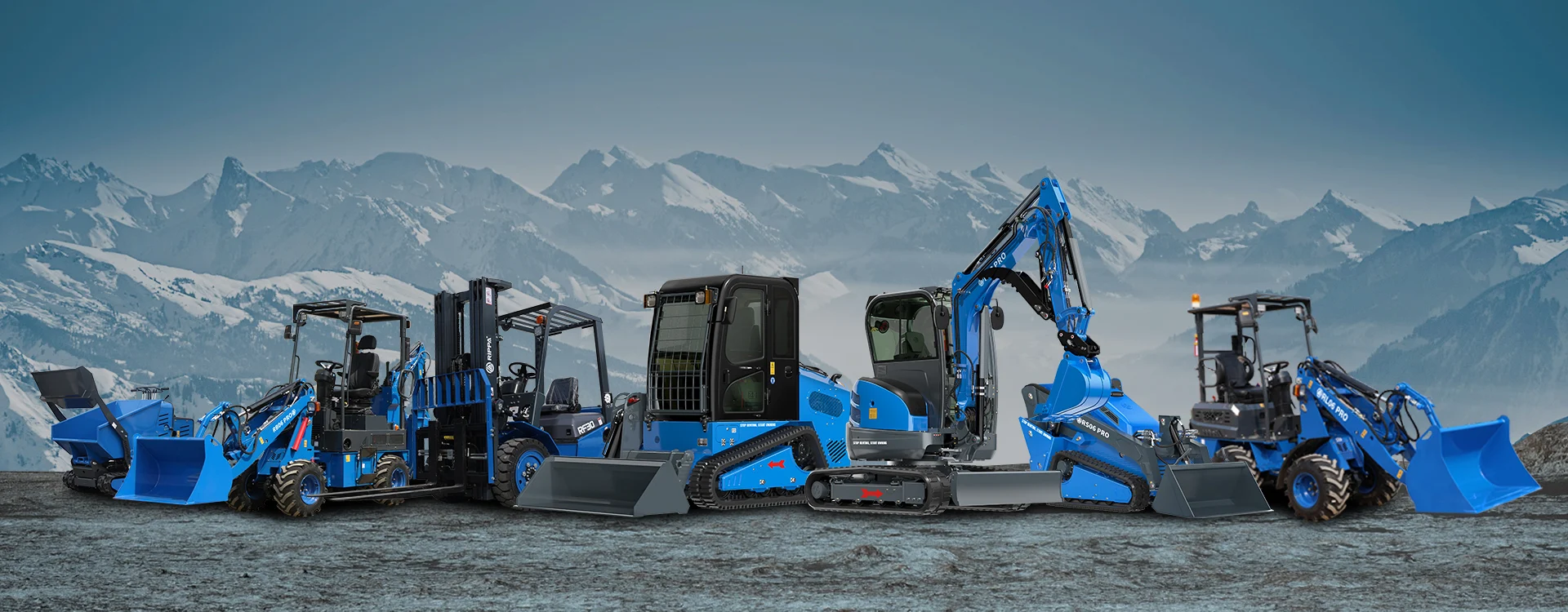
RIPPA offers a range of compact and professional wheel loaders designed to meet the needs of contractors, agricultural businesses, equipment dealers, and industrial users worldwide.
RIPPA wheel loaders are designed with a focus on:
Whether you need a compact loader for landscaping or a larger machine for construction and agriculture, RIPPA provides solutions designed to improve productivity and long-term operating efficiency.
Choosing the best wheel loader for sale requires more than comparing specifications. Understanding your projects, work environment, material handling requirements, and future business plans is essential to selecting equipment that delivers long-term value.
From compact wheel loaders for landscaping to larger machines for construction and agriculture, investing in the right loader helps increase productivity, reduce operating costs, and improve overall job-site efficiency.
Wheel loaders are primarily used to load, transport, and handle materials such as soil, gravel, sand, snow, agricultural products, and construction debris.
Compact wheel loaders are designed for smaller job sites and tighter working spaces, while standard wheel loaders generally provide greater lifting capacity and bucket volume for larger projects.
Yes. Most modern wheel loaders are compatible with buckets, pallet forks, grapples, bale spears, snow blades, sweepers, and other attachments to support multiple applications.
Wheel loaders are widely used in construction, agriculture, landscaping, mining, recycling, municipal maintenance, ports, and industrial material handling.
Consider your lifting requirements, bucket capacity, working environment, attachment needs, transportation requirements, and long-term operating costs before selecting a machine.


 Početna
 Proizvodi
 E-pošta
 WhatsApp