Quick Answer: What Factors Should You Consider When Buying a Mini Excavator?
Choosing the right mini excavator depends on four key factors: 1) Access and workspace – measure gate width and job site constraints; 2) Project requirements – digging depth, force, and soil type; 3) Transport and storage – trailer capacity and storage space; 4) Budget and total cost of ownership – purchase price plus fuel, maintenance, and resale value. Match the machine to your hardest task, not your easiest one.
Key insight: 85% of homeowners can complete all their projects with a 1.5–2.5 ton machine. Larger is not always better – oversize machines cause more lawn damage and transport headaches.
1. Step 1: Measure Your Access – Gate Width and Job Site
The most common mistake is buying a machine that won’t fit through your gate or into your backyard.
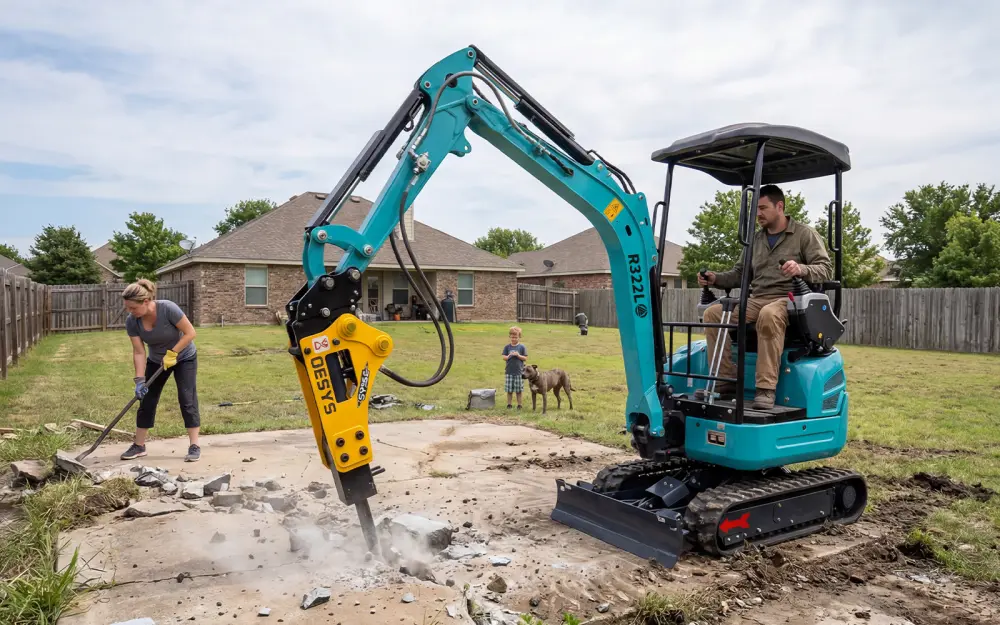
Standard residential gates are 36 inches (914 mm) wide. Measure your narrowest opening before you look at any specifications.
Action step: If your gate is 36 inches, look for machines with transport width under 917 mm. If you have wider access, you can consider larger models like 1.5–1.8 ton machines.
2. Step 2: Identify Your Hardest Project – Depth and Soil Type
Buy for your toughest task, not your most common one. A machine that can handle your hardest job will easily manage easier tasks.
Typical digging depths by project:
Rule of thumb: Your machine’s maximum digging depth should exceed your deepest required depth by at least 6 inches for comfortable operation.
Soil type matters: If you have clay, rocky soil, or dense roots, you need higher digging force (measured in kN). For loose garden soil, standard force is fine.
Example: For a typical homeowner with clay soil and occasional small stumps, a 1.5–1.8 ton machine with 10–15 kN digging force is adequate. For regular stump removal, look for 15 kN or more.
3. Step 3: Consider Transport and Storage
Do you have a trailer and a truck capable of towing the machine? If not, consider dealer delivery and keeping the machine on your property.
If you don’t own a trailer: Many owners choose dealer delivery once and keep the machine on their property permanently. This is often the most convenient and cost‑effective solution.
Storage space: Most mini excavators fit in a standard garage bay (approx. 2.5 m long, 1 m wide). Measure your storage area before buying.
4. Step 4: Choose the Right Size Class
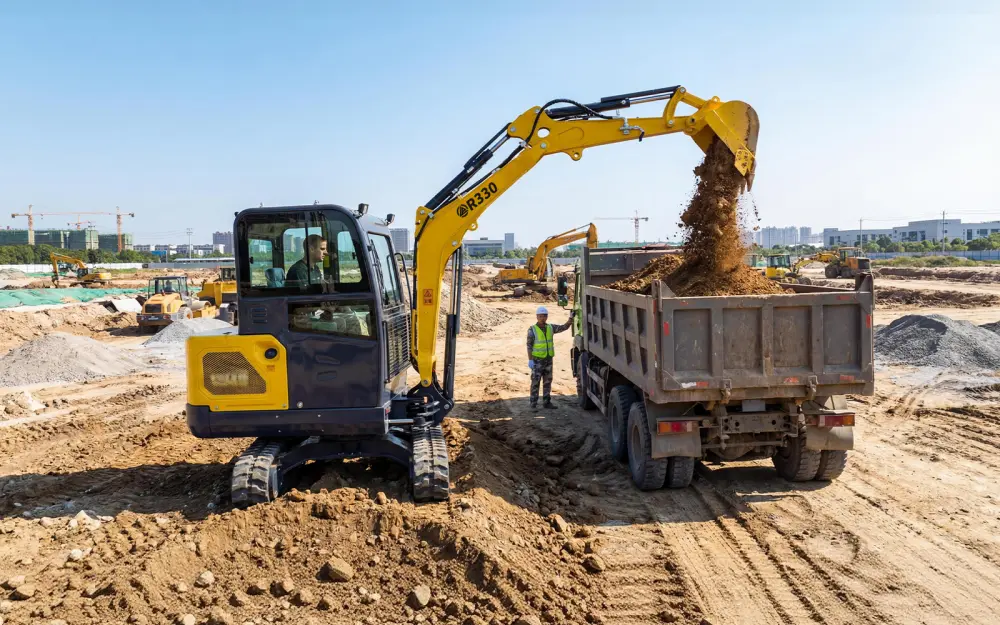
For most homeowners: A 1.5–1.8 ton machine is the sweet spot. It balances power, transportability, and ease of use. 96% of owners in this class would recommend it.
5. Step 5: Decide on Attachments – What Will You Use?
A mini excavator with only a bucket is limited. Attachments greatly expand what you can do.
If your machine does not already have a hydraulic quick coupler, add it immediately. It turns a 15‑minute attachment change into a 30‑second operation from the cab.
Check hydraulic flow: Some attachments (breakers, mulchers) require high‑flow hydraulics. Verify your machine’s auxiliary flow rating before buying high‑demand attachments.
6. Step 6: New vs Used – Which Is Better for You?
Recommendation: For homeowners using the machine 100–200 hours per year, a well‑maintained used machine with a Kubota engine offers excellent value. For contractors or daily use, new with warranty is safer.
Used inspection checklist: Check hour meter, look for leaks, test all functions, inspect tracks (50%+ life left), and ask for service records. A machine with complete records is worth 10‑20% more.
7. Step 7: Calculate Total Cost of Ownership (TCO)
The purchase price is only part of the equation. Over 5 years of typical homeowner use (200 hours/year), a $25,000 excavator will cost:
Payback period: Most homeowners break even in 2‑3 years through avoided contractor costs ($50‑100 per hour).
If you hire contractors regularly, owning a mini excavator often pays for itself faster than you think. A single driveway repair can cost $1,200–$3,500 – that’s a significant portion of a used machine’s price.
8. Step 8: Verify Dealer and Parts Support
Before buying, ask these questions:
-
How far is the nearest authorized service center?
-
Are common parts (filters, seals, hoses) stocked locally or shipped from a regional warehouse?
-
What is the typical parts delivery time (1‑3 days is good)?
-
Is technical support available by phone or video?
China manufacturers like RIPPA maintain overseas warehouses in North America and Europe, with common parts shipping within 48 hours. This is a critical advantage over brands without local support.
9. Frequently Asked Questions
Q: What is the best mini excavator for a first‑time buyer?
A: A 1.5–1.8 ton machine with a Kubota engine, hydraulic quick coupler, and grading blade. It balances power, transportability, and ease of use.
Q: Do I need a special license to operate a mini excavator on my own property?
A: No. For personal use on your land, no license is required. Commercial work may have different rules – check local regulations.
Q: How long does a mini excavator last?
A: With proper maintenance, 8,000–12,000 hours (10‑15 years for homeowners). The Kubota engine alone is known to exceed 10,000 hours.
Q: Can I use a mini excavator in winter?
A: Yes. Use winter‑grade fuel, check coolant freeze protection, and allow extra warm‑up time. Tracked machines perform better in snow.
Q: What is the difference between zero tail swing and conventional machines?
A: Zero tail swing machines rotate within their track width – ideal for working near walls and fences. Conventional machines have a tail swing that can hit obstacles.
Q: Should I buy a machine with a cab or open canopy?
A: Cab provides weather protection, heat, and AC – essential for commercial use or harsh climates. Open canopy is lighter, cheaper, and easier to transport for occasional use.
10. Conclusion
Choosing the right mini excavator comes down to five simple steps:
-
Measure your gate – ensure the machine fits.
-
Identify your hardest project – depth and soil type.
-
Check your transport – trailer and truck capacity.
-
Select the right size – 1.5–1.8 tons for most homeowners.
-
Budget for total cost – not just purchase price.
Take your time, measure carefully, and pick a machine that will serve you for years – not just for tomorrow’s project. Whether you choose a new or used machine, focus on proven reliability (Kubota engine), parts support, and the features that matter for your specific tasks.
Ready to start your search? Contact a reputable manufacturer or dealer with your project list and gate measurements. The right machine is waiting.



 Accueil
 Produits
 Courriel
 WhatsApp