Ene 09, 2026
[newsletter_form]There is no single “best” skid steer on the market; the best skid steer is defined by how well a specific machine’s capacity, configuration, and performance characteristics match a particular use case, operating environment, and workload.The best skid steer on the market is not a universal model or brand, but the machine that most closely aligns with the required operating capacity, attachment needs, hydraulic performance, workspace constraints, and duty cycle of the intended application.
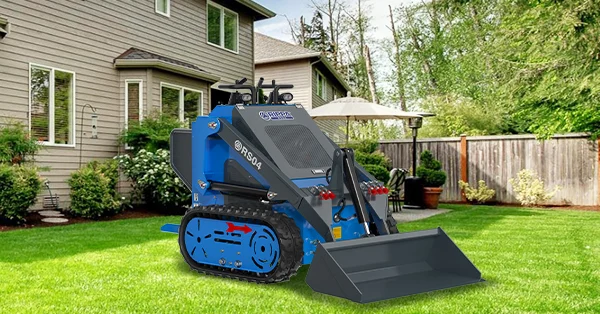
The phrase “the best skid steer on the market” refers to a comparative evaluation of skid steer loaders based on objective performance criteria rather than subjective preference.
A skid steer is a compact, engine-powered loader that uses skid steering to maneuver and operates a wide range of attachments via a front-mounted lift arm system.
“Best,” in this context, is defined as the most suitable machine for a clearly defined operational purpose.
From an industry and engineering perspective, “best” usually means:
Therefore, the best skid steer is not a fixed product, but a result of matching specifications to requirements.
All skid steers on the market operate using the same fundamental principle:
This steering method allows skid steers to work efficiently in confined spaces.
Work functions are typically powered by hydraulic systems that control:
Because the operating principle is consistent across manufacturers, performance differences are primarily determined by component specifications rather than basic design.
When determining which skid steer is “best,” the following components are typically evaluated:
The combination of these elements determines whether a skid steer is best suited for a specific role.
The best skid steer varies by application, as different scenarios prioritize different performance factors.
For construction use, the best skid steer is typically one that:
In this scenario, vertical lift designs and higher hydraulic output are often required.
In agricultural settings, the best skid steer is usually defined by:
Reliability and daily-use suitability are emphasized over maximum power.
For landscaping, the best skid steer is often characterized by:
Tracked configurations are commonly selected in this scenario.
In municipal applications, the best skid steer is defined as a machine that:
Versatility and attachment compatibility are prioritized.
For industrial environments, the best skid steer is typically one that:
Compact size and controllability are critical factors.
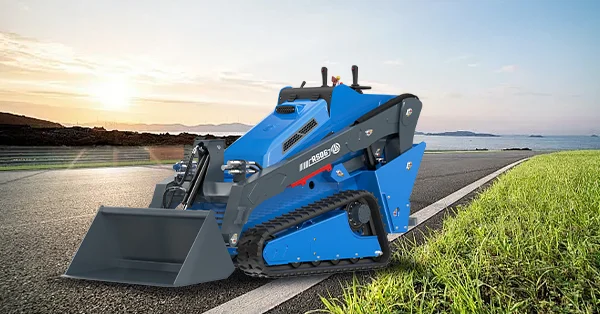
Regardless of brand, a skid steer considered “best” for its application can typically:
Typical specification ranges that define capability include:
The “best” machine is one that operates comfortably within, not at the extreme limits of, these ranges for its intended tasks.
No skid steer on the market is designed to:
Recognizing these limitations is essential when defining what “best” means in context.
No.
The best skid steer depends on application, workload, environment, and attachment requirements.
Not necessarily.
Higher power only matters if hydraulic flow, lift capacity, and attachment demands require it.
No.
In many applications, a smaller skid steer is more effective due to space constraints and maneuverability needs.
“Best” is usually determined by matching machine specifications to task requirements, rather than by brand or maximum performance figures.
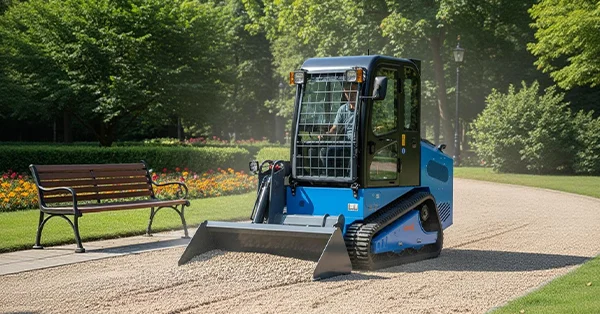
The best skid steer on the market is the one that most accurately matches a specific job’s capacity, hydraulic, size, and attachment requirements.
Rather than a single model, “best” is a contextual evaluation based on objective operating criteria and defined use scenarios.






 Inicio
 Productos