
Ιούν 14, 2026
When choosing compact construction equipment, many contractors struggle with one common question: Skid Steer vs. Compact Track Loader: Which is Best? Both machines are highly versatile and widely used in construction, agriculture, landscaping, and material handling. However, selecting the right equipment depends on jobsite conditions, operating costs, and performance requirements.
This guide compares skid steer loaders and compact track loaders (CTLs) from real-world applications, technical specifications, and industry standards to help buyers make informed decisions.
A ολισθαίνοντα φορτωτή is a wheeled compact machine designed for maneuverability in confined spaces. By independently controlling the wheels on each side, the machine can rotate within its own footprint.
Based on our export experience supplying equipment to North America, Europe, and Southeast Asia, skid steer loaders are commonly used for:
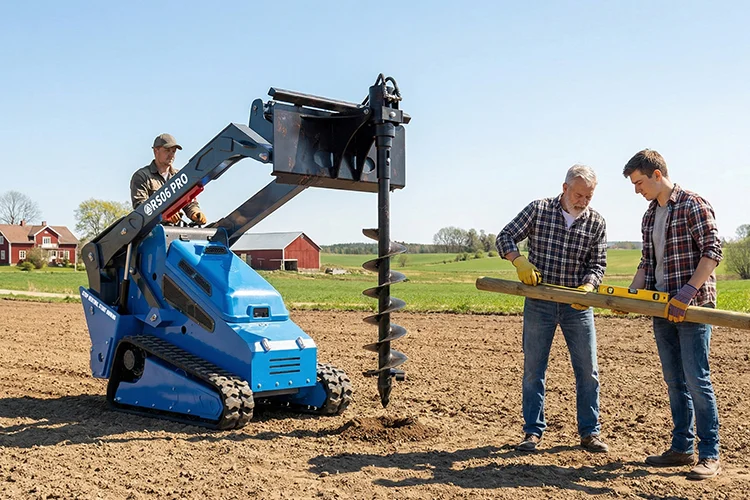
A συμπαγής φορτωτής με ερπύστριες uses rubber tracks instead of wheels, providing superior traction and lower ground pressure.
Compact track loaders perform exceptionally well in:
The hydraulic system significantly impacts attachment efficiency.
Most modern skid steer loaders provide hydraulic flow between 60–120 L/min, while premium compact track loaders may offer high-flow auxiliary hydraulics exceeding 150 L/min for demanding attachments such as mulchers and cold planers.
Rated Operating Capacity is a critical specification when evaluating compact equipment.
| Machine Type | Typical ROC |
|---|---|
| Φορτωτής με κατευθυνόμενο άξονα | 700–1,600 kg |
| Συμπαγής φορτωτής με ερπύστριες | 900–1,800 kg |
For heavy lifting applications, compact track loaders often provide higher lifting capacity and stability.
Compact track loaders distribute machine weight over a larger surface area, resulting in significantly lower ground pressure than wheeled skid steer loaders. This advantage is especially important when working on turf, wet soil, or sensitive landscaping areas.
Skid steer loaders generally cost 15–30% less than comparable compact track loaders.
Track systems require periodic replacement and maintenance. Wheel-based skid steer loaders typically have:
However, CTLs may generate greater productivity on challenging terrain, offsetting higher ownership costs.
Professional buyers should ensure equipment complies with international standards:
Manufacturers should meet:
For European markets, CE certification confirms compliance with machinery safety directives and operator protection requirements.
For North American exports, engines should meet EPA Tier 4 Final emission standards to reduce environmental impact.
As a professional construction equipment supplier with extensive export experience, we provide:
These factors help ensure long-term machine reliability and lower total ownership costs.
)
When evaluating Skid Steer vs. Compact Track Loader, there is no universal winner. A skid steer loader offers affordability, speed, and lower maintenance, while a compact track loader delivers superior traction, flotation, and performance on difficult terrain.
By considering jobsite conditions, hydraulic requirements, rated operating capacity, and certification standards, buyers can select the machine that delivers the best return on investment.


 Αρχική σελίδα
 Προϊόντα
 Ηλεκτρονικό ταχυδρομείο
 WhatsApp