
März 08, 2026
[newsletter_form]For many families, adding a swimming pool, a detached garage, or a large patio is a dream project. But the cost of professional excavation can be staggering—often tens of thousands of dollars—and contractors may be booked months in advance. An increasing number of ambitious DIYers are discovering that with the right mini excavator, they can take on these massive undertakings themselves, saving a fortune and gaining the immense satisfaction of building with their own hands. This article explores three common major projects and how RIPPA excavators make them achievable.
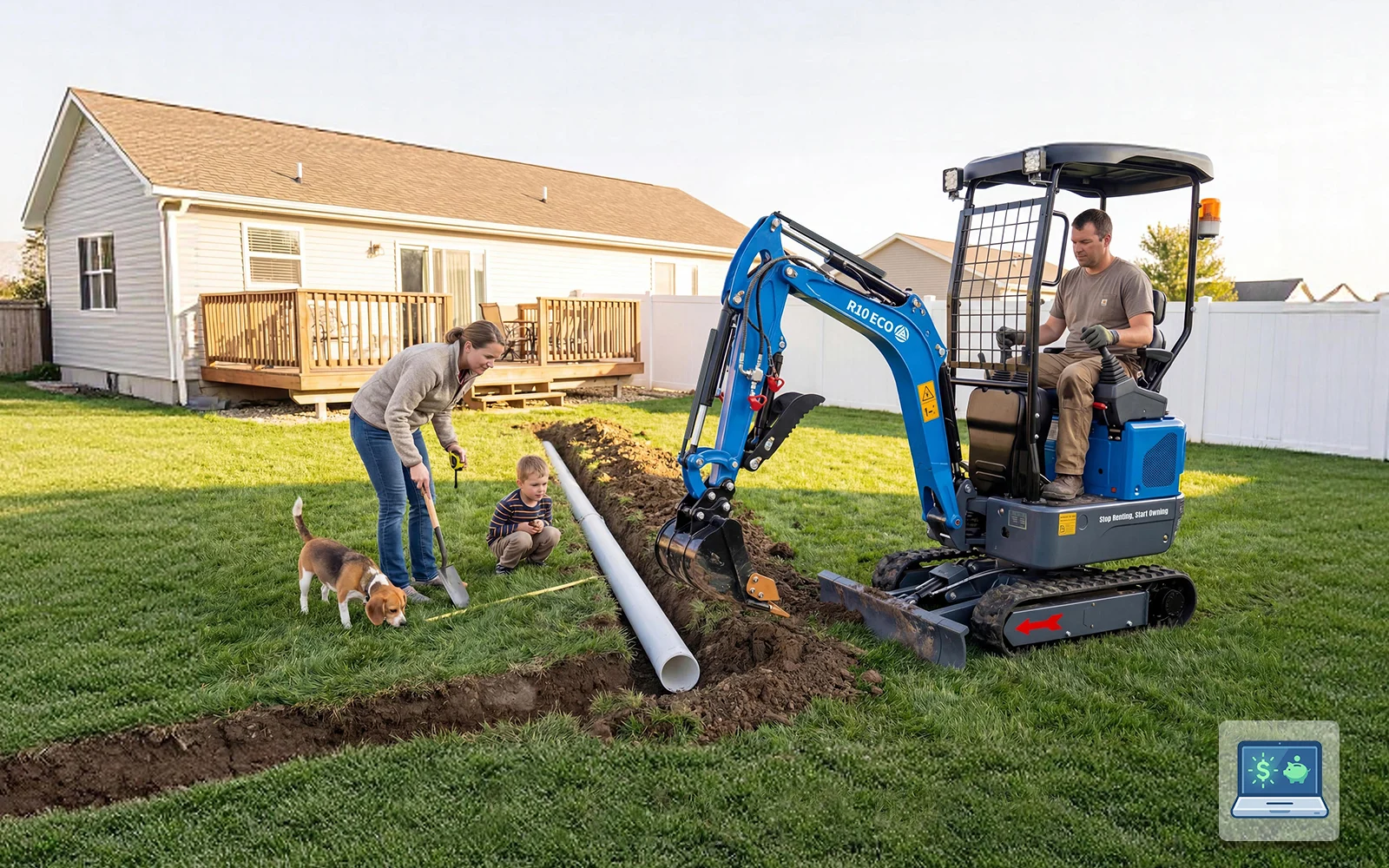
The Problem: Excavating a standard residential pool (say, 12×24 feet, 4–6 feet deep) typically costs $10,000 to $30,000, depending on soil and location—and that’s just for the hole. That price tag does not include concrete, plumbing, or filtration. On top of that, contractors often have long waiting lists.
The RIPPA Solution: With a RIPPA R22 or R32, you can excavate the pool yourself over a few weekends. The R22 digs to 2.9 meters (9.5 feet)—more than enough for most residential pools. The R32 reaches 3.3 meters (10.8 feet) and can handle deeper spa areas. Precise hydraulic controls let you follow your design plans accurately, keeping walls vertical and the bottom level.
Real‑Life Example: Robert from Texas had always dreamed of a pool, but contractors quoted $45,000 and a four‑month wait. “I decided to try digging it myself. I rented a RIPPA R22 for one weekend and found it surprisingly easy. So I bought one. Over three weekends I excavated the entire pool. Later, the concrete contractor told me my excavation was perfect—they could pour right away. I saved at least $15,000 on excavation alone.”
Cost Breakdown:
Contractor excavation: $15,000 – $30,000
DIY with RIPPA: $0 – $5,000 (fuel + machine depreciation)
Savings: $10,000 – $25,000
Important: Before starting, obtain any required permits and consult a structural engineer about soil and drainage conditions.
The Problem: Adding a detached garage or workshop requires excavating footings, leveling the site, and possibly digging utility trenches. These earthmoving tasks are often the most labor‑intensive part of the build.
The RIPPA Solution: A RIPPA R22 or R32 can dig foundation trenches deep enough to meet local frost line requirements (up to 4 feet in northern climates). The machine also excels at rough grading the building pad. For pole‑barn structures, an auger attachment drills post holes quickly and accurately.
Step‑by‑Step:
Clear vegetation and topsoil with the bucket.
Dig foundation trenches to required depth, keeping bottoms level.
Dig utility trenches for water, power, or drainage.
Move and place materials like gravel and rebar.
After concrete is poured, backfill and compact with the machine.
User Story: Mike from Pennsylvania wanted a 24×30‑foot workshop. Local contractors quoted $8,000 just for the foundation work. “I’d operated equipment before, so I decided to do it myself. With my RIPPA R22, I dug all the footings in one weekend, and the next weekend I graded the pad and spread gravel. Materials cost me about $1,500, but the machine had already paid for itself with previous projects.”
The Math: Foundation work often accounts for 10–20% of total construction cost. Doing it yourself can save thousands, and the same machine can then be used for landscaping, drainage, and countless other projects.
The Problem: A large patio (say, 500 square feet) needs a level base, excavation for footings, and moving heavy materials. Professional contractors charge $5,000–$10,000 for such a job.
The RIPPA Solution: Use your RIPPA to grade the area with precision—down to an inch. If you’re removing an old concrete slab or adjusting slope, the machine does it quickly. An auger drills holes for deck piers (if using a wood structure). And you can use the bucket to move pavers, gravel, and bags of concrete mix, saving your back.
Efficiency: Leveling 500 square feet by hand could take 2–3 days. With a RIPPA and a grading blade, it’s 3–4 hours.
Powerful Digging: R22 and R32 models deliver 22.5 kN and 28.5 kN of digging force—enough for compacted soil and small rocks.
Sufficient Depth: Maximum digging depths of 2.9–3.3 meters meet the needs of almost any residential project.
Precision Control: Load‑sensing hydraulics and pilot joysticks allow fine work like leveling a foundation bottom.
Attachment Versatility: Breakers for rock, augers for holes, thumbs for material handling—one machine does it all.
5‑Year Warranty: RIPPA Care+ protects your investment, even during intensive use.
Get permits – Check with your local building department.
Mark utilities – Call 811 or your local service for free marking.
Plan your site – Draw detailed plans with depths and slopes.
Choose the right machine – Consult a dealer about the best RIPPA model for your project.
Safety gear – Wear PPE and follow the operator’s manual.
Large‑scale home projects are no longer out of reach. With a RIPPA mini excavator, you can convert tens of thousands of dollars of contractor fees into your own sweat equity—and enjoy the deep satisfaction of building your dream space with your own hands. From pools to garages to patios, RIPPA gives you the power to say “I built that.”
Ready to tackle your big dream? Contact a RIPPA dealer to find the right machine for your project. They can also advise on the best attachments and even help you plan the work.





 Startseite
 Produkte
 E-Mail
 WhatsApp