
März 04, 2026
| Faktor | Impact on Resale Value |
|---|---|
| Engine brand (Kubota, Yanmar) | +15–25% |
| Complete maintenance records | +10–20% |
| Low hours (under 1,500) | +20–30% |
| Standard quick coupler | +5–10% |
| Dealer service history | +5–15% |
| Cosmetic condition | +5–10% |
The bottom line: A well-maintained mini excavator with a Kubota engine and full service records can retain 50-60% of its purchase price after 5 years. Machines without documented maintenance may lose 30-40% more value .
For many equipment buyers, the purchase price is only part of the financial equation. What happens when you sell the machine matters just as much. A mini excavator that holds its value effectively reduces your total cost of ownership by thousands of dollars.
The real cost equation:
Total Cost = Purchase Price – Resale Value + Operating Costs
A machine that costs $30,000 new but sells for $15,000 after 5 years has a lower net cost than a $25,000 machine that sells for $8,000. Understanding what drives resale value helps you make smarter buying decisions .
The single most important factor in mini excavator resale value is the engine brand. Kubota and Yanmar engines are widely recognized for their reliability, parts availability, and long service life .
| Engine Brand | 5-Year Resale Premium |
|---|---|
| Kubota | +15–25% |
| Yanmar | +10–20% |
| Other brands | Baseline |
Why it matters: Used buyers know that a Kubota-powered machine will have readily available parts and a proven track record. Many RIPPA models, including the R319, R13, R15, R322L, R18, R22, R32, and R350, offer Kubota engine options .
The relationship between hours and value is not linear. A 3-year-old machine with 2,000 hours may be worth more than a 5-year-old machine with 1,500 hours if the newer machine has been properly maintained .
| Hours Range | Typical Value Impact |
|---|---|
| Under 500 hours | Like new – 80-90% of new price |
| 500–1,500 hours | Light use – 65-80% of new price |
| 1,500–2,500 hours | Moderate use – 50-65% of new price |
| 2,500–4,000 hours | Heavy use – 35-50% of new price |
| Over 4,000 hours | High use – 20-35% of new price |
RIPPA reliability data: Owner surveys show that 94% of RIPPA owners report no major issues within the first 1,000 hours, with many machines reaching 3,000–5,000 hours before significant repairs .
A machine with complete service records consistently outsells an identical machine with unknown history. Documentation proves that:
Oil was changed at proper intervals
Filters were replaced regularly
Hydraulic fluid was maintained
Major components were inspected
What buyers look for:
| Documentation | Value Impact |
|---|---|
| Dealer service records | +10–20% |
| Owner maintenance log with dates/hours | +5–15% |
| Receipts for parts and fluids | +5–10% |
| No records | Baseline – highest risk |
Digital Thread advantage: Some RIPPA models feature Digital Thread technology that creates a verifiable service history. This documentation can add significant value at resale .
The undercarriage is one of the most expensive components to replace. A set of tracks can cost $1,500–$3,000, and replacing rollers and sprockets adds even more .
| Undercarriage Condition | Value Impact |
|---|---|
| 75%+ life remaining | +10–15% |
| 50–75% life remaining | Baseline |
| 25–50% life remaining | -10–20% |
| Near replacement | -25–35% |
What to check:
Track pad wear (wear indicators flush with surface)
Roller condition (smooth rotation, no flat spots)
Sprocket teeth (even wear, no hooking)
Track tension (proper sag of 10–15 mm)
RIPPA durability feature: The R322L features retractable tracks that reduce transport wear, while all RIPPA models use engineered rubber tracks with three-layer steel wire reinforcement for extended life .
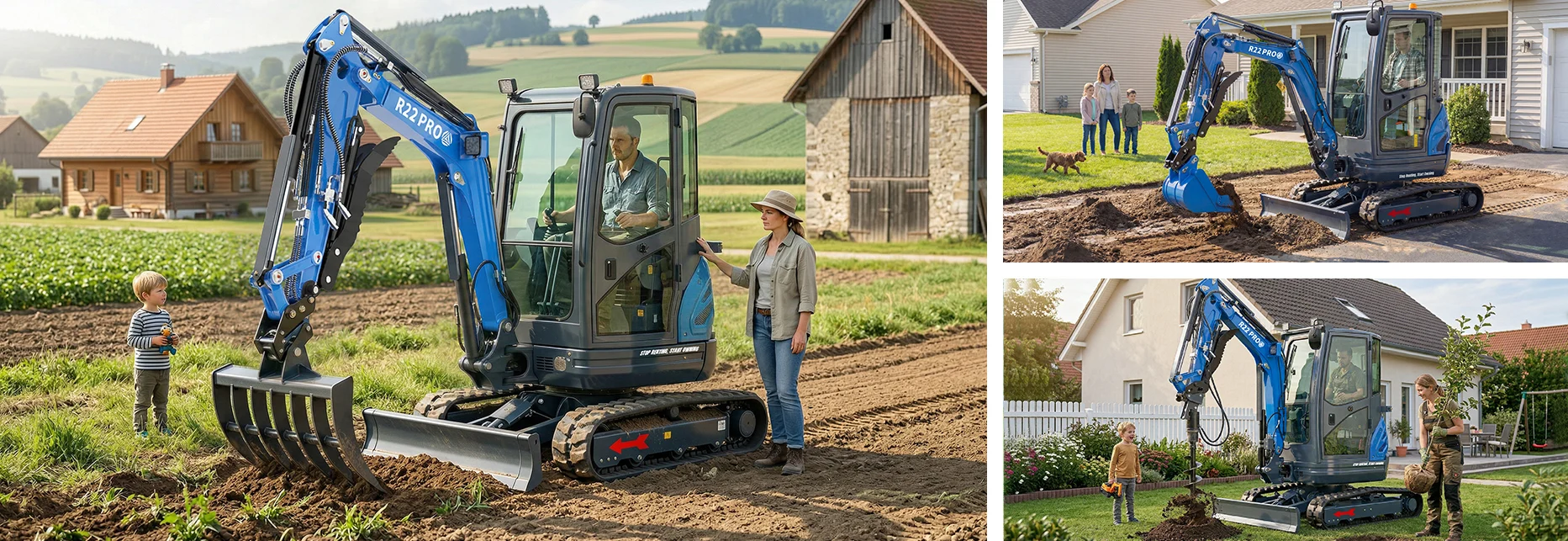
Machines with standard features that improve versatility command higher resale prices because they appeal to more buyers .
| Merkmal | Resale Value Impact |
|---|---|
| Hydraulischer Schnellwechsler | +5–10% |
| Hilfshydraulik | +5–10% |
| Teleskopketten | +5–8% |
| Zero tail swing | +5–10% |
| Air-conditioned cab | +5–10% |
RIPPA advantage: Many RIPPA models include these features as standard equipment, which helps maintain resale value compared to machines where they are optional .
Kubota and Caterpillar have decades of market presence, which supports their resale values. RIPPA, as a newer brand, has seen improving resale values as more machines enter the market and prove their reliability .
| Brand Category | 5-Year Resale Range |
|---|---|
| Premium (Kubota, CAT) | 50–60% |
| Mid-tier | 40–50% |
| Value (RIPPA) | 40–50% |
Resale values vary by region based on dealer density and local brand acceptance:
| Region | Market Characteristics |
|---|---|
| Midwest US | Strong agricultural demand for all brands |
| Northeast US | Compact machines preferred; premium for zero tail swing |
| Southeast US | Higher demand for Kubota due to dealer network |
| West Coast | Strong market for value brands; growing RIPPA presence |
RIPPA dealer network: With 200+ dealers and growing, RIPPA’s market presence continues to expand, supporting improving resale values .
While mechanical condition matters most, appearance influences buyer perception and final sale price .
| Cosmetic Factor | Value Impact |
|---|---|
| Original paint, no rust | +5–10% |
| Minor scratches, dings | Baseline |
| Significant rust or fading | -10–15% |
| Poorly repainted | -15–25% |
Simple maintenance that preserves value:
Wash machine regularly to remove dirt and debris
Touch up paint chips promptly
Store indoors when possible
Keep decals intact and readable
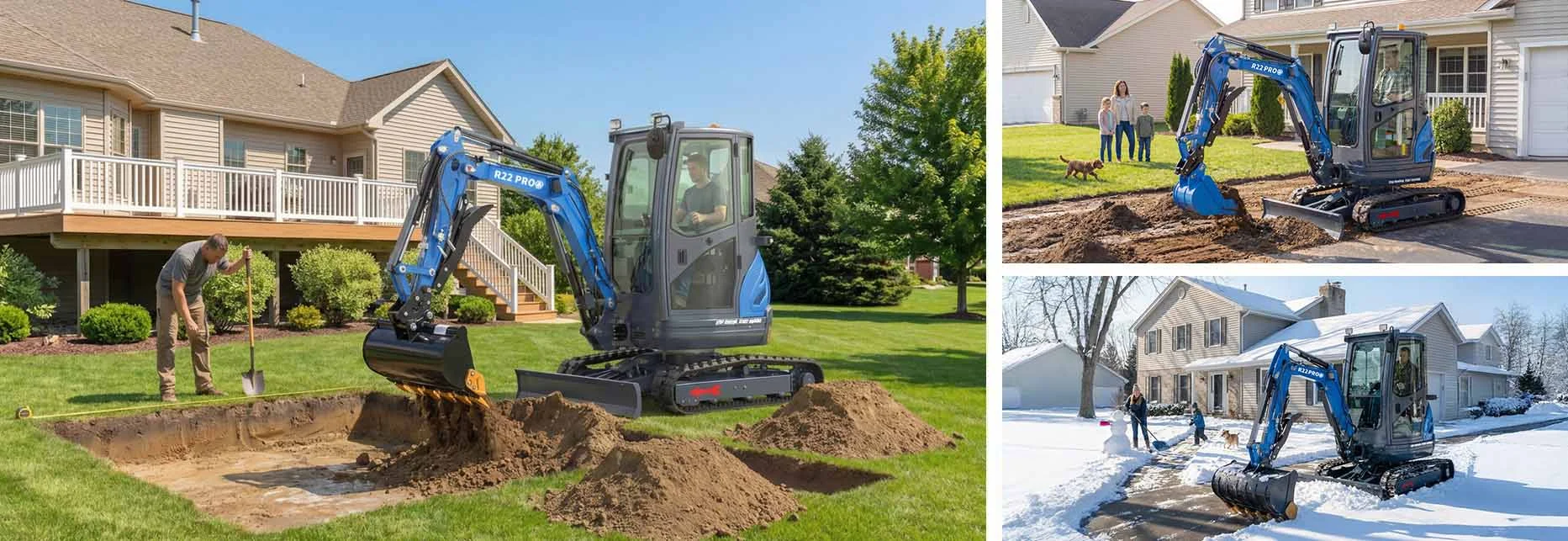
Gate-friendly width (917 mm) appeals to suburban buyers
Kubota D722 engine supports strong resale
Compact size holds value well in residential markets
Most popular homeowner model – high demand
Standard quick coupler and auxiliary hydraulics add value
96% owner satisfaction supports strong resale
Unique boom cylinder protection appeals to contractors
Retractable tracks expand buyer pool
Kubota D902 engine maintains value
15.8 kN digging force attracts buyers needing power
Higher demand in rural and wooded areas
Gear drive travel motor is a desirable feature
X-shaped frame durability appeals to commercial buyers
Multiple engine options allow buyers to choose
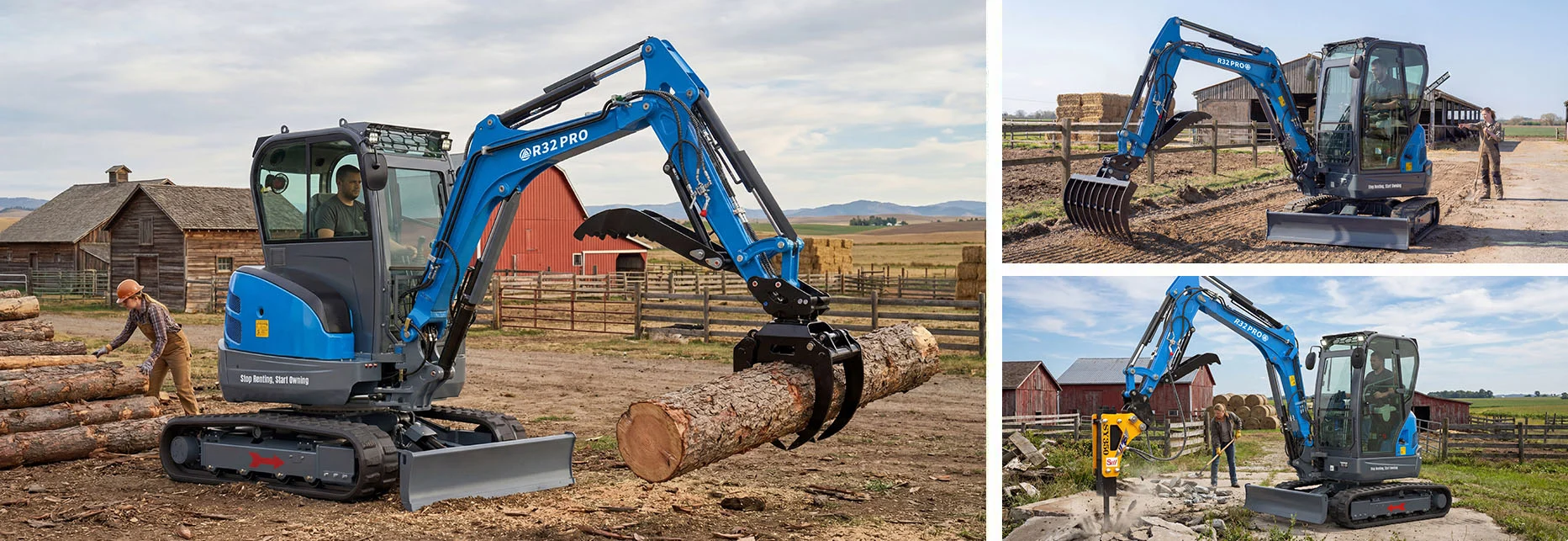
Strong demand from farmers and large property owners
Kubota engine option supports premium resale
Side swing boom adds versatility value
Commercial-grade features attract contractor buyers
Maintain complete service records, keep the machine clean, fix small issues before they become big problems, and use genuine parts for repairs .
Yes. Zero tail swing machines typically sell for 5-10% more than conventional machines in urban and suburban markets .
Very important. A machine with complete dealer service records can sell for 10-20% more than an identical machine with no documentation .
If you maintain it well, keeping it longer can be economical. The steepest depreciation occurs in the first 3 years. After that, value declines more slowly .
Options include: authorized dealer consignment (highest price, slowest), equipment auctions (fastest, variable price), private sale (good balance), and online marketplaces .
Mini excavator resale value is determined by a combination of factors you can control and factors built into the machine. Engine brand, maintenance records, undercarriage condition, and standard features all play significant roles.
For buyers, choosing a machine with a Kubota engine, maintaining complete service records, and keeping the machine in good cosmetic condition will maximize resale value. For sellers, documenting maintenance history and addressing minor repairs before listing can add thousands to the final sale price.
RIPPA machines with Kubota engines and comprehensive maintenance records typically retain 40-50% of their purchase price after 5 years—comparable to mid-tier competitors and offering excellent value for well-maintained examples.
Ready to maximize your machine’s value? Kontakt RIPPA for maintenance guidance and genuine parts to keep your excavator in top condition for years to come.


 Startseite
 Produkte
 E-Mail
 WhatsApp