
Tem 02, 2026
Choosing between Skid Steer and Compact Track Loaders is one of the most important decisions for contractors, landscapers, farmers, rental companies, and construction businesses. Both machines are designed to improve productivity, reduce labor costs, and operate in confined job sites. However, understanding their differences can help buyers maximize efficiency while lowering long-term operating expenses.
As compact construction equipment continues to evolve, manufacturers now offer more powerful hydraulic systems, greater operator comfort, smarter control systems, and compatibility with hundreds of attachments. Whether you’re clearing land, grading roads, digging trenches, moving materials, or removing snow, selecting the right machine directly impacts jobsite performance.
This guide explains everything buyers should know about skid steer loaders and compact track loaders, helping you make a smarter purchasing decision.
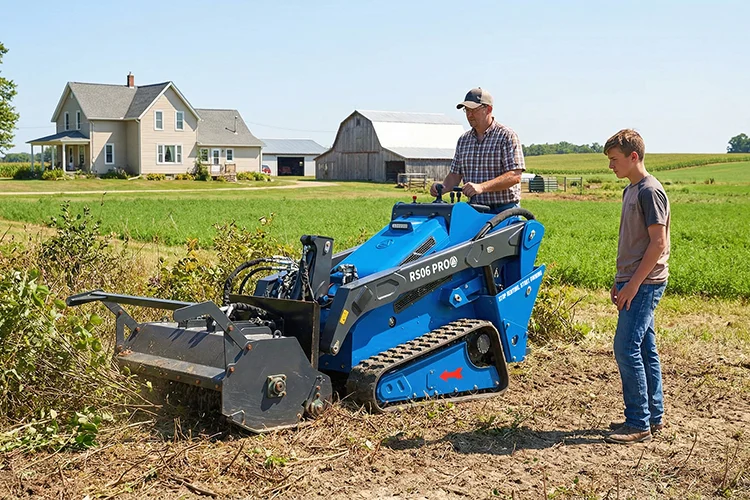
A skid steer loader is a compact, highly maneuverable machine equipped with lift arms capable of supporting a wide range of attachments. Its four-wheel design allows the machine to turn within its own footprint by skidding the wheels independently.
Because of this unique steering system, skid steer loaders excel in confined areas where larger equipment cannot operate efficiently.
Industries commonly using skid steer loaders include:
Their versatility makes them one of the most widely used compact machines in today’s equipment market.
A compact track loader shares many similarities with a skid steer loader but replaces traditional wheels with rubber tracks.
The track system distributes machine weight over a larger surface area, significantly reducing ground pressure. This allows compact track loaders to operate efficiently on soft, muddy, sandy, snowy, or uneven terrain where wheeled machines may lose traction.
Compact track loaders are particularly popular in:
Their enhanced traction often results in higher productivity under difficult ground conditions.
Although these machines appear similar, several important differences influence purchasing decisions.
Skid steer loaders perform exceptionally well on:
Compact track loaders perform better on:
Choosing equipment based on ground conditions can significantly reduce operating costs.
Skid steer loaders generally offer tighter turning capabilities, making them ideal for:
Compact track loaders remain maneuverable while offering improved stability on rough terrain.
Skid steer loaders typically feature:
Compact track loaders usually involve:
However, improved productivity on difficult terrain may offset these additional expenses.
Productivity depends heavily on jobsite conditions.
A skid steer loader often completes projects faster on hard surfaces due to reduced rolling resistance.
A compact track loader maintains consistent performance in adverse environments where wheeled machines may become stuck or lose traction.
For contractors frequently working on undeveloped land, compact track loaders often provide greater daily productivity.
One reason Skid Steer and Compact Track Loaders remain popular is their ability to utilize hundreds of interchangeable attachments.
Common attachments include:
Ideal for loading gravel, sand, soil, and construction materials.
Used in warehouses, farms, and construction sites for moving palletized goods.
Perfect for fence installation, tree planting, and foundation drilling.
Suitable for demolition projects involving concrete and asphalt.
Frequently used by utility contractors installing pipelines or communication cables.
Help clear vegetation quickly during land development.
Essential for municipalities and commercial snow removal contractors.
The flexibility of these attachments transforms one machine into a multi-purpose construction solution.
General contractors use skid steer loaders for excavation support, grading, cleanup, and material transport.
Compact equipment easily navigates residential properties while minimizing ground disturbance.
Farmers use loaders for feed handling, fencing, manure removal, and property maintenance.
Cities rely on compact loaders for snow removal, street maintenance, and public works.
Rental fleets appreciate machines capable of serving multiple customer industries with interchangeable attachments.
When comparing equipment, experienced buyers often evaluate:
Higher hydraulic flow supports demanding attachments such as mulchers and cold planers.
Modern cabins may include:
Comfort directly influences operator productivity during long workdays.
Machines with accessible maintenance points reduce downtime and simplify routine servicing.
Efficient engine design lowers operating costs while helping companies improve sustainability.
Universal quick-attach systems increase equipment utilization across multiple applications.
Proper maintenance extends equipment lifespan and reduces unexpected repairs.
Recommended practices include:
Routine inspections help maintain consistent productivity.
Ask yourself several important questions before purchasing:
Businesses primarily operating on paved surfaces often benefit from skid steer loaders.
Companies working in muddy or uneven environments frequently achieve greater efficiency using compact track loaders.
Compact equipment delivers numerous long-term advantages:
These benefits explain why demand for compact construction machinery continues growing worldwide.
Both Skid Steer and Compact Track Loaders play essential roles across today’s construction, agriculture, landscaping, and industrial sectors. While skid steer loaders provide exceptional maneuverability and cost efficiency on hard surfaces, compact track loaders offer superior traction and stability in challenging environments.
The ideal choice depends on your operating conditions, project requirements, attachment needs, and long-term business goals. By carefully evaluating terrain, maintenance expectations, and equipment utilization, buyers can invest confidently in machinery that delivers reliable performance and lasting value.
Whether expanding a construction fleet or purchasing your first compact machine, selecting the right loader ensures greater productivity, improved operational efficiency, and stronger returns on investment over the life of the equipment.


 Ev
Ev
 Ürünler
 E-posta
 WhatsApp