
feb. 24, 2026
Forklifts are one of the most important machines in modern warehouses and logistics centers. Choosing the correct forklift type can significantly improve efficiency, safety, and operating costs. With many options available in 2026, businesses must understand how different forklift designs serve different applications.
Manufacturers such as RIPPA offer multiple forklift models designed for warehouses, industrial yards, and global distribution operations.
This guide explains the most common types of warehouse forklifts and how to select the right one for your operation.
Not all forklifts are designed for the same tasks. The wrong machine can cause:
Lower efficiency
Higher maintenance costs
Safety risks
Reduced productivity
Selecting the correct forklift ensures smoother warehouse workflows and better long-term return on investment.
Counterbalance forklifts are the most common forklifts used worldwide.
Two front forks for lifting pallets
Weight at the rear balances the load
Available in electric, diesel, and LPG models
Simple and easy to operate
General warehouse operations
Loading and unloading trucks
Unități de producție
Distribution centers
Because of their versatility, counterbalance forklifts are often the first choice for many businesses.
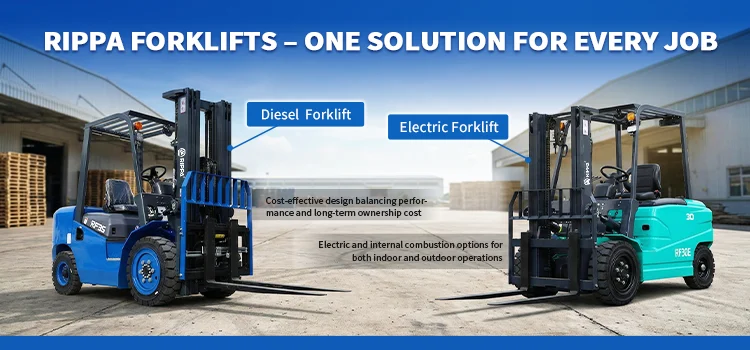
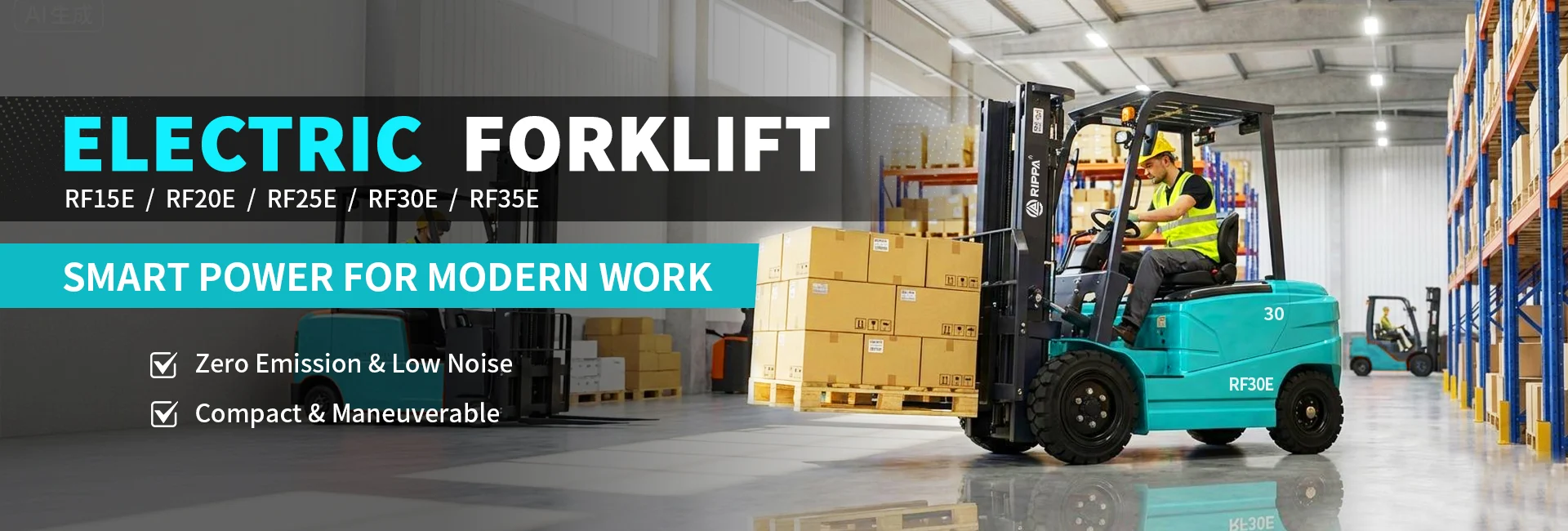
Electric forklifts are increasingly popular as companies focus on efficiency and sustainability.
Costuri de exploatare mai mici
Environmentally friendly
Niveluri reduse de zgomot
Smooth acceleration and handling
Indoor warehouses
Retail distribution centers
Food and pharmaceutical storage
E-commerce fulfillment facilities
Electric forklifts also require less maintenance compared with internal combustion models.
Reach trucks are designed specifically for warehouses with tall racking systems.
Extended lifting height
Narrow body design
Stabilizing outriggers
Precise load handling
High-density storage warehouses
Narrow aisle environments
Large logistics centers
These forklifts help maximize vertical storage space.
These smaller material-handling machines are widely used in compact warehouses.
Compact size
Easy operation
Lower purchase cost
Ideal for short-distance transport
Retail stockrooms
Small warehouses
Truck loading zones
Supermarkets
Although smaller than traditional forklifts, they are extremely useful for light-duty tasks.
Rough terrain forklifts are designed for outdoor environments.
Large pneumatic tires
Powerful engines
High ground clearance
Strong lifting capacity
Șantiere de construcții
Timber yards
Agricultural operations
Outdoor material handling
These machines perform well on uneven surfaces where standard forklifts cannot operate efficiently.
Warehouses with limited space often rely on narrow aisle forklifts.
Raza de viraj redusă
Efficient use of storage space
Higher stacking capability
Improved warehouse layout efficiency
By reducing aisle width, businesses can increase storage capacity without expanding facilities.
Before purchasing a forklift, businesses should evaluate several operational factors.
Ensure the forklift can safely handle the maximum load weight.
Warehouses with tall shelving require forklifts capable of reaching higher levels.
Aisle width and floor space influence the type of forklift needed.
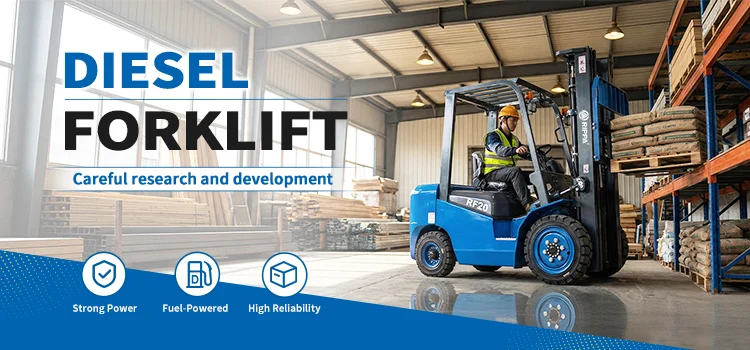
Electric forklifts suit indoor environments, while diesel models perform better outdoors.
Heavy-duty operations require machines designed for continuous use.
Modern forklifts are designed to improve both safety and productivity.
Printre caracteristicile importante se numără:
Ergonomic operator cabin
Clear visibility design
Stable hydraulic lifting systems
Efficient power systems
Advanced safety technology
Companies investing in modern forklifts often see improved workflow and reduced downtime.
Global equipment distributors are increasingly working with manufacturers that combine quality and cost efficiency.
RIPPA forklifts offer:
Proiectare structurală rezistentă
Reliable hydraulic systems
Competitive factory-direct pricing
Models suited for warehouses and logistics operations
Support for international dealers and partners
This makes them a practical choice for businesses looking to expand their material-handling fleet.
Understanding the different types of warehouse forklifts helps businesses choose equipment that matches their operational needs. From electric forklifts to rough terrain models, each machine serves a specific purpose in the logistics chain.
Selecting the right forklift improves efficiency, reduces operational costs, and ensures smoother warehouse operations.


 Acasă
Acasă
 Produse
 E-mail
 WhatsApp