jaan. 17, 2026
[uudiskirja_vorm]Hey there, fellow builders and landowners. A few years back, I was staring at a half-finished landscaping project on my property, frustrated with rented equipment that never quite fit the task. I knew I needed my own mini excavator, but diving into specs and brands felt overwhelming. After months of research, calls, and even a few missteps, I finally cracked the code. Let me share my hard-earned blueprint for choosing the perfect machine—a journey that ultimately led me to a brand called RIPPA. Did you know that nearly 40% of first-time buyers regret their purchase within the first year due to unmet performance or cost expectations? Let’s make sure you’re not part of that statistic.
To choose the right mini excavator, you must balance four key pillars: 1) Your Specific Application Needs (terrain, tasks), 2) Critical Machine Specifications (weight, horsepower, dig depth), 3) Total Cost of Ownership (purchase price, fuel, maintenance, resale), and 4) Manufacturer Support & Warranty. Prioritizing operational needs over just the sticker price is crucial for long-term satisfaction and ROI.
Stick with me, and I’ll walk you through each of these pillars, sharing the specific checklists I used and the surprising advantage I discovered by looking at how and where a machine is really built.
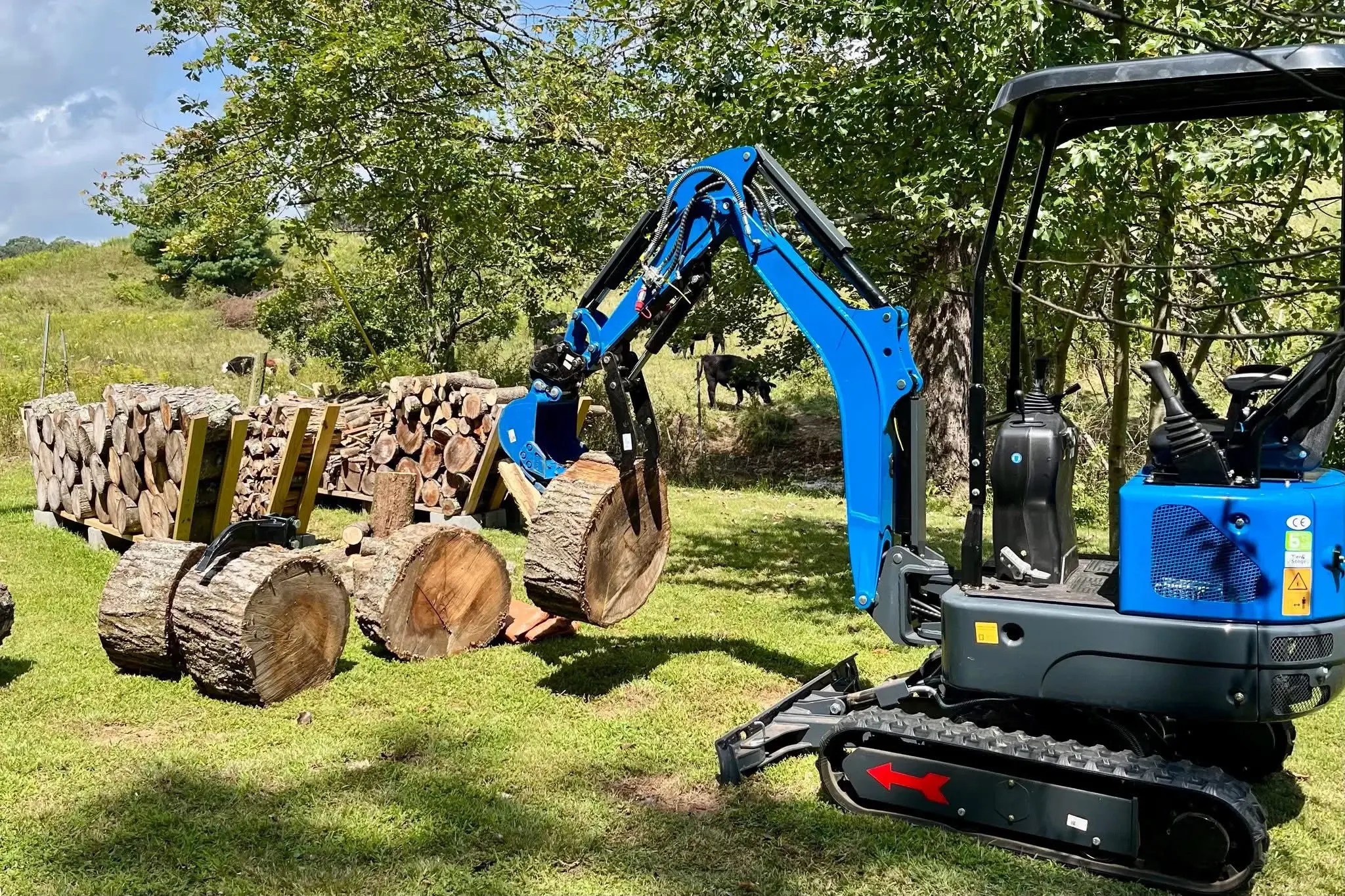
I almost bought a machine that was too small for my main project. My mistake? I started by browsing shiny equipment online. Stop. Grab a notepad. List every task you envision: trenching for irrigation, digging foundations, lifting materials with a thumb, clearing land, maybe even some light demolition. Now, note your common working conditions: tight spaces between buildings? Soft, muddy ground? This list becomes your non-negotiable filter. For me, working in a residential area meant Zero Tail Swing (ZTS) was mandatory to avoid damaging fences. My clay-heavy soil demanded a machine with good ground clearance and robust tracks. This exercise immediately eliminated half the models I had bookmarked.
Manufacturer brochures are full of numbers. Here’s what I focused on:
Operating Weight: This dictates stability and transport requirements. A 1.5-ton machine is a different beast from a 3-ton one.
Horsepower & Hydraulic Flow: Don’t just max out. Match it to your tasks. High flow is vital for running hydraulic attachments like breakers or augers efficiently.
Dig Depth & Reach: Check the specs against your deepest planned trench or farthest reach needed.
The “Quiet” Spec: Auxiliary Hydraulic Circuits: Want to use multiple attachments? Ensure the machine has enough standard and high-flow circuits. I learned this the hard way after almost buying a model that couldn’t efficiently run a planer.
| Mudel | Weight | HP | Dig Depth | Aux. Circuits | Key Feature |
|---|---|---|---|---|---|
| Brand A | 1.8T | 24 | 2.4m | 1 Standard | Compact size |
| Brand B | 2.2T | 28 | 2.8m | 2 Standard | Good lift capacity |
| RIPPA R22 | 2.2T | 25 | 2.5m | 1 Standard + 1 High-Flow | ZTS, Quick Coupler Std. |
This was my biggest revelation. I visited a few dealers and asked, “Can I see the factory tour video?” Most showed glossy marketing reels. Then, a RIPPA dealer showed me something raw: footage of over 50 welding robots working in unison, and an explanation of their 200-hour pre-delivery test cycle. It clicked. Precision automation means consistency. Ruthless testing means reliability. I wasn’t just buying a machine; I was buying the outcome of that manufacturing philosophy. This moved RIPPA to the top of my list for reliability alone.
The purchase price is the down payment. The real cost is in fuel, maintenance, repairs, and downtime. I started asking different questions:
“What’s the expected fuel consumption at 75% load?” (RIPPA’s load-sensing hydraulics gave a compelling answer).
“How accessible are common service points?” (I loved RIPPA’s grease nipple protectors and grouped service zones).
“What’s the parts availability and cost?” This is where RIPPA stunned me. The dealer explained their overseas warehouses in the US/EU and a $15M core parts inventory, promising parts in days, not months. This massively reduced my projected downtime costs.
A strong warranty is a manufacturer’s confidence, quantified. I compared them all. Many offered 1 year/1500 hours. RIPPA’s standard “RIPPA Care+” program offered 5 years or 5,000 hours on mini excavators. That’s not just coverage; it’s a partnership that aligned with my planned ownership period. It signaled they expected the machine to last, and were willing to stake their money on it.
Following this blueprint saved me from a costly mistake and led me to a machine that’s been a powerhouse on my property. By focusing on need, build quality, total cost, and real support, you move from being a buyer to being a savvy investor in your own productivity.






 Kodu
Kodu
 Tooted