
mai 23, 2026
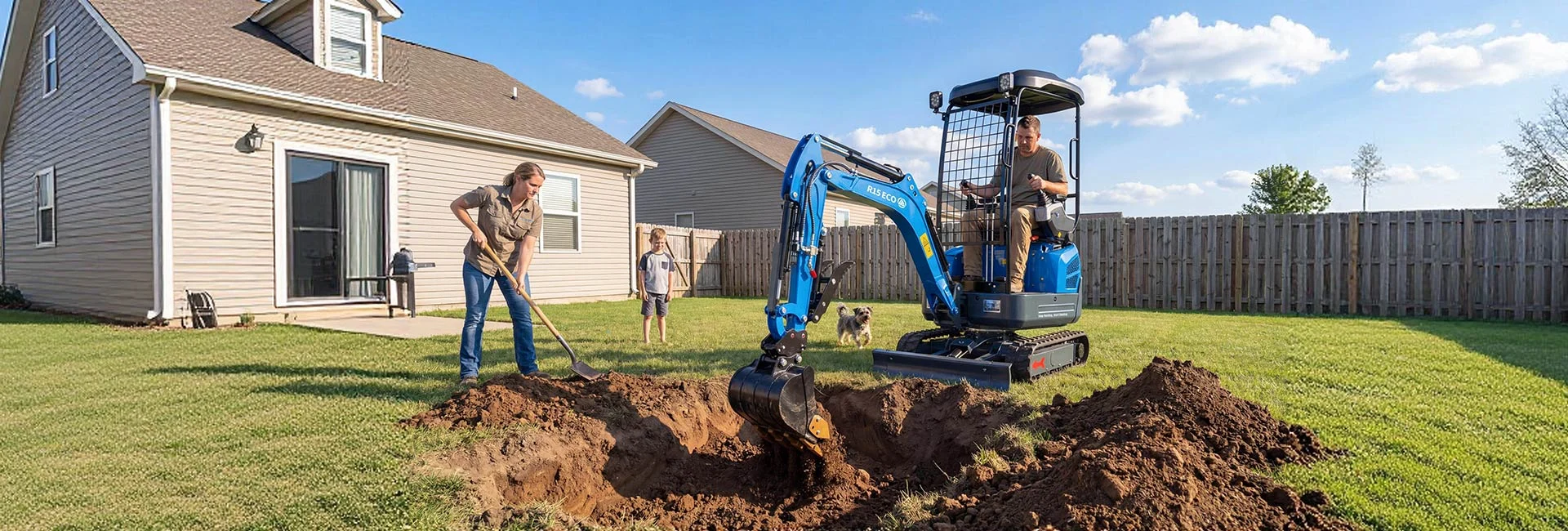
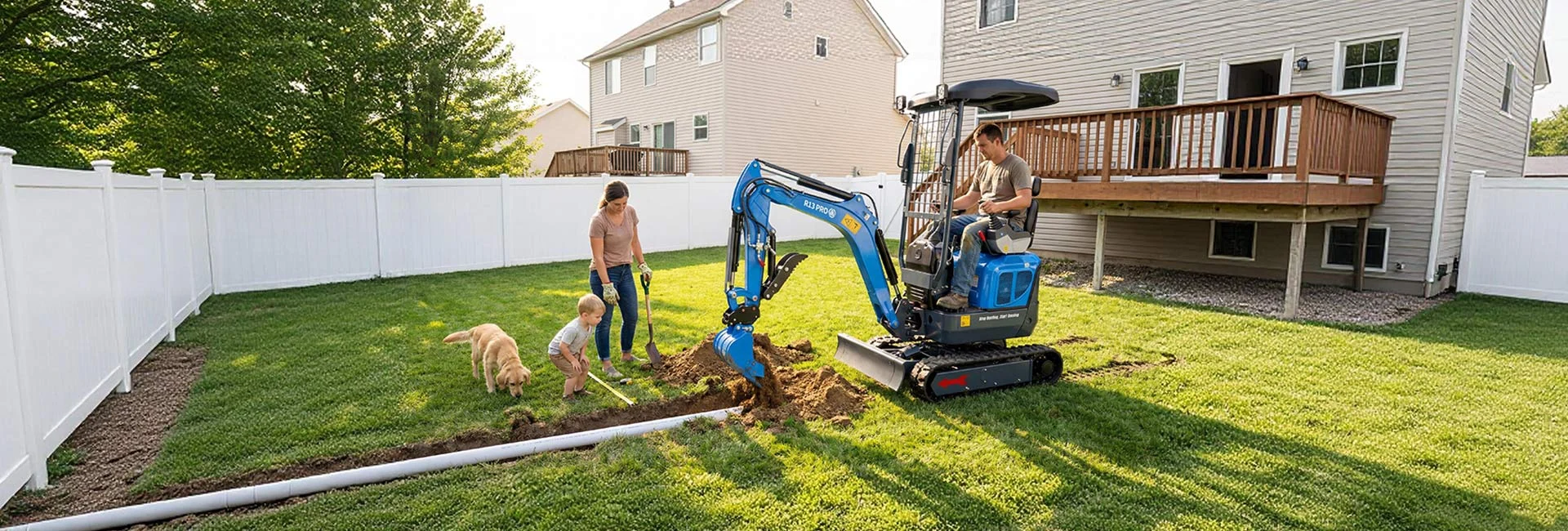
For most homeowners with 1–5 acres, a 1.5–2.5 ton mini excavator is the ideal choice. It handles drainage trenches, stump removal, driveway repair, and landscaping. Key factors: gate access (measure your openings), digging depth (at least 2.5 m), and transport capability. Models like the RIPPA R15 (1.5t) or R322L (1.8t) offer the best balance of power and portability for residential use.
Key insight: 85% of homeowners can complete all their projects with a 1.5–2.5 ton machine. Larger is not always better – oversize machines cause more lawn damage and transport headaches.
 1. Why Size Matters When Choosing a Mini Excavator
The size of your mini excavator determines what you can dig, where you can go, and how you transport it. Choosing the wrong size leads to frustration, wasted money, or even an unusable machine.
Three main size classes:
| Size Class | Weight | Sobib kõige paremini |
|---|---|---|
| Micro (1–1.5 tons) | 1,000–1,500 kg | Garden work, small trenches, gate access |
| Compact (1.5–2.5 tons) | 1,500–2,500 kg | Driveways, drainage, stump removal |
| Midi (2.5–4 tons) | 2,500–4,000 kg | Ponds, foundations, land clearing |
RIPPA models by class: R319 (1.0t, micro), R15 (1.5t, compact), R322L (1.8t, compact), R330 (2.0t, compact/midi), R350 (3.5t, midi).
Standard residential gates are 36 inches (914 mm) wide. If your machine won’t fit, you can’t use it in your backyard.
| Machine Width | Fits 36″ Gate? | What to Do |
|---|---|---|
| Under 917 mm | Yes | Models like RIPPA R319 (917 mm) work perfectly |
| 950–980 mm | Tight | May need to remove hinges or a fence panel |
| Over 980 mm | No | Requires permanent panel removal or alternative access |
Action step: Measure your narrowest gate opening before you look at any specifications. If you have a 36-inch gate, prioritize machines with transport width under 917 mm.
Buy for your toughest task, not your most common one. A machine that handles your hardest job will easily manage easier tasks.
| Projekt | Typical Depth Needed |
|---|---|
| Garden trench (irrigation) | 12–18 tolli |
| French drain | 24–36 tolli |
| Small tree stump (under 12″) | 18–24 tolli |
| Foundation for shed | 24–48 inches |
| Swimming pool | 48–72 inches |
| Large stump (over 24″) | 36–48 inches |
Rule of thumb: Your machine’s maximum digging depth should exceed your deepest required depth by at least 6 inches for comfortable operation.
Digging force (measured in kN) determines how easily the machine breaks through compacted soil, clay, or roots.
| Digging Force | Suitable For |
|---|---|
| 9–11 kN | Loose soil, garden beds |
| 11–15 kN | Compacted soil, small roots |
| 15–20 kN | Heavy clay, medium stumps |
| 20+ kN | Rock, large stumps, demolition |
For clay or rocky soil: Choose a machine with at least 12 kN digging force. For regular stump removal, look for 15 kN or more.
RIPPA examples: R319 has 9.2 kN (light garden work). R322L has 10.4 kN (general use). R18 has 15.8 kN (stump removal). R350 has ~22 kN (heavy excavation).
Do you have a trailer and a truck capable of towing the machine? If not, consider dealer delivery and keeping the machine on your property.
| Masina kaal | Trailer Type | Minimum Truck |
|---|---|---|
| Under 1,500 kg | Single‑axle (3,500 lb) | Half‑ton pickup |
| 1,500–2,200 kg | Tandem‑axle (7,000 lb) | Half‑ton or 3/4‑ton |
| Over 2,200 kg | Heavy tandem (10,000+ lb) | 3/4‑ton or 1‑ton |
If you don’t own a trailer: Many owners choose dealer delivery once and keep the machine on their property permanently – often the most convenient and cost‑effective solution.
A mini excavator with only a bucket is limited. These attachments greatly expand what you can do:
| Manus | Typical Use | investeeringutasuvus (ROI) |
|---|---|---|
| Tasanduslaba | Driveway leveling, spreading gravel | 1 driveway repair |
| Hüdrauliline pöidlakäepide | Grabbing stumps, rocks, logs | 3–5 stump removals |
| Auger | Fence posts, tree planting | 1 fencing project |
| Kiirühendus | Fast attachment changes | Saves hours of labor |
If your machine does not already have a hydraulic quick coupler, add it immediately. It turns a 15‑minute attachment change into a 30‑second operation from the cab.
The purchase price is only part of the equation. Over 5 years of typical homeowner use (200 hours/year), a $25,000 excavator will cost:
| Cost Component | 5‑Year Total |
|---|---|
| Purchase price | $25,000 |
| Fuel (1.4 L/h × $1.20 × 1,000h) | $1,680 |
| Maintenance (oil, filters, grease) | $2,500 |
| Minor repairs | $1,000 |
| Attachments (blade, thumb, auger) | $3,000 |
| Edasimüügiväärtus | –$12,000 |
| Net 5‑year cost | $21,180 |
Tasuvusaeg: Most homeowners break even in 2‑3 years through avoided contractor costs
Q: What is the best mini excavator for a first‑time buyer?
A: A 1.5–1.8 ton machine with a Kubota engine, hydraulic quick coupler, and grading blade. It balances power, transportability, and ease of use.
Q: Do I need a special license to operate a mini excavator on my own property?
A: No. For personal use on your land, no license is required. Commercial work may have different rules – check local regulations.
Q: How long does a mini excavator last?
A: With proper maintenance, 8,000–12,000 hours (10‑15 years for homeowners). Kubota engines are known for 10,000+ hour lifespans.
Q: Is it cheaper to rent or buy a mini excavator?
A: For less than 10 days of use per year, rent. For 15+ days per year, buying is cheaper over 5 years.
Choosing the right mini excavator comes down to four steps: measure your gate, identify your hardest project, check your transport setup, and budget for total cost. For most homeowners, a 1.5–1.8 ton machine with a Kubota engine, hydraulic quick coupler, and grading blade is the sweet spot. Take your time, measure carefully, and pick a machine that will serve you for years – not just for tomorrow’s project.
Järgmine samm: Measure your gate, list your projects, and contact a reputable mini excavator manufacturer for a recommendation.


 Kodu
Kodu
 Tooted
 E-post
 WhatsApp