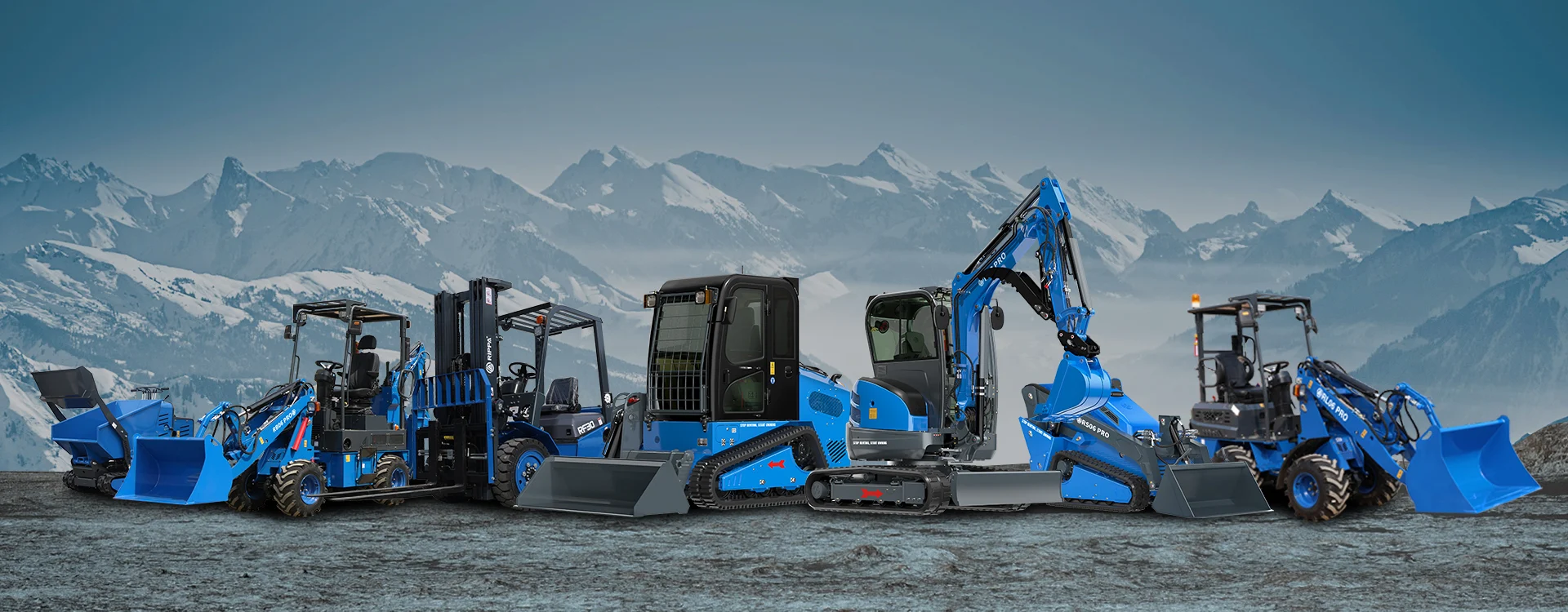
When choosing compact construction equipment, many buyers ask the same question: Skid Steer vs. Compact Track Loader — what’s the difference, and which one should I choose?
Although these two machines look similar and use many of the same attachments, their performance, cost, and ideal applications can differ significantly.
This guide explains the key differences between skid steer loaders (SSLs) 和 compact track loaders (CTLs) to help contractors, landscapers, and equipment buyers make an informed decision.
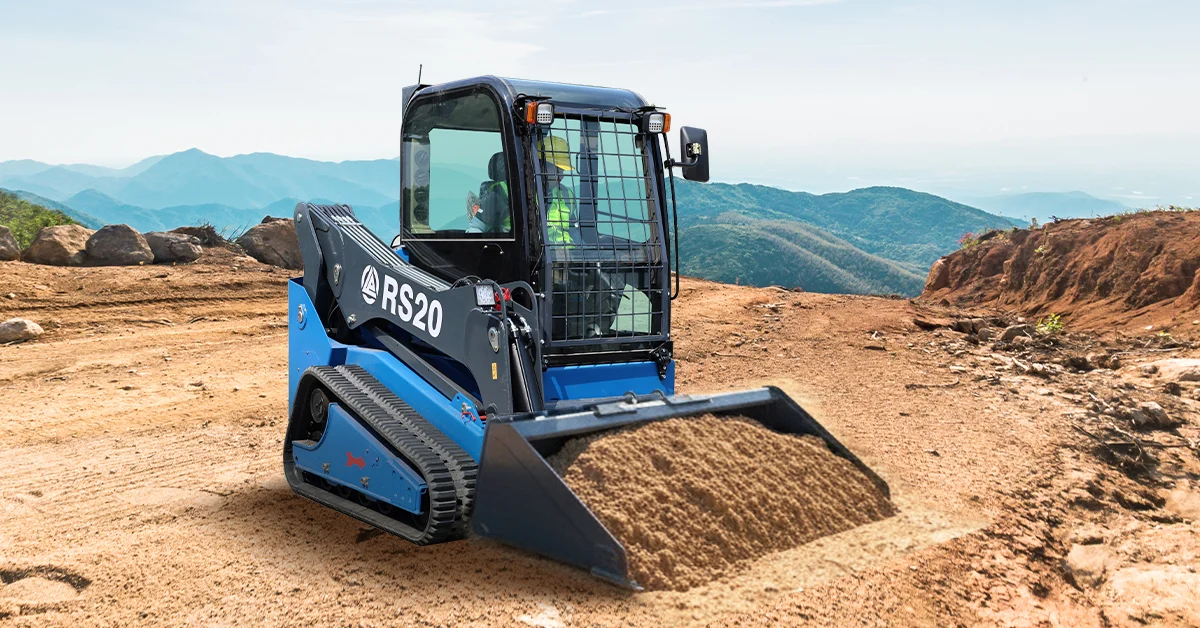
什么是滑移装载机?
A 滑移装载机 is a compact, engine-powered machine that uses four wheels and a rigid frame. It turns by skidding or dragging the wheels on each side in opposite directions, which gives the machine its name.
Key Features of a Skid Steer
-
●Wheeled undercarriage
-
●Fast travel speed
-
●Lower purchase and maintenance cost
-
●Excellent maneuverability in tight spaces
-
●Ideal for hard, flat surfaces
Skid steers are widely used in construction, material handling, road work, and warehouse-related outdoor tasks.
What Is a Compact Track Loader?
A compact track loader (CTL) is similar in size and structure to a skid steer but replaces wheels with rubber tracks. This design significantly changes how the machine interacts with the ground.
Key Features of a Compact Track Loader
-
●Rubber track undercarriage
-
●Superior traction and flotation
-
●Lower ground pressure
-
●Better stability on slopes
-
●Strong performance in mud, sand, and snow
Compact track loaders are especially popular in landscaping, agriculture, forestry, and wet or uneven job sites.
Skid Steer vs. Compact Track Loader: Key Differences
1. Undercarriage
-
●Skid Steer: Four wheels
-
●Compact Track Loader: Continuous rubber tracks
Tracks provide more surface contact, while wheels offer speed and simplicity.
2. 地基条件
-
●Skid Steer: Best on concrete, asphalt, and packed soil
-
●CTL: Excels on soft, muddy, sandy, or snowy terrain
If your job site changes frequently or includes poor ground conditions, a CTL offers more versatility.
3. Traction and Stability
Compact track loaders provide:
-
●Better grip in slippery environments
-
●Improved balance on slopes
-
●Reduced machine sinking
Skid steers may struggle in wet or loose soil but perform efficiently on firm ground.
4. Speed and Maneuverability
-
●Skid Steer: Faster travel speed and sharper turns
-
●CTL: Slightly slower but smoother operation
For jobs requiring frequent repositioning on hard surfaces, skid steers have the advantage.
5. Cost and Maintenance
-
●Skid Steer:
-
●Lower initial purchase price
-
●Less expensive maintenance
-
-
●Compact Track Loader:
-
●Higher upfront cost
-
●Track and undercarriage maintenance required
-
Over time, CTLs may cost more to maintain but can reduce downtime on difficult terrain.
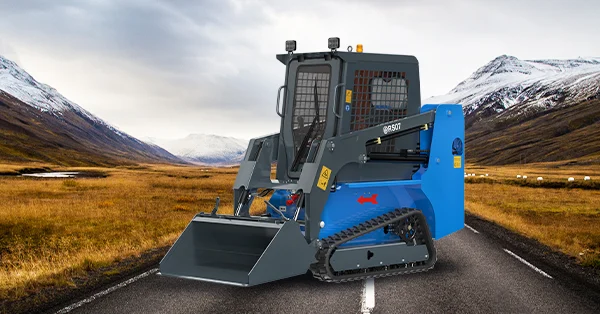
附件兼容性
Both machines support a wide range of attachments, including:
-
●Buckets
-
●Pallet forks
-
●Augers
-
●Trenchers
-
●Grapples
-
●Snow blowers
Most skid steers and CTLs use a 通用快装系统, allowing operators to switch tools quickly.
Which One Should You Choose?
选择一个 滑移装载机 if:
-
●You work mostly on paved or solid surfaces
-
●Speed and agility are priorities
-
●Budget is a major factor
选择一个 紧凑型履带装载机 if:
-
●You frequently work on soft or uneven ground
-
●Job site conditions vary throughout the year
-
●Stability and traction are critical
Skid Steer vs. Compact Track Loader: Final Verdict
There is no one-size-fits-all answer in the skid steer vs. compact track loader debate. The right choice depends on your job site conditions, workload, and budget.
-
●Skid steers offer affordability, speed, and simplicity
-
●Compact track loaders deliver traction, stability, and all-terrain performance
Understanding these differences helps ensure you select the machine that maximizes productivity and long-term value.
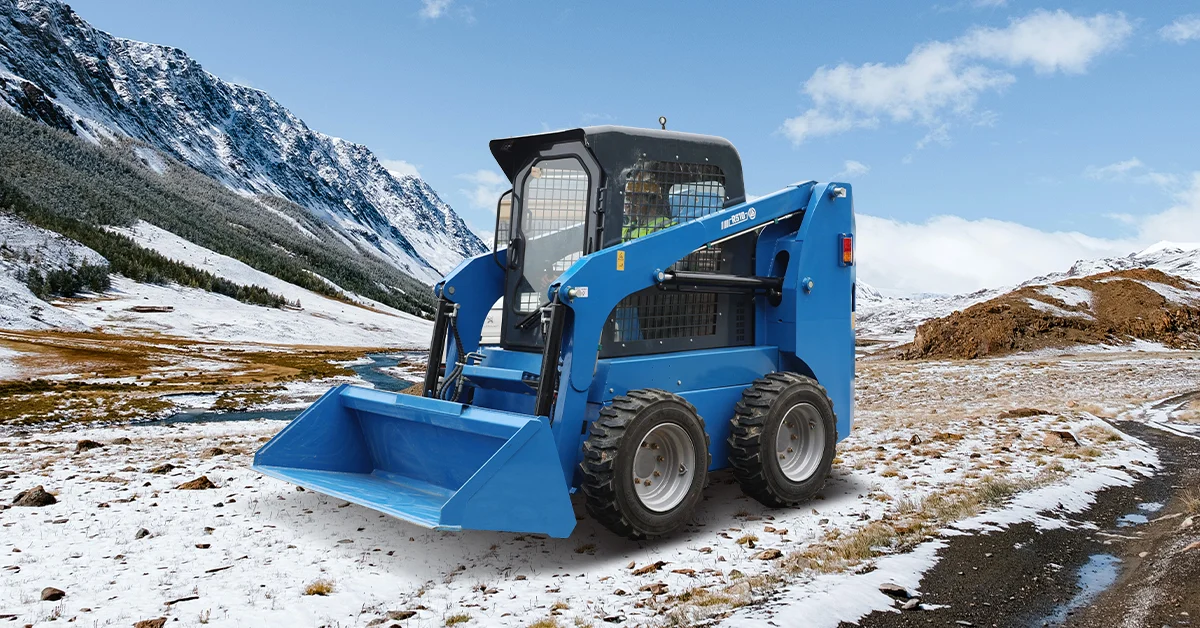
Frequently Asked Question
Is a compact track loader just a tracked skid steer?
Yes, in simple terms. However, the correct industry name is compact track loader, and it is engineered specifically for tracked performance rather than being a wheeled machine with tracks added.
 首页
首页
 产品
产品
 电子邮件
电子邮件
 WhatsApp

