1 月 09, 2026
[新闻简报表格]When evaluating best Chinese mini skid steer for the money, the term should be understood as a value-alignment question, not a search for a single superior machine. Purchase decisions are typically shaped by several decision dimensions, including intended use scenarios, operating frequency, core performance boundaries, site limitations和 maintenance conditions. Each dimension introduces trade-offs: compact size improves access but limits capacity, higher hydraulic capability expands attachment use but increases system demands, and broader versatility may reduce task-specific efficiency. Because working environments, workloads, and operational expectations vary, there is no unified optimal choice. Suitability depends on how well the machine’s functional limits match practical needs and constraints rather than on a generalized definition of value.
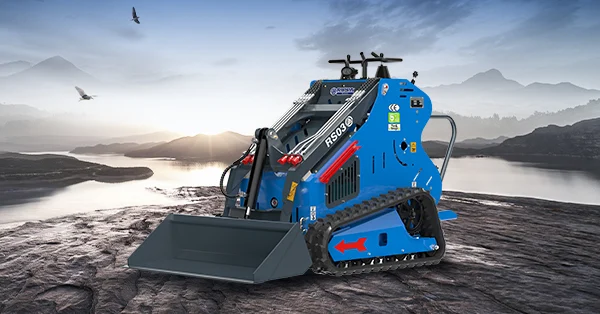
Clarifying the primary use scenario is essential. Mini skid steers are commonly applied in landscaping, light construction, property maintenance, agriculture, and confined-area material handling. Ground conditions, space restrictions, and task type determine whether a mini skid steer’s design characteristics are appropriate.
Use frequency affects expectations for durability and upkeep. Occasional or seasonal use places different stress patterns on components compared to daily or continuous operation, influencing acceptable design complexity and maintenance planning.
Before purchase, it is necessary to define baseline requirements such as:
These factors establish minimum functional thresholds rather than targeting maximum output.
Mini skid steer parameters define operational boundaries:
Increasing capability in one parameter often introduces limitations in another, requiring balance rather than maximization.
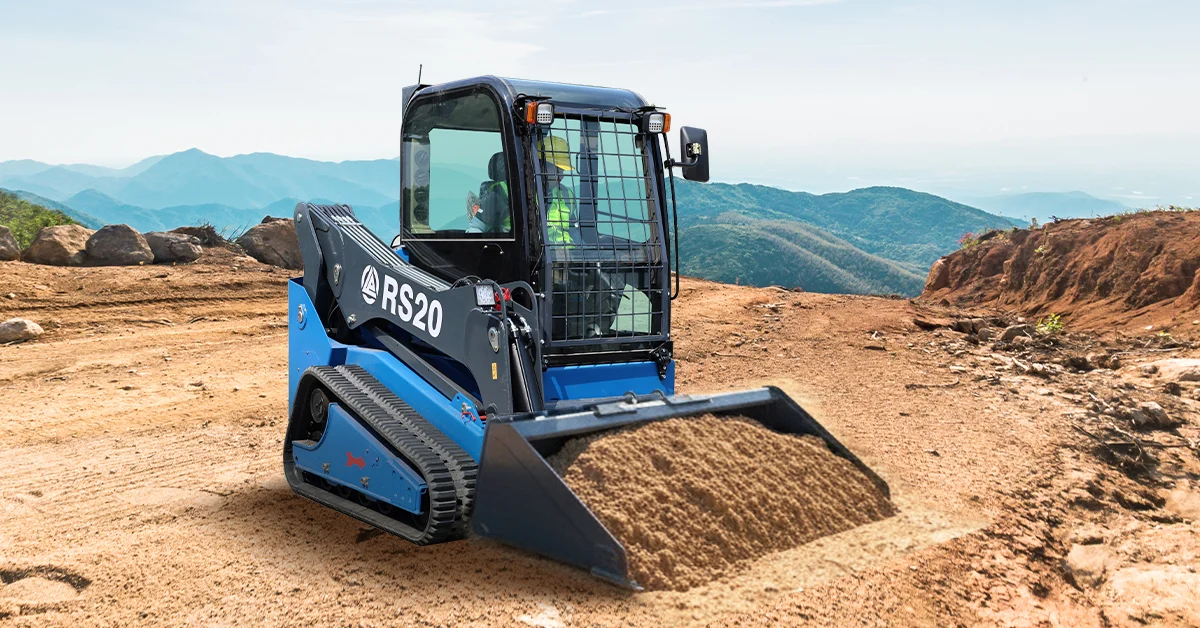
These scenarios typically emphasize:
Light construction use often prioritizes:
Indoor applications shift focus toward:
Environmental conditions such as dust, moisture, temperature variation, and surface hardness affect wear patterns and system reliability. Limited access to service resources constrains acceptable hydraulic and mechanical complexity.
Maintenance requirements scale with:
Long-term usability depends on aligning machine demands with available maintenance capacity.
A mini skid steer may not be suitable in the following situations:
In these cases, other equipment categories may better align with task requirements.
No. Higher capacity expands lifting range but can reduce access and maneuverability in confined spaces.
No. Attachment performance depends on hydraulic parameters and defined operating limits.
No. Compact dimensions improve access but introduce clear limits on load handling and reach.
The concept of best Chinese mini skid steer for the money should be viewed as a reasonable matching process, not a single-answer outcome. Effective purchase decisions depend on aligning use scenarios, parameter boundaries, and operating constraints through balanced and context-specific matching, rather than assuming a universal solution exists






 首页
首页
 产品
产品