
feb. 02, 2026
The heart of any “Global Standard” machine is its power plant. RIPPA’s 3.5-t to 8-t range is built upon a foundation of Global Emission Standards (Stage V and Tier 4 Final). However, engineering for a global market goes beyond mere exhaust chemistry; it requires a sophisticated approach to equipment environmental adaptability.
For the European market, RIPPA utilizes engines equipped with sophisticated DPF (Diesel Particulate Filter) and DOC (Diesel Oxidation Catalyst) technologies. These systems ensure that particulate matter is captured and neutralized, allowing contractors to operate in “Ultra Low Emission Zones” (ULEZ).
In the Latin American context, particularly in regions like Peru or Bolivia, high-altitude operation (often above 3,500 meters) can lead to power loss and overheating due to thin air. RIPPA’s engine calibration includes automatic altitude compensation, which adjusts the fuel-to-air ratio and turbocharger output to prevent engine “strangulation.”
To bridge the gap between Nordic winters and Tropical summers, RIPPA employs an Oversized Parallel Cooling System. Unlike traditional stacked radiators, this design allows for better airflow and easier cleaning in dusty Latin American environments, while the integrated pre-heating systems ensure reliable ignition in sub-zero European climates.
A standardized asset must be “over-engineered” by definition. It must survive the most aggressive operator in a remote quarry while maintaining the structural tolerances required for precision work in a city center.
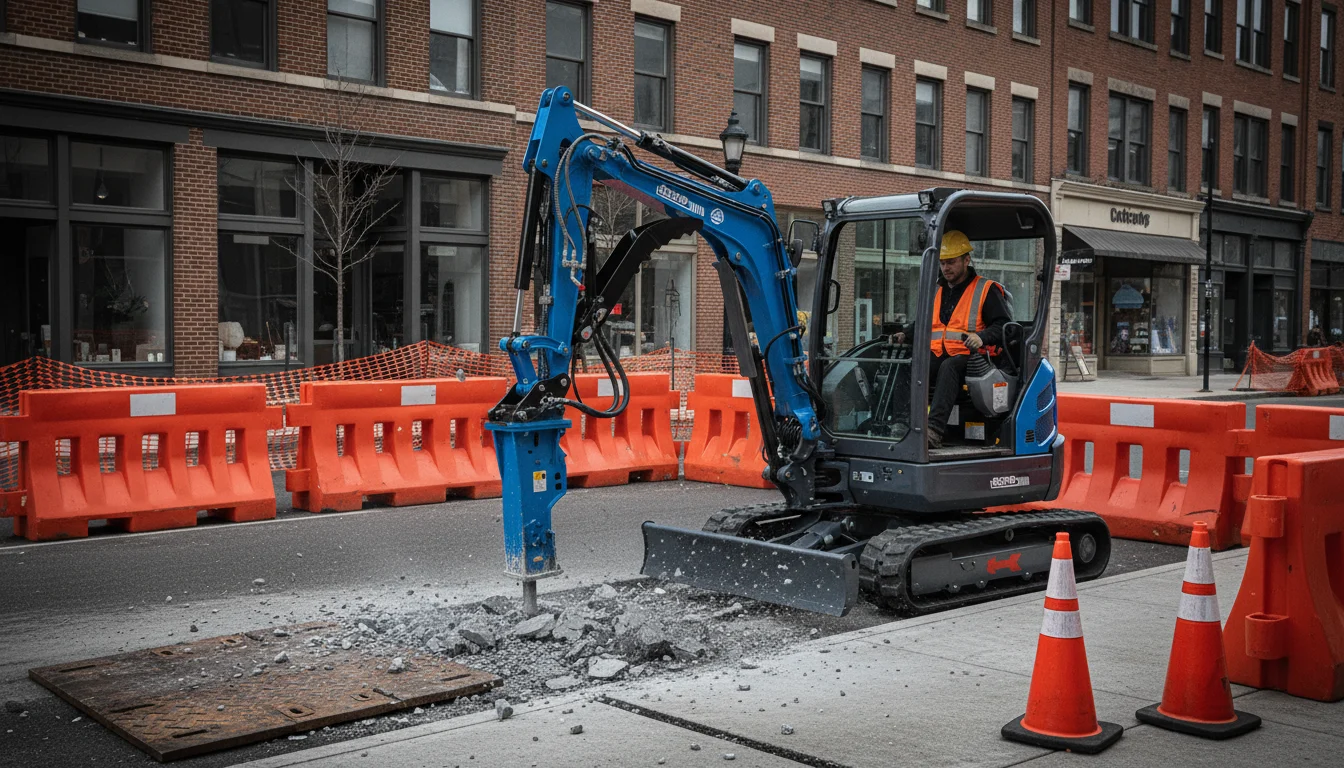
RIPPA utilizes Finite Element Analysis (FEA) to simulate 10,000+ hours of high-stress operation. The boom and arm of the 3.5t+ series are constructed from high-strength alloy steel, with critical stress points reinforced by forged steel castings rather than simple weldments. This ensures that the machine can handle the constant impact of hydraulic breaking—a high-frequency task in both European demolition and Latin American mining support.
Safety is a universal currency. RIPPA cabins are designed and tested to meet ISO 12117-2 (ROPS) and ISO 10262 (FOPS) standards.
European Value: Meets strict site-safety insurance requirements.
Latin American Value: Provides critical life-saving protection in rugged, uneven terrains where the risk of machine rollover or falling debris is significantly higher.
The cabin design also prioritizes Visibility Engineering. By utilizing high-strength, slim-profile pillars and expansive glass surfacing, RIPPA reduces blind spots, a factor that is as vital for avoiding pedestrians on a London street as it is for navigating narrow mountain passes in Chile.
In the modern era, “reliability” also means “trackability.” A machine that cannot be managed remotely is a “dark asset.” RIPPA integrates a Remote Information Management System as a standard offering for its global series.
In Europe, where fuel costs are high and carbon reporting is becoming mandatory, RIPPA’s telematics provide real-time data on idle time vs. work time, fuel burn rates, and CO2 emissions. This allows fleet managers to optimize operator behavior and prove environmental compliance to project owners.
In many Latin American markets, equipment theft and unauthorized use are significant risks. RIPPA’s GPS-based “Geofencing” allows owners to lock the machine remotely if it leaves a designated jobsite. Furthermore, it tracks engine hours to ensure that maintenance is performed on schedule, even when the machine is hundreds of kilometers away from the main office.
One of the greatest costs for a global contractor is the complexity of spare parts inventory. RIPPA addresses this by partnering with world-class component manufacturers.
Hydraulics: By utilizing pumps and valves from globally recognized brands (such as Rexroth, Eaton, or Kawasaki), RIPPA ensures that a hydraulic seal or a solenoid valve is available in almost any major industrial city worldwide.
Modular Design: The 3.5-8t series shares a high degree of part commonality. Whether the machine is a canopy version in Colombia or a full-cab version in France, the undercarriage components, hydraulic cylinders, and electrical harnesses are largely identical.
This Globalized Equipment Platform significantly reduces the “Mean Time To Repair” (MTTR). When a machine goes down, the technician doesn’t need to wait for a proprietary part from a single factory; they can rely on a global supply chain of standardized components.
Every RIPPA excavator undergoes a “Multi-Stage Validation” process before it leaves the factory:
Hydraulic Stress Test: 48 hours of continuous operation at maximum pressure to ensure no micro-leaks or thermal instabilities.
Climate Chamber Simulation: Testing electrical components in conditions ranging from -30°C to +50°C.
Vibration and Noise Mapping: Ensuring the machine meets European noise pollution standards (CE marking).
From the perspective of a Chief Equipment Officer, the RIPPA 3.5t+ series represents more than just a tool—it represents a low-risk, high-versatility asset. Its engineering reliability is not a compromise between two markets; it is an elevation of standards that satisfies both.
By choosing a machine that meets the highest global emission standards, incorporates proven international components, and offers advanced remote management, a contractor secures their investment against future regulatory changes and environmental challenges. Whether you are expanding your fleet in the EU or seizing new opportunities in Latin America, RIPPA provides the “Engineering Peace of Mind” required for long-term profitability.
Solid engineering data provides the foundation, but translating that data into commercial success for the customer is the ultimate goal. In our final section, we will analyze the specific investment returns and value propositions that make RIPPA the definitive choice for the modern contractor.


 Acasă
Acasă
 Produse
 E-mail
 WhatsApp