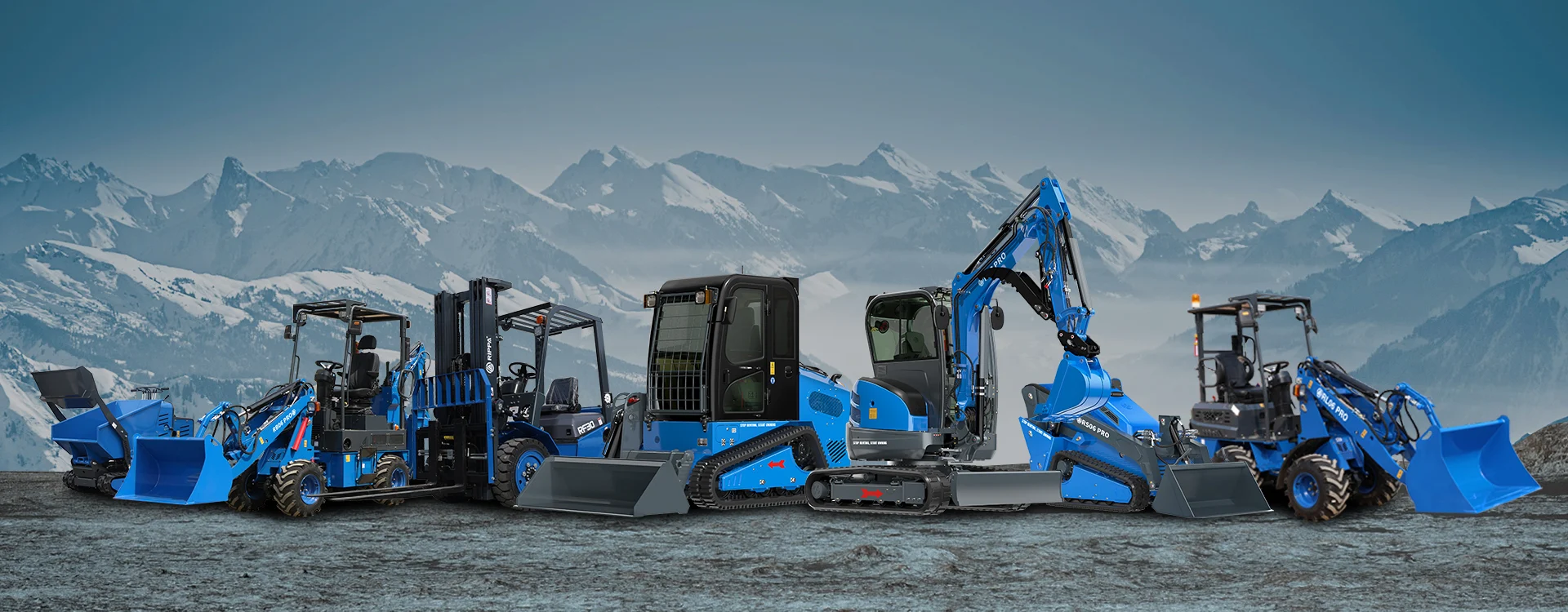
Choosing between a skid steer en een compacte rupslader (CTL) is one of the most common decisions contractors, landscapers, farmers, and construction companies face. While both machines are compact, versatile, and compatible with dozens of attachments, they perform differently depending on terrain, operating conditions, and project requirements.
This guide compares skid steers and compact track loaders from every important angle, helping buyers determine which machine delivers the highest productivity and lowest operating cost in 2026.
.webp)
Wat is een schranklader?
A skid steer loader is a compact wheeled machine that turns by skidding its wheels. It is widely used in construction, agriculture, demolition, road maintenance, snow removal, and material handling.
Because of its compact size and excellent maneuverability, a skid steer can operate efficiently in tight working environments where larger equipment cannot.
Common attachments include:
- Emmer
- Palletvorken
- Hydraulic breakers
- Schroefboren
- Gravenmachines
- Veegmachines
- Grijpers
- Sneeuwblazers
Modern skid steers can replace multiple machines simply by changing attachments.
Wat is een compacte rupslader?
A compact track loader shares the same basic structure as a skid steer but replaces wheels with rubber tracks.
Instead of concentrating machine weight onto four tires, tracks distribute weight across a larger surface area. This significantly improves flotation, traction, and stability on soft or uneven ground.
Compact track loaders are commonly used for:
- Tuinaanleg
- Forestry
- Farm work
- Muddy construction sites
- Wet terrain
- Hillsides
- Earthmoving
Skid Steer vs Compact Track Loader
1. Traction
Compact track loaders clearly outperform skid steers on soft terrain.
Tracks provide:
- Better grip
- Less wheel slip
- Higher pushing power
- Improved climbing ability
If your projects frequently involve mud, snow, sand, or loose soil, a CTL is usually the better option.
Winner: Compacte rupslader
2. Ground Pressure
One of the biggest advantages of tracks is reduced ground pressure.
Lower pressure means:
- Less turf damage
- Better performance on lawns
- Reduced sinking in mud
- Improved flotation
This makes CTLs popular among landscapers and golf course contractors.
Winner: Compacte rupslader
3. Speed
Skid steers typically travel faster than tracked machines.
For jobs involving:
- Warehouse work
- Concrete surfaces
- Frequent transportation
a skid steer saves valuable time.
Winner: Schranklader
4. Maneuverability
Both machines offer zero-radius turning, but wheeled skid steers usually feel more agile on hard surfaces.
Their faster steering response makes them ideal for:
- Urban construction
- Vrachtwagens laden
- Indoor demolition
- Warehouse applications
Winner: Schranklader
5. Operating Costs
This is where skid steers often have a major advantage.
Typical ownership expenses include:
Schranklader
- Lower purchase price
- Less expensive tires
- Simpler maintenance
- Lower repair costs
Compacte rupslader
- Higher initial investment
- Track replacement costs
- More undercarriage maintenance
- Additional cleaning requirements
Businesses focused on minimizing ownership costs often prefer skid steers.
Winner: Schranklader
6. Comfort
Modern compact track loaders generally provide a smoother ride because tracks absorb bumps and vibrations more effectively than tires.
Operators working long shifts may experience:
- Reduced fatigue
- Better stability
- Improved control
Winner: Compacte rupslader
7. Lifting Performance
Today’s premium skid steers and compact track loaders offer similar lifting capacities.
However, CTLs often provide greater stability when handling heavy materials on uneven terrain.
For flat concrete surfaces, both machines perform exceptionally well.
Winner: Tie
Which Machine Works Best on Different Terrain?
Hard Pavement
Choose a skid steer because tires wear more slowly and travel faster.
Mud
Compact track loaders maintain traction and avoid sinking.
Snow
Both machines perform well, but tracks generally offer better grip.
Zand
Tracks distribute weight better, reducing sinking.
Grass
Compact track loaders minimize surface damage.
Grind
Both perform effectively, though skid steers are usually more economical.
Attachment Compatibility
Both machines support hundreds of hydraulic attachments, including:
- Emmer
- Grijpers
- Snow pushers
- Palletvorken
- Tillers
- Gravenmachines
- Bosmaaiers
- Hydraulic hammers
Many manufacturers design attachments that work interchangeably between skid steers and compact track loaders, increasing equipment flexibility.
Industries That Prefer Skid Steers
A skid steer is often the preferred choice for:
- General construction
- Goederenbehandeling
- Municipal maintenance
- Opslag
- Demolition
- Sneeuwruimen
- Equipment rental businesses
Its lower ownership cost and fast travel speed make it an excellent all-around machine.
Industries That Prefer Compact Track Loaders
Compact track loaders are commonly selected for:
- Tuinaanleg
- Forestry
- Landbouw
- Pipeline work
- Utility installation
- Residential construction
- Wet job sites
Superior traction allows them to remain productive where wheeled machines may struggle.
Which Machine Offers Better Return on Investment?
The answer depends on how the equipment will be used.
Choose a skid steer if you:
- Primarily work on paved or compacted surfaces
- Need higher travel speeds
- Want lower maintenance costs
- Frequently transport materials
- Operate in urban environments
Choose a compacte rupslader if you:
- Work on muddy or uneven terrain
- Require maximum traction
- Perform landscaping or forestry work
- Need to protect finished ground surfaces
- Operate year-round in changing weather conditions
Why Many Contractors Choose RIPPA Equipment
RIPPA offers a range of skid steer loaders designed for construction, agriculture, landscaping, and industrial applications. Built for reliability and versatility, RIPPA machines support numerous attachments, allowing one machine to complete multiple tasks efficiently.
Key advantages include:
- Compact designs for confined job sites
- Powerful hydraulic systems
- Comfortable operator stations
- Easy maintenance access
- Compatibility with a wide range of attachments
- Global parts and dealer support
Whether you’re expanding a rental fleet or upgrading your construction equipment, selecting the right machine can significantly improve productivity and reduce operating costs.
Conclusie
The debate between Skid Steer vs Compact Track Loader comes down to jobsite conditions rather than one machine being universally better.
If most of your work takes place on hard surfaces and you prioritize affordability, speed, and low maintenance, a skid steer is likely the best investment.
If your projects regularly involve mud, slopes, soft ground, or landscaping, a compact track loader offers superior traction, stability, and flotation.
By matching the machine to your typical working environment, contractors can maximize efficiency, reduce downtime, and improve long-term profitability.
Veelgestelde vragen
Is a skid steer cheaper than a compact track loader?
Yes. Skid steers generally have lower purchase prices, lower maintenance costs, and less expensive replacement parts.
Which machine is better for muddy ground?
A compact track loader performs significantly better because its rubber tracks provide greater traction and lower ground pressure.
Can both machines use the same attachments?
Most modern attachments are compatible with both skid steers and compact track loaders using standard quick-attach systems.
Which machine is better for landscaping?
Compact track loaders are typically preferred because they minimize ground disturbance and perform better on soft soil.
Which machine is better for general construction?
For projects on paved or compacted surfaces, a skid steer often provides the best combination of speed, maneuverability, and cost efficiency.
 Home
Home
 Producten
 E-mail
 WhatsApp

