
Sau 09, 2026
The difference between a skid steer and a mini excavator is mainly defined by their primary work function, movement structure, and excavation capability, which determines how each machine fits specific job scenarios rather than indicating overall superiority.
Skid steers and mini excavators are both compact construction machines, but they are designed for different types of work. The comparison of skid steer vs mini excavator usually focuses on three core dimensions: primary task focus, movement and working range, ir ground interaction method.
A skid steer is typically used for material handling, loading, grading, and attachment-based tasks in confined or mixed work areas such as construction sites, farms, and landscaping projects. A mini excavator is typically used for digging, trenching, and precision earthmoving tasks in environments where controlled excavation and reach are required. These machines serve distinct operational purposes, and there is no absolute advantage or disadvantage; suitability depends on matching machine characteristics to the task and site conditions.
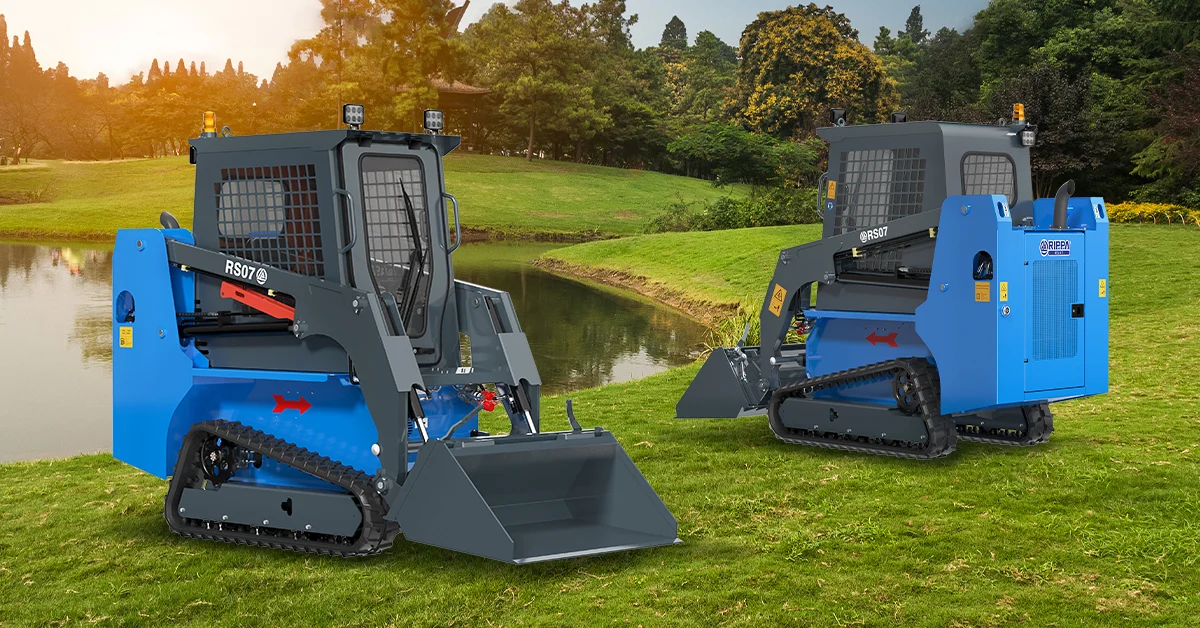
The most fundamental difference between a skid steer and a mini excavator is the type of work each machine is designed to perform.
A skid steer focuses on loading, transporting, and placing materials using buckets, forks, and other front-mounted attachments. Tasks usually involve moving materials over short distances rather than removing soil from depth.
A mini excavator focuses on excavation tasks, including digging trenches, foundations, and utility lines. Its boom, arm, and bucket system allows controlled digging below ground level with greater depth and accuracy.
Skid steers move by skid steering, allowing them to turn within their own footprint. This enables efficient operation in tight spaces but limits reach beyond the machine’s front.
Mini excavators use a tracked undercarriage combined with a rotating upper structure. This design allows the machine to dig, swing, and place material without repositioning frequently, providing a larger working envelope.
Skid steers distribute weight through wheels or tracks and are often used on compacted or mixed surfaces. Surface disturbance can occur during turning due to skid steering.
Mini excavators distribute weight evenly through tracks and remain mostly stationary during operation, reducing surface scuffing while concentrating force at the digging point.
Not typically used for: deep trenching or precision excavation.
Not typically used for: high-volume material transport or loading trucks repeatedly.
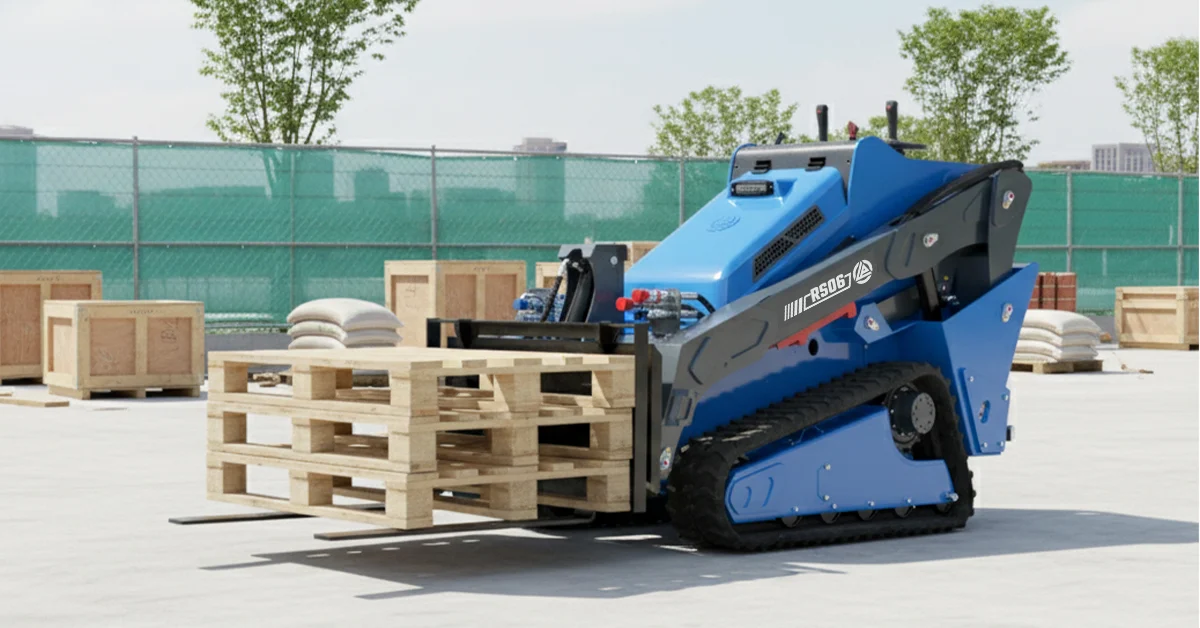
A skid steer can dig shallow material, but it does not match the depth, reach, or precision of a mini excavator.
A mini excavator can move material short distances, but it is not optimized for repeated loading or attachment-driven tasks.
Cost trends depend on usage patterns. Skid steers tend to incur additional costs through attachment use, while mini excavators concentrate wear on digging components.
The comparison of skid steer vs mini excavator highlights differences in work focus, movement design, and excavation capability.
Rather than indicating superiority, the distinction emphasizes scenario matching, where effective use depends on aligning machine design with specific job requirements and site conditions.





 Pagrindinis
 Produktai
 El. paštas
 "WhatsApp"