
Ιαν 08, 2026
Tracked skid steer loaders and wheeled skid steer loaders differ mainly in ground contact method, terrain adaptability, and operating characteristics; tracked models are typically used on soft or unstable surfaces, while wheeled models are commonly applied on hard, paved ground, and neither represents an absolute better option across all working scenarios.
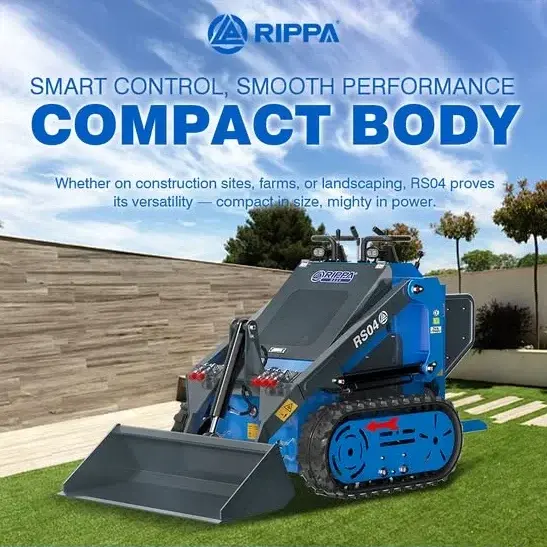
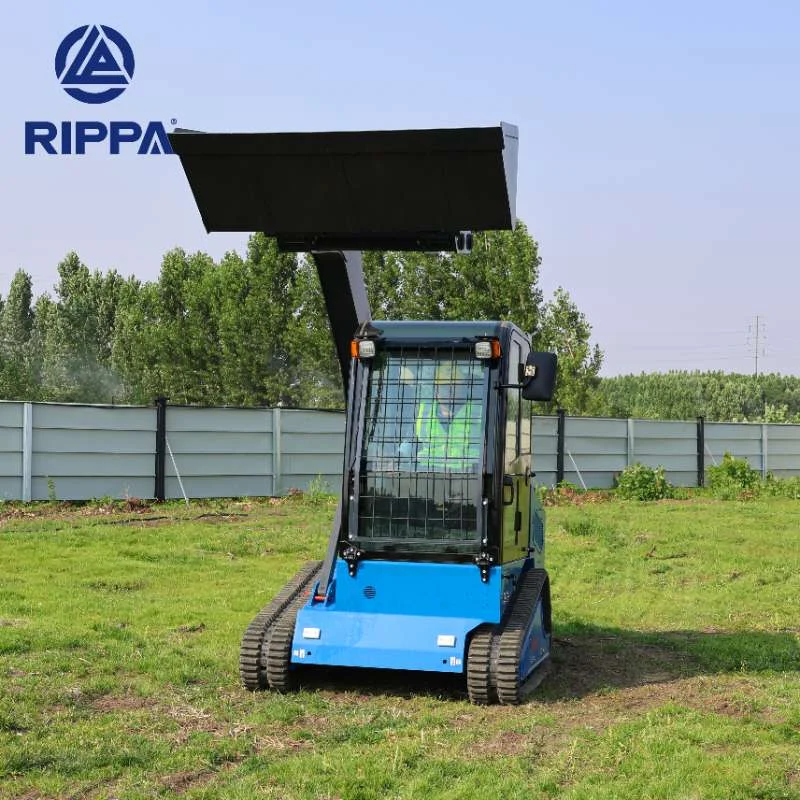
Tracked skid steer loaders move using continuous tracks that distribute machine weight over a larger surface area. This design reduces ground pressure and improves traction on loose, wet, or uneven terrain. As a result, tracked units are often used where surface bearing capacity is limited or where maintaining surface integrity is important.
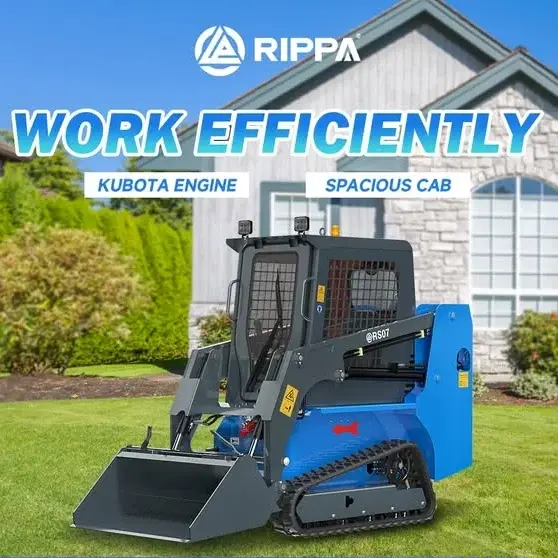
Wheeled skid steer loaders rely on tires for mobility. Tires offer lower rolling resistance on hard, flat surfaces, allowing smoother movement and quicker repositioning. However, on soft or muddy ground, wheeled machines may experience traction loss or surface deformation due to higher localized pressure.
The wider contact area of tracked skid steer loaders contributes to improved stability, particularly when operating on slopes or uneven terrain. This characteristic is relevant in landscaping, agriculture, and undeveloped construction sites where ground conditions vary.
Wheeled skid steer loaders provide stable operation on flat and reinforced surfaces such as concrete floors or paved job sites. Their stability in these environments depends largely on tire specification, inflation level, and surface condition rather than track geometry.
Tracked skid steer loaders generally exert lower pressure per unit area, which can help reduce surface disturbance on grass, soil, or other sensitive ground. This makes them suitable for projects where minimizing surface damage is a consideration.
Wheeled skid steer loaders generate higher point loads during turning due to skid steering action. On hard surfaces, this may result in increased surface abrasion, though it is typically acceptable in industrial yards, warehouses, and urban construction environments.
Tracked skid steer loaders require attention to track tension, undercarriage wear, and debris management within the track system. These elements are more sensitive to operating conditions and may influence maintenance scheduling.
Wheeled skid steer loaders primarily require monitoring of tire wear, wheel alignment, and hub components. Tire replacement and inspection processes are generally more straightforward, particularly in applications with consistent ground conditions.
Q1: Are tracked skid steer loaders always better on uneven ground?
Tracked models generally handle uneven or soft terrain more effectively due to lower ground pressure, but actual performance depends on surface conditions and machine configuration.
Q2: Can wheeled skid steer loaders be used outdoors?
Yes, wheeled skid steer loaders are commonly used outdoors, particularly on compacted or paved surfaces with adequate bearing capacity.
Q3: Do operating costs differ between tracked and wheeled models?
Cost differences are primarily reflected in wear patterns and maintenance frequency of the travel system, rather than fixed pricing, and vary based on application intensity.
Tracked and wheeled skid steer loaders differ primarily in how they interact with the ground, influencing traction, stability, and maintenance characteristics. Tracked models align with soft or uneven terrain, while wheeled models align with hard, stable surfaces. Selecting between the two is best approached through job site condition matching, ensuring equipment configuration aligns with the specific operating environment rather than relying on generalized comparisons.





 Αρχική σελίδα
 Προϊόντα
 Ηλεκτρονικό ταχυδρομείο
 WhatsApp